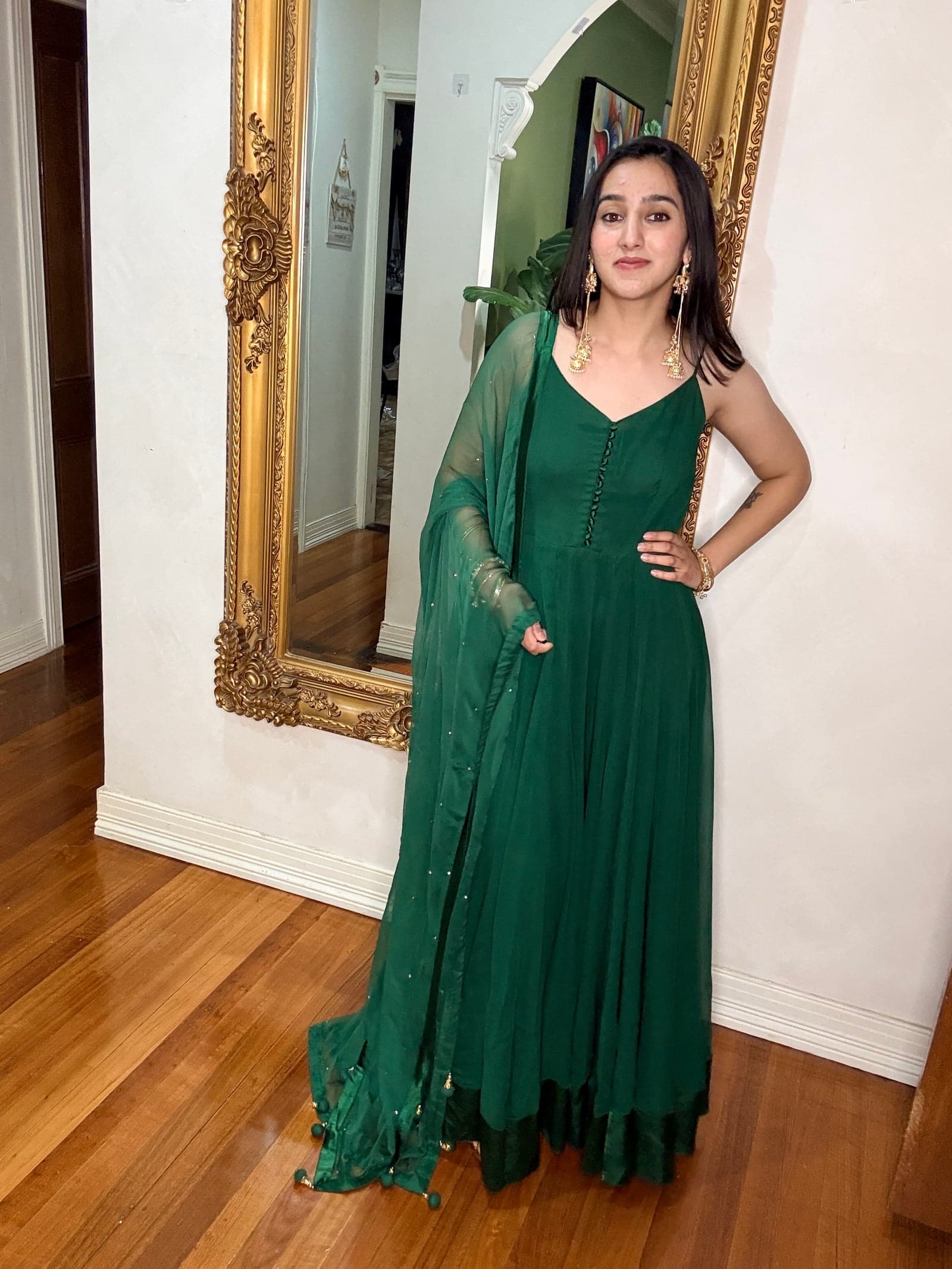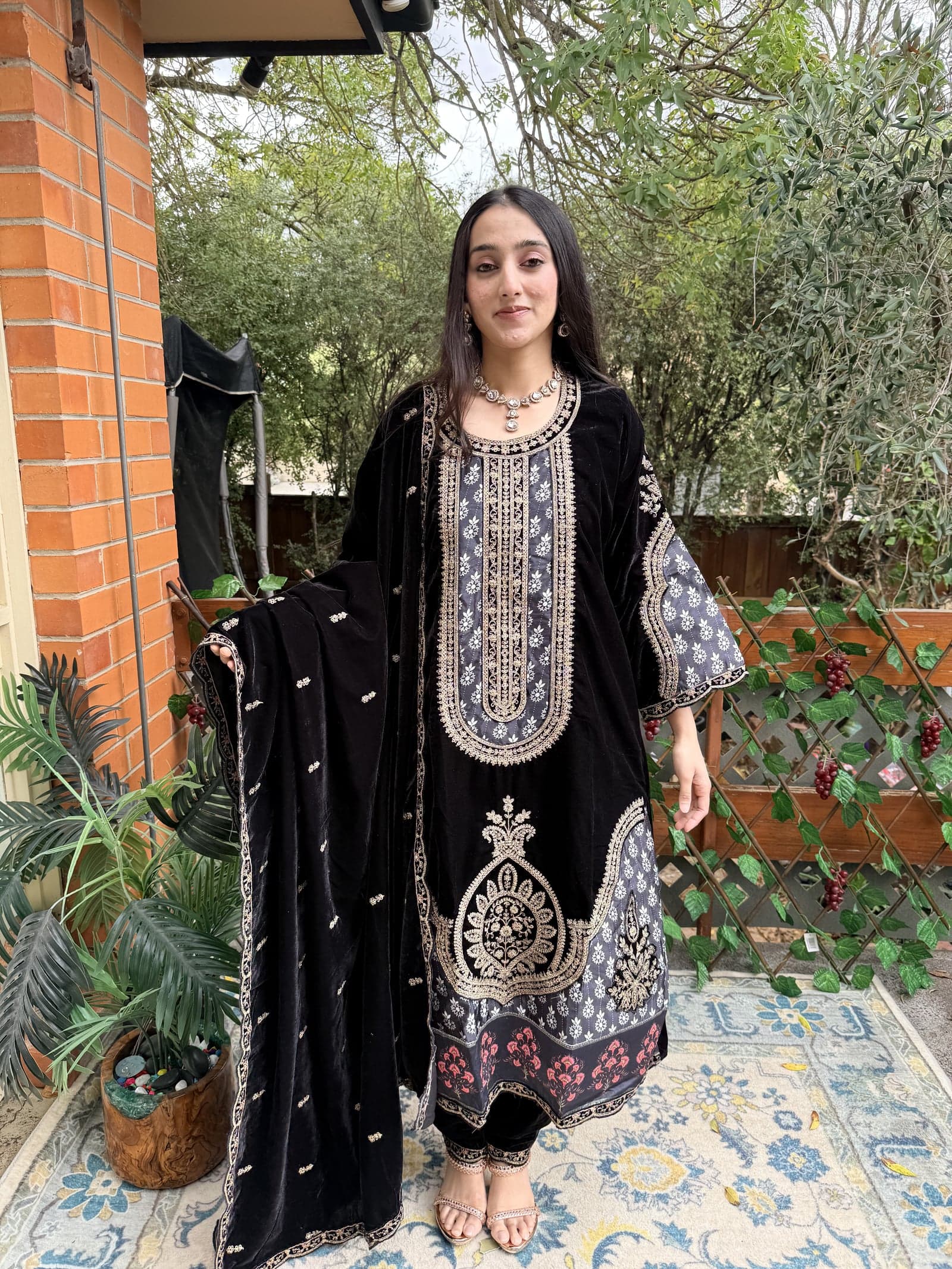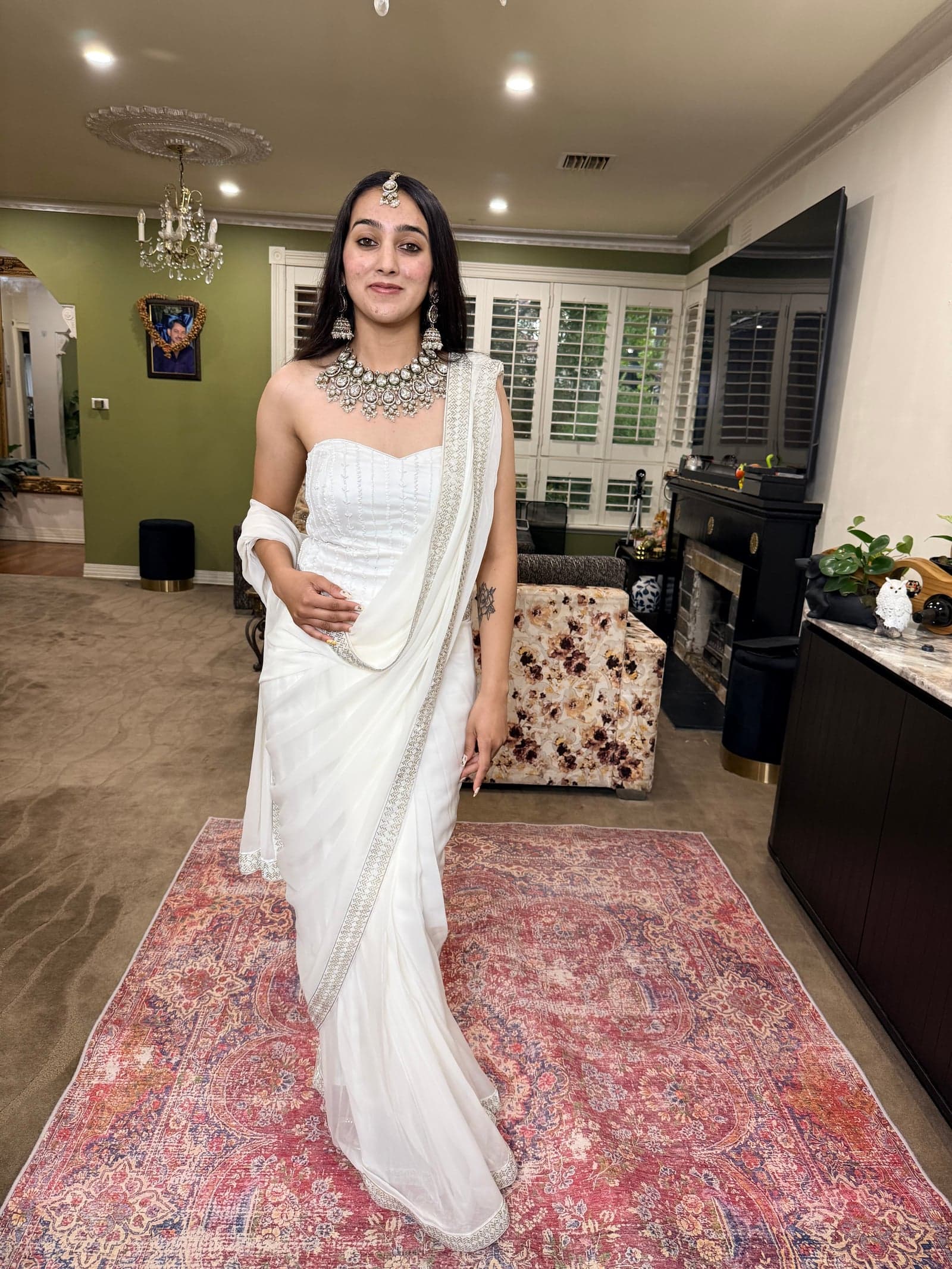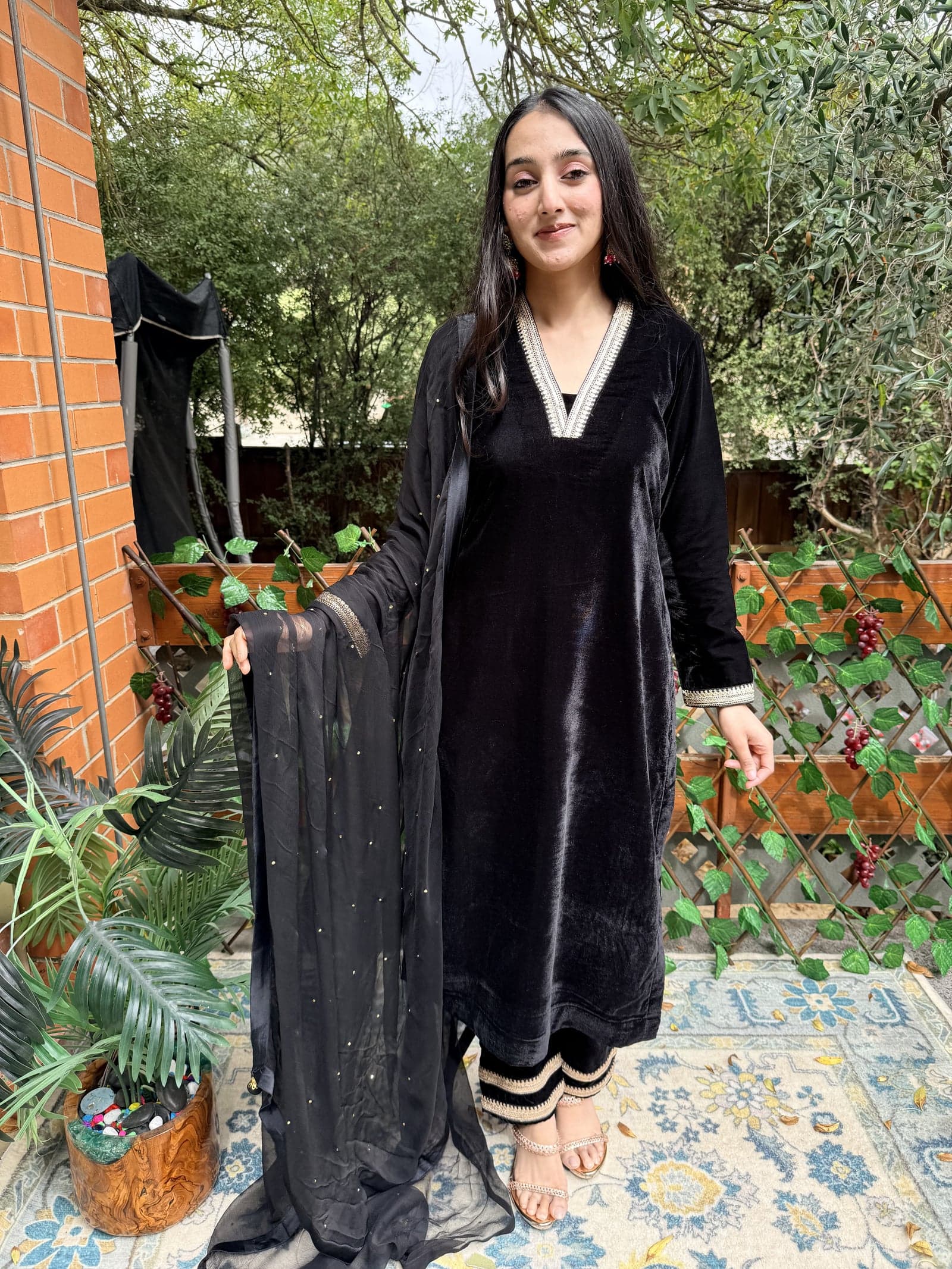
elbourne is the cluster that does not weave anything. It is the part of the atelier where the Indian cloth becomes a wardrobe. The workshop is small, deliberately small. There is a long cutting table, a half-mannequin on a stand, a wall of butter-paper toiles pinned up in chronological order, and a window that faces west onto a jacaranda. This is where every piece spends its last three weeks before it leaves us. This is where the saree is matched to the woman who has commissioned it, the blouse is drafted to her measurements, the lehenga waist is taken in or let out, the hem is set to her preferred shoe.
I work this room myself for the first hour of every commission. Not because the cutter is not better at the cut than I am — she is — but because the first hour is when the cloth and the wearer's measurements meet on the same table, and I want to see that meeting. We talk about how the woman intends to wear the piece. A sangeet in Parramatta is not a reception in Singapore is not a Tuesday in Melbourne. The cloth knows the difference. The cut must know it too. We have, on more than one occasion, sent a piece back to Banaras for a longer pallu because the wearer is tall and the standard length would have looked clipped on her. The cluster understands. The cluster waits. The cluster ships again.
The hand-finishing is the part you cannot see. Every interior seam is closed by hand, every facing bound in matching silk, every hem rolled — not blind-stitched on a machine. It is the work that nobody on the street will ever look at, and it is the work that decides how the piece sits on the body after the third wear, the tenth wear, the hundredth wear. That is the difference between a piece you wear to one occasion and a piece you wear into a wardrobe. We are building wardrobes. The cloth comes up from the Indian clusters; the cut happens in Australia; the woman puts it on and it fits her. That is the whole atelier.