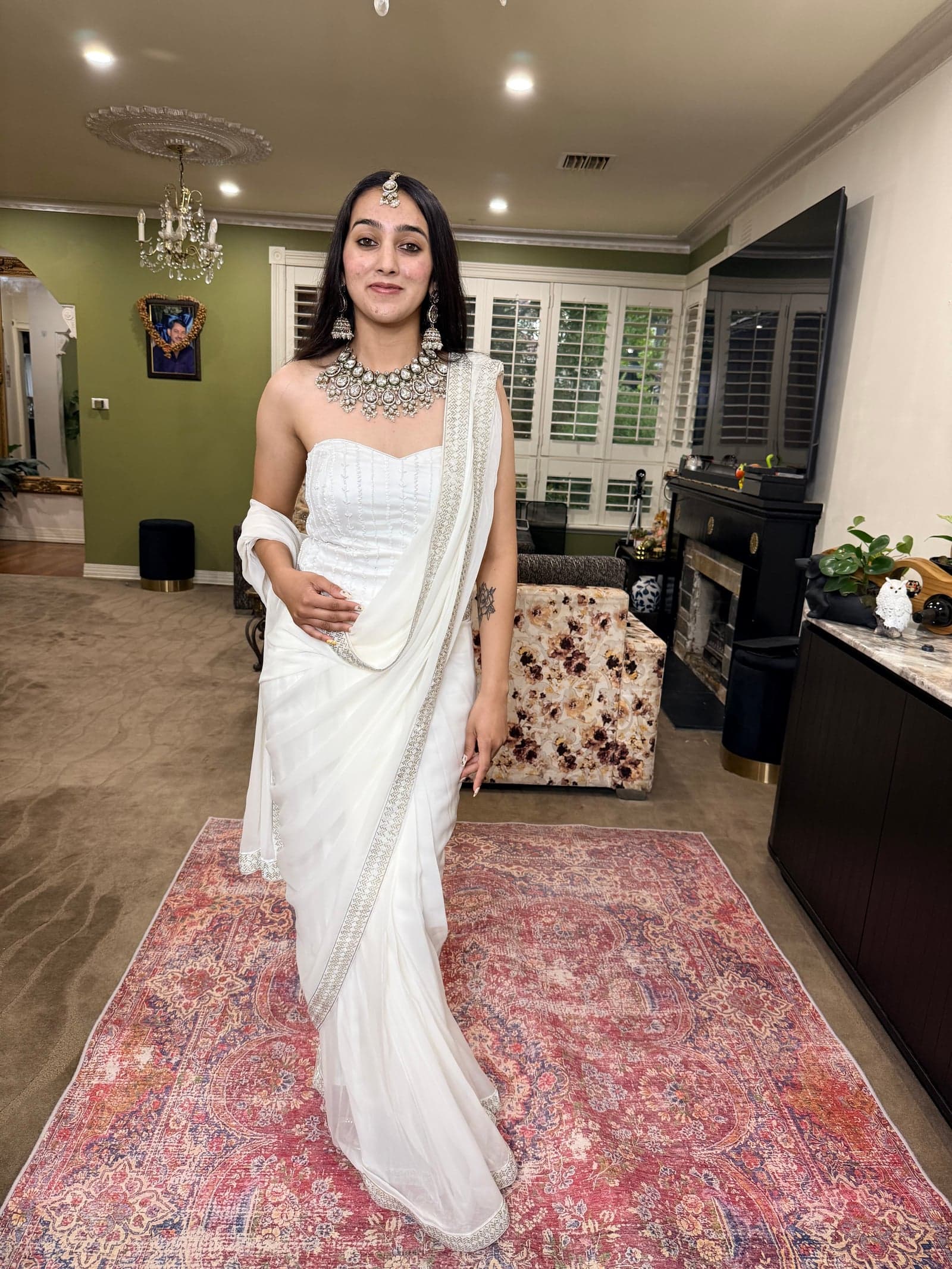
UTTAR PRADESH · INDIA

Banaras

बनारस

The Naqshbandi cluster of master weavers — fifteen years known to the atelier, riverside workshops opening onto the Ganges.

Uttar Pradesh, India

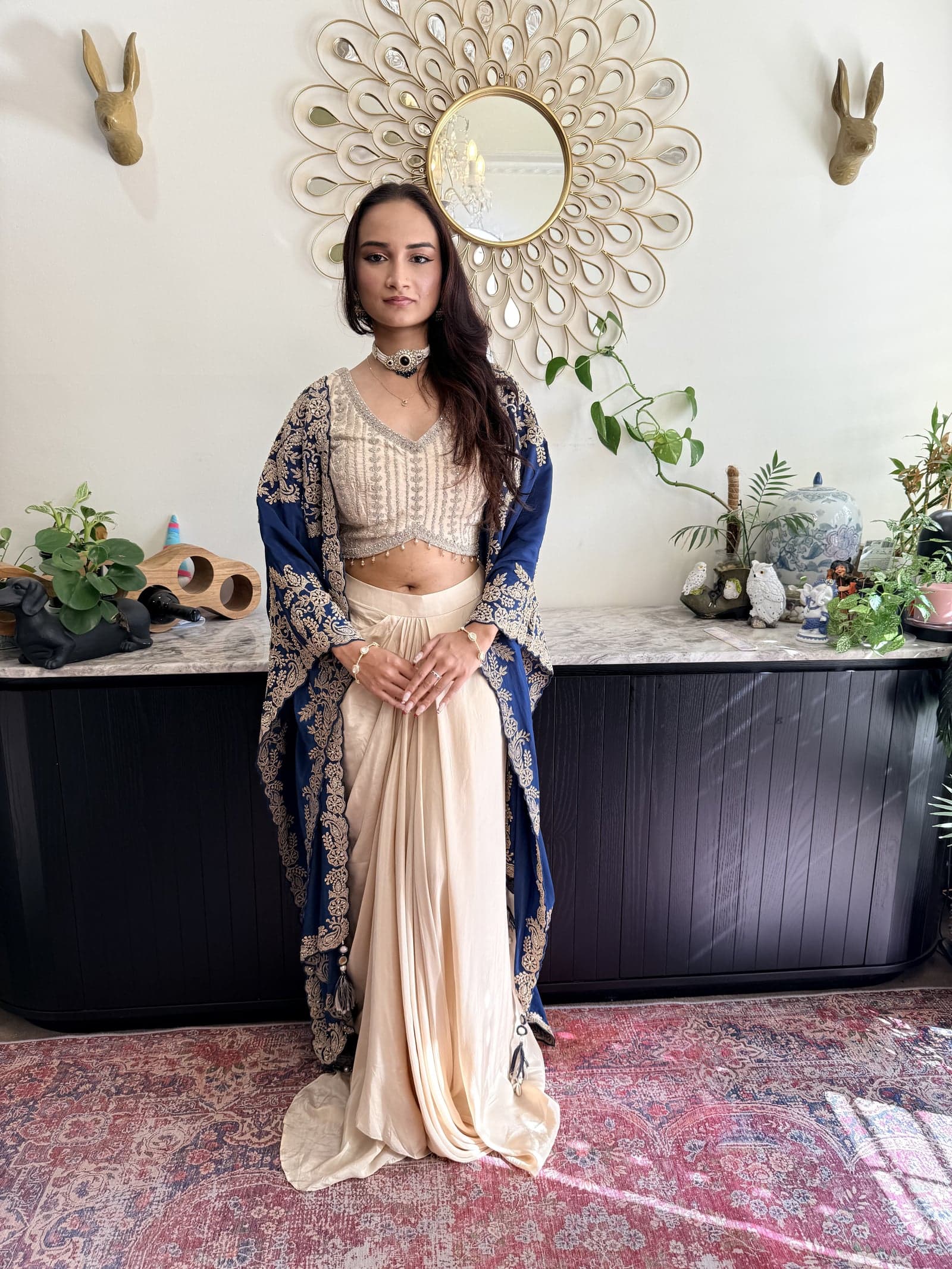
Banaras cluster — editorial reference, champagne and navy embroidery standing in for the Naqshbandi weave
Atelier reference from the current Aratrikkaz catalogue.

The cluster, in Ketki's words

On Banaras.

came to Banaras the first time at nineteen, on a train that arrived at four in the morning, and I have been coming back ever since. The Naqshbandi cluster sits along the river — the workshops open at one end onto a courtyard and at the other onto the Ganges, and the looms are old enough that the wood has gone the colour of tea. The weavers I work with there are the third and fourth generation in their families to lay zari on silk. I do not say that to be lyrical. I say it because the man who weaves your saree learned the kadhua from the man who taught his father, and the silver-gilt thread he uses is drawn at a workshop two lanes away by a family who have drawn zari for nine generations. That is the structure. That is what costs eight weeks.

A Banarasi from this cluster is not a printed silk and it is not a power-loom imitation. The ground is mulberry silk, the zari is real silver wrapped in gold leaf, and every motif is laid in by hand — a single butti at a time, the loom paused while the weaver counts threads against a paper card his father drew. The pallu alone takes eight weeks. I have watched it. I have, on the days I am there, sat on the floor of the workshop with a cup of chai and watched a peacock's tail come up out of the warp one feather at a time. There is no urgency in the room. There is only the soft sound of the shuttle and the small bells that hang from the loom-frame to mark each thousand passes.

I chose this cluster, of all the Banarasi clusters, for the way their kadhua holds light at dusk. The silver-gilt they use is drawn finer than the standard, and when the cloth is finished and held up against the river-light at the end of the day, the zari does not glare — it warms. It is the difference between a saree that reads as expensive in a photograph and a saree that reads as luminous in a room. I wanted the second thing. I am willing to wait eight weeks for it. I am willing to pay for it in advance, on terms we publish, and I am willing to put the weavers' names on the label inside your blouse.
The vocabulary

Techniques.

bakhiya
the shadow-work hem-stitch that finishes a Banarasi border without breaking the weave.
jangla
the trellis-of-vine ground pattern that climbs the full length of a saree.
kadhua
the single-motif-at-a-time weaving method — slowest, oldest, and the only one that lets the silver-gilt zari sit truly proud of the ground.
tilfi
the three-shuttle technique that lays gold, silver, and silk into the same shed — used for the small bird-and-bough butti.
meenakari
the enamelled colour-work where coloured silks are knotted into the zari to read like cloisonné.
shikargah
the hunting-scene pallu — peacocks, deer, the figured field that takes eight weeks alone.

The hands

The karigars
we work with.

  • Karigar portrait stand-in — the master weaver who leads the Naqshbandi kadhua bench
    Atelier reference from the current Aratrikkaz catalogue.

    Mohammad Yusuf — head weaver

  • Karigar portrait stand-in — the zari-puller who draws the silver-gilt thread two lanes away
    Atelier reference from the current Aratrikkaz catalogue.

    Ahmad Rasheed — zari-puller

  • Karigar portrait stand-in — the apprentice working the tilfi shuttle on the river-side loom
    Atelier reference from the current Aratrikkaz catalogue.

    Iqbal Hussain — tilfi apprentice

The visit log

When Ketki was last
in the workshop.

  • March 2026

    Ketki visited the Naqshbandi cluster for the spring loom-warping and commissioned the dawn-grey kadhua now in progress.

  • October 2025

    Final fittings on the autumn shikargah pallu; tea with the head weaver's family on the courtyard side of the workshop.

I chose this cluster for the way their kadhua holds light at dusk.

— Ketki Gupta · on the Banaras cluster