Loading the atelier…
Highlight · 22 May 2026 · 4 min read
Chikankari for sangeet.
The wardrobe that survives the night.
A white-on-white Lucknow piece worked by hand on muslin. Why it is the most-forgiving sangeet wardrobe a diaspora woman can own.
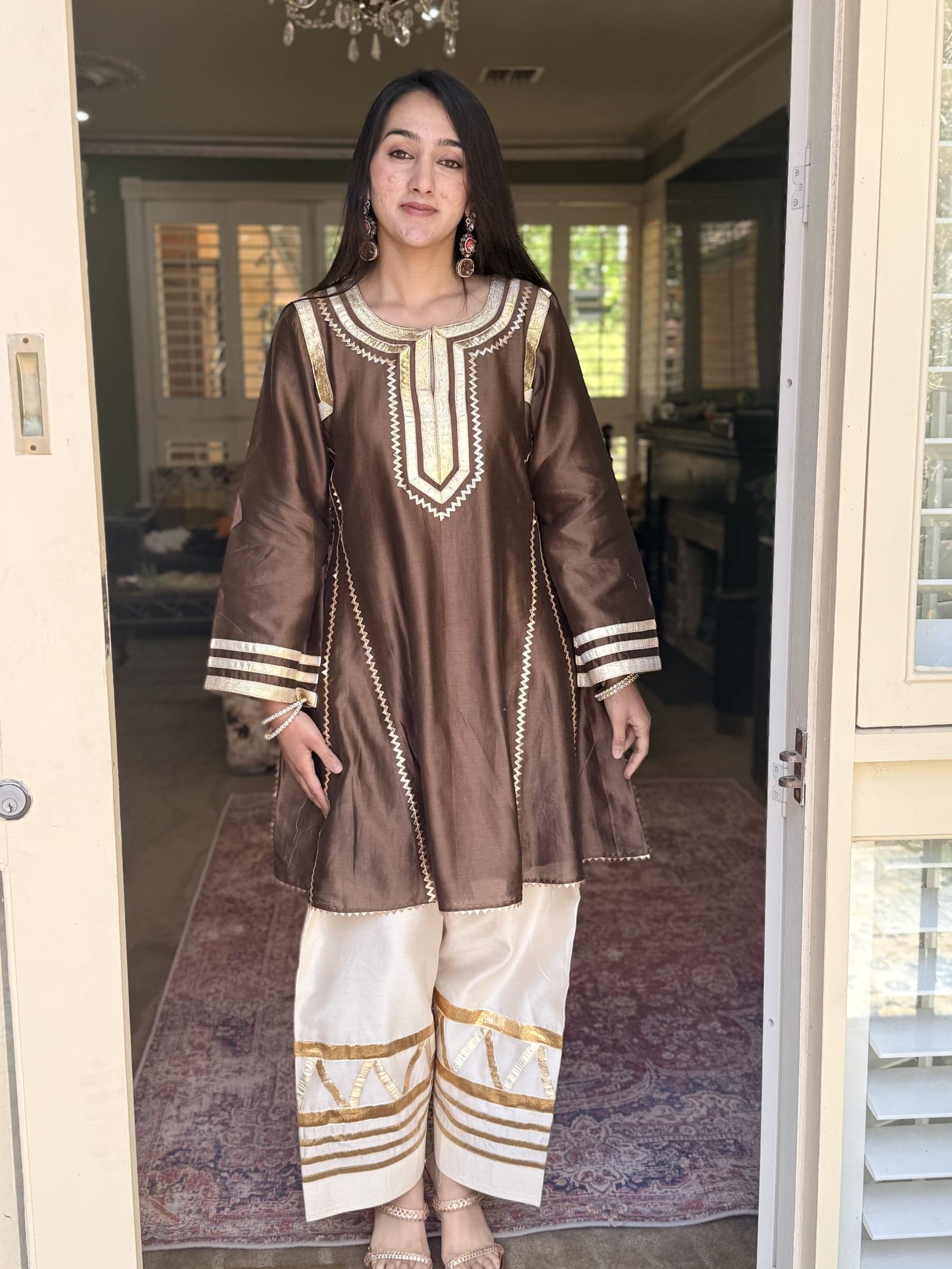
White-on-white looks simple only from a distance. Up close, the whole piece depends on shadow: the raised phanda, the shadow of bakhiya on fine muslin, the openings of jaali where the hand has persuaded the thread aside. If the work is careless, there is nowhere for it to hide.
For a sangeet, chikankari has a rare advantage. It moves without announcing every movement. The fabric can take dance, heat, and a long evening better than many silks, and it lets jewellery do the ceremonial work without making the outfit heavy.
I like this wardrobe because it gives the diaspora customer room to breathe. In Melbourne, not every sangeet needs a floor-length lehenga. A white-on-white kurta set with a good dupatta can hold the room, especially when the work is dense at the cuff, neckline, and hem.
Style it three ways: pearls and a low bun for restraint, kundan earrings and metallic sandals for a wedding house, or a coloured dupatta if the event calls for more ceremony. The base stays useful long after the night is over.
— Ketki Gupta / Melbourne