utch is the cluster that is hardest to write about without falling into the picture-postcard. I am going to try anyway. The collective we work with sits outside Bhuj, in a village that took years to come back from the 2001 earthquake. The women run the workshop themselves — they elect a head, they keep the books, they decide the rates. We agree the rates with them in advance and we pay before the cloth ships. That is the only deal that makes sense in a craft where every dot is a finger-tie and the woman who tied it knows exactly what her hour is worth.
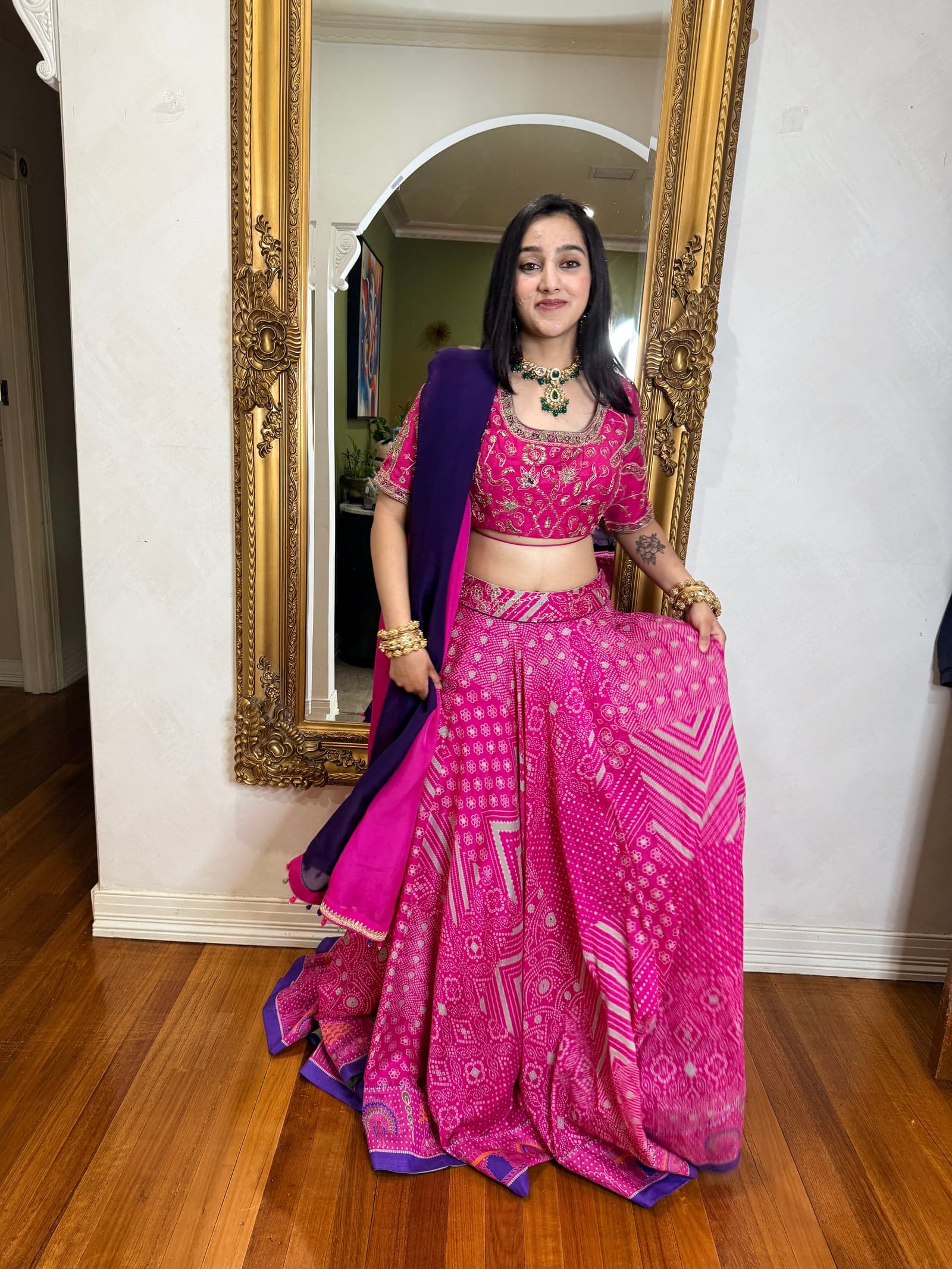
Bandhani is the slowest of the slow crafts. A length of fine cotton or silk is stretched on a frame; the design is pricked into it with a needle dipped in fugitive ink; and then, dot by dot, a woman or a girl will lift the cloth between her thumbnail and forefinger and bind a tiny knot around the pinch with a length of thread. A small dupatta carries ten thousand ties. A wedding-grade odhani can carry seventy thousand. The cloth is then dipped — sometimes once, sometimes through a sequence of dyes — and the ties are untied, and the white dots come up where the dye could not reach. The bandhani we commission is tied by women who learned it from their mothers and grandmothers and who, against considerable economic pressure, have refused to industrialise.
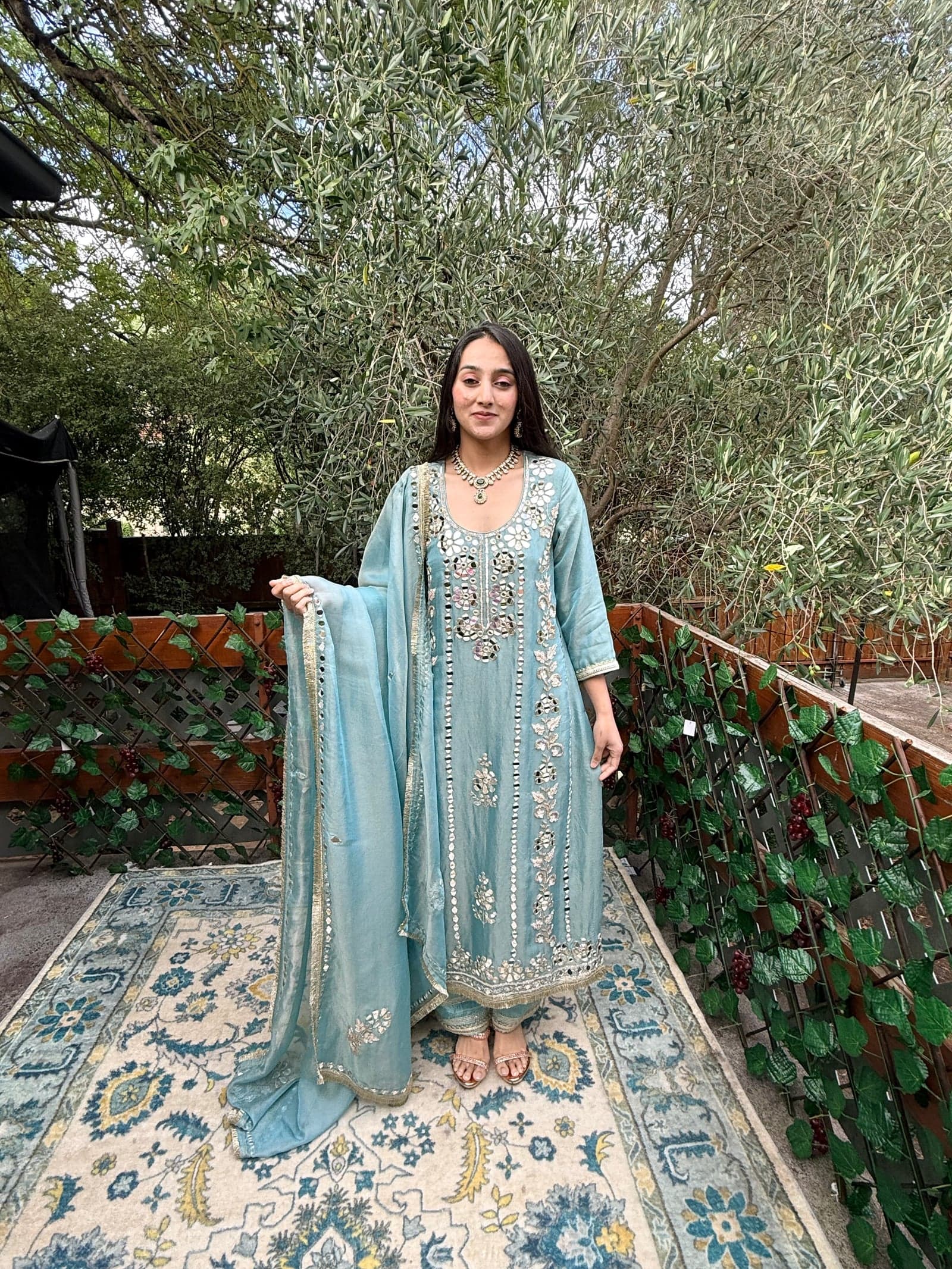
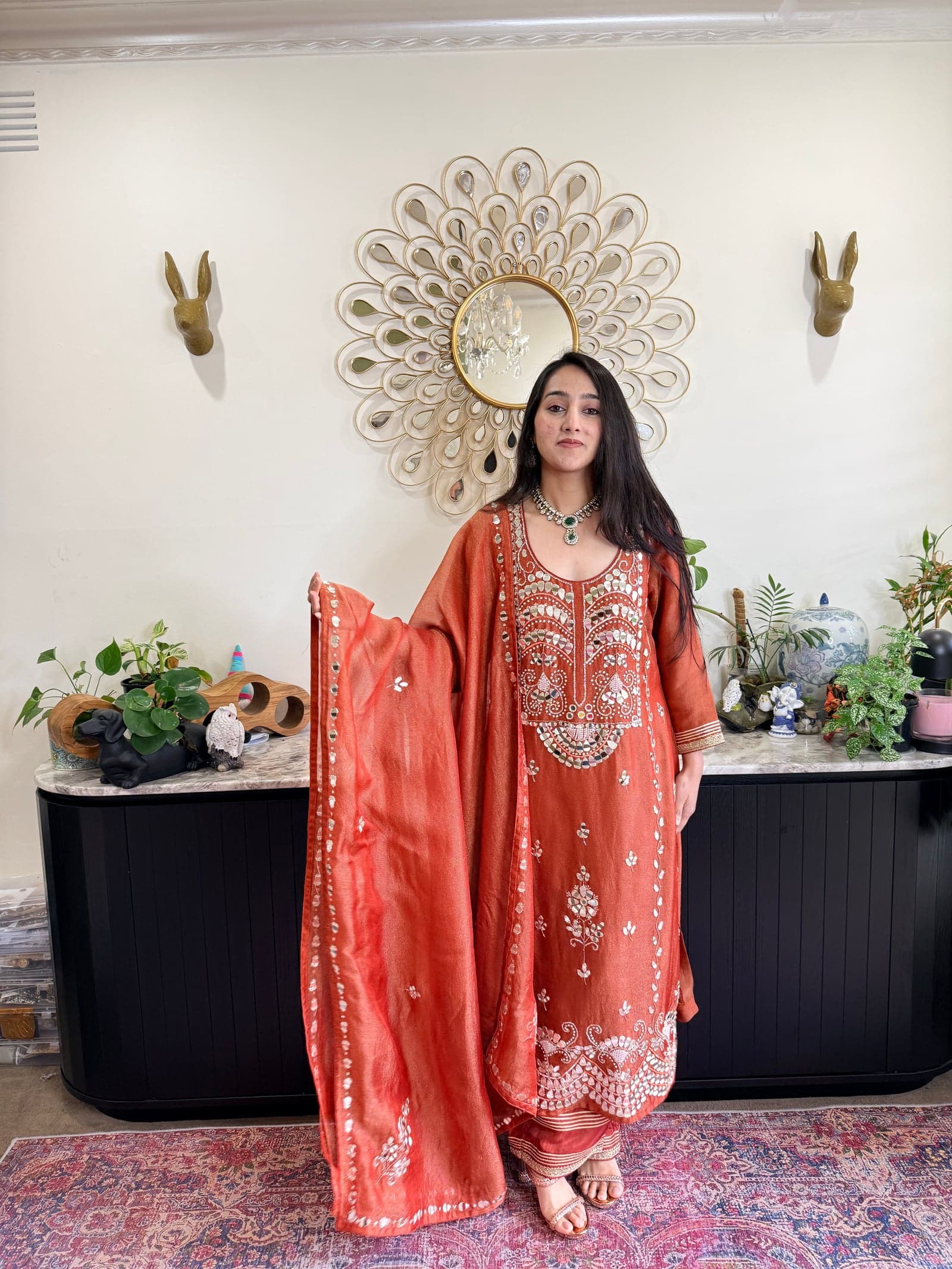
The mirror-work — abhla — is a separate vocabulary, and a separate group of hands in the same workshop. The mirrors come from a small glass-cutter in Bhuj. Each one is held to the cloth by a frame of buttonhole stitches; no glue, ever. The mirrors catch and throw light in a way machine-set sequins cannot, because they are not perfectly flat — every disc has a tiny convexity, the trace of the cutter's hand. When a Kutchi piece moves in lamplight, the mirrors flash one by one across the cloth. There is no shortcut to this. There is only the woman, the needle, the thread, and the hour she is paid for.