Loading the atelier…
Technique · Banaras, Uttar Pradesh
Banarasi zari.
ज़री
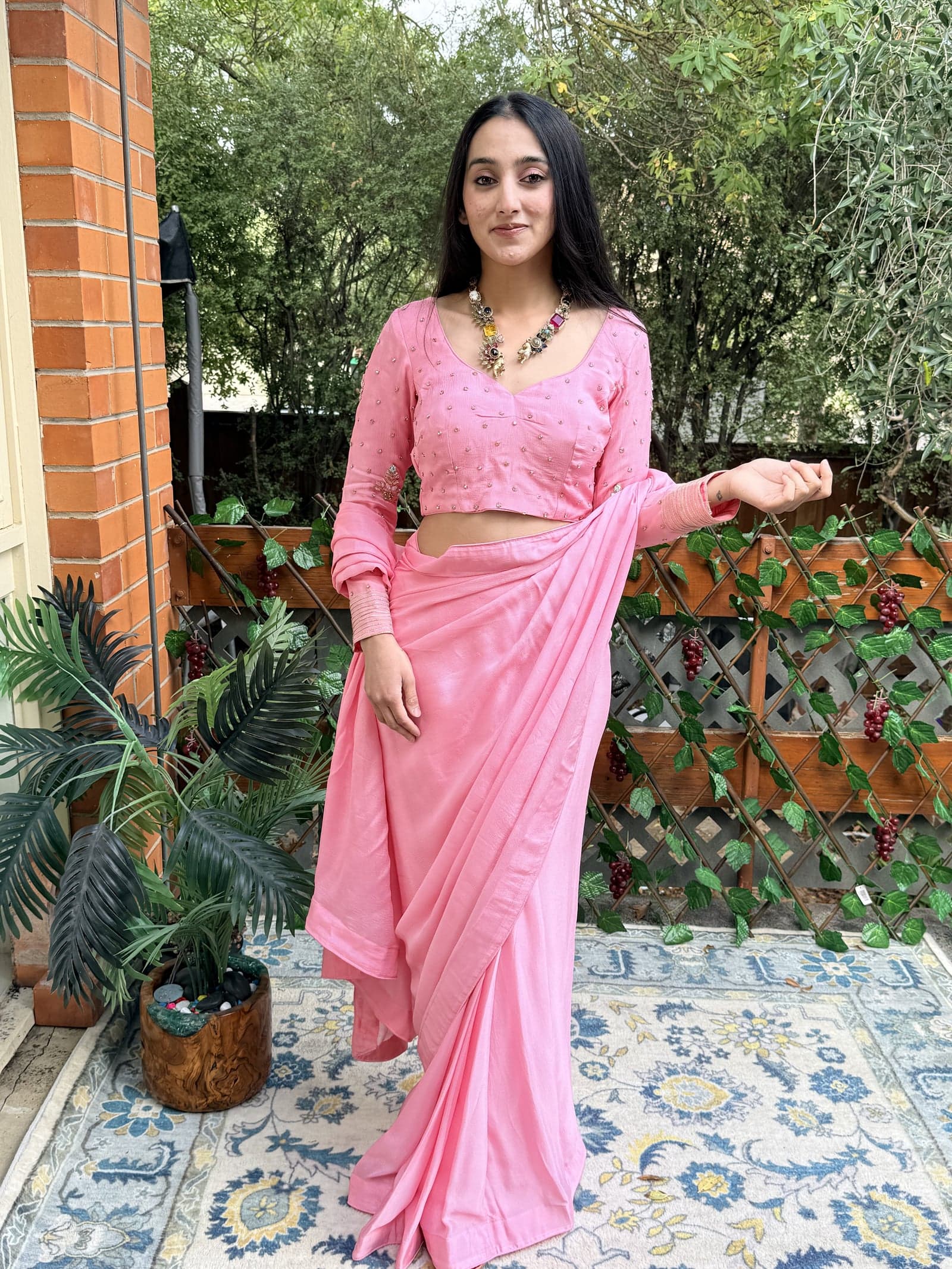
A pit-loom inheritance carried through Naqshbandi master-weaver families in the lanes off Madanpura and Alaipura, Varanasi — older than the country, older than most things.
Banarasi cloth begins as a thought on graph paper — the naqsha — drawn by a designer. From there it goes to the pit loom, where the weaver sits with his legs in a trench under the floor, shuttle in one hand, jacquard cord in the other, and the silk warp threaded with real silver-gilt zari pulled from one of three Mughal-lineage workshops still doing it correctly. The metal is what makes it Banarasi. The rest is patience.
A kadhua saree pallu — the decorated end-panel — can take a single weaver eight to twelve weeks of working days.
What you should know as the wearer: real zari blackens slightly over years and you should let it. The metal is honest. The motifs — jangla, shikargah, tilfi, meenakari — are not interchangeable; they sit in a hierarchy the weaver knows by heart and which the price reflects. And the silk should rest folded with muslin between the layers, never on a hanger. A Banarasi saree is an object that survives a daughter, if you let it.
Vocabulary
The terms.
- kadhua
- discontinuous-weft figuring, each motif woven individually — the loom-weeks-per-saree technique
- jangla
- all-over vine pattern that runs the length of the field
- tilfi
- three-shuttle weave that lets a single weft motif carry three colours at once
- meenakari
- coloured silk worked alongside zari to read like enamel against metal
- shikargah
- hunt scene — Mughal-era pictorial weave with animals, foliage, archers
“The pallu alone takes eight weeks of one weaver's days.”
— From the atelier file, Banaras