Loading the atelier…
Highlight · 19 May 2026 · 3 min read
Gota patti at the cuff.
A Jaipur technique returns to Melbourne.
Why we put gota patti on chikankari pieces — the deliberate Banaras-Lucknow conversation that began in the Awadhi court.
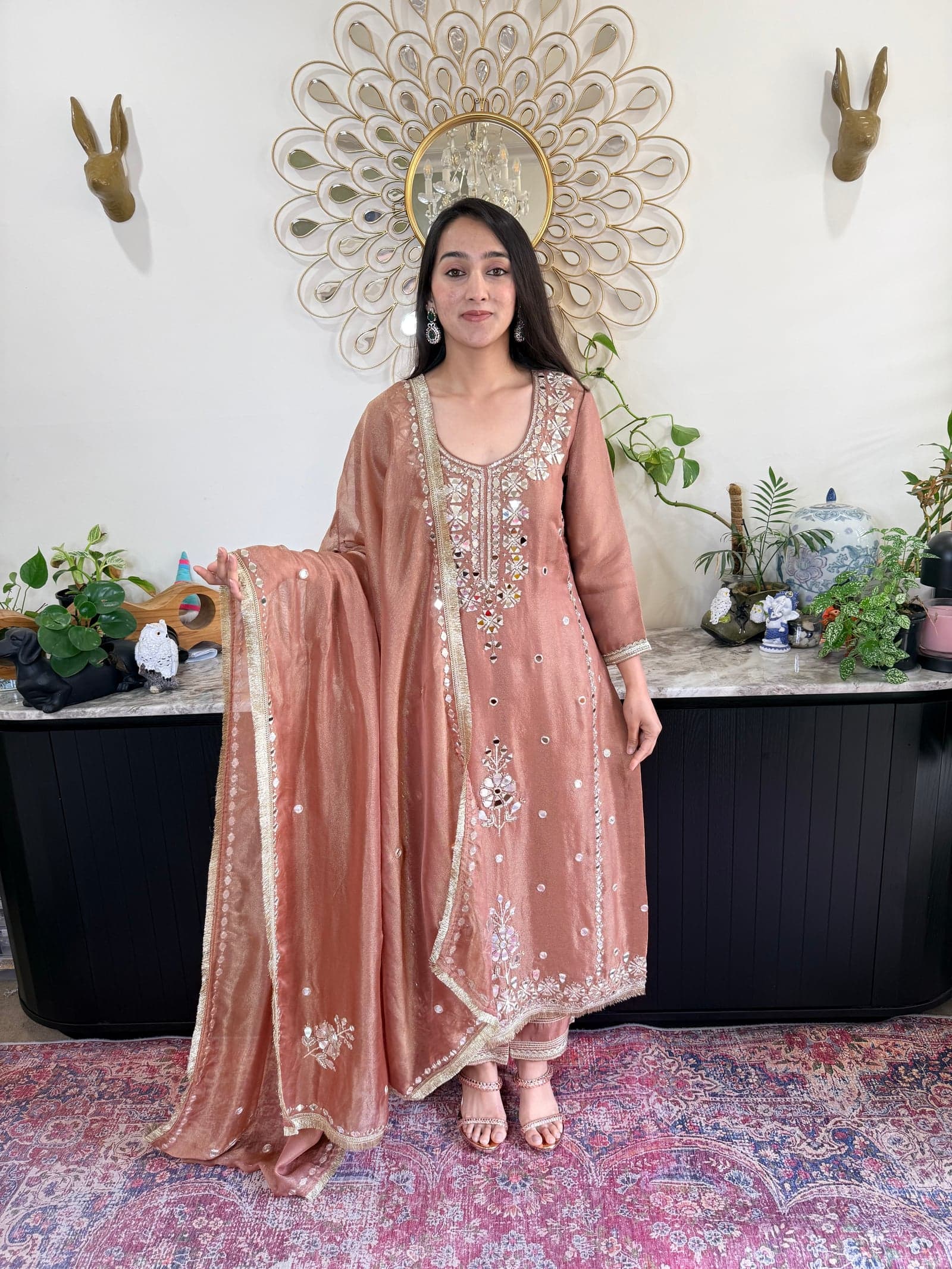
Gota patti brings light to a garment without asking for stones. The metal ribbon is cut, folded, and applied so that it catches movement at the edge of the cloth. In Rajasthan it has its own festive vocabulary, but it also travels beautifully when used with restraint.
At the cuff, gota patti behaves differently from a border. A border announces the outline of a garment. A cuff meets the hand. It flashes when you lift a glass, hold a thali, fasten an earring, or gather a dupatta. That intimacy is why we use it there.
Paired with chikankari, the technique creates a conversation between softness and gleam. The white thread keeps the piece quiet. The gota gives it evening. Used too broadly, it can overpower the embroidery; used at the cuff or neckline, it sharpens the whole garment.
Our Jaipur cluster does this work with the crispness it needs. The placement is planned before stitching so the garment does not feel trimmed as an afterthought. That is the difference between ornament and finishing.
— Ketki Gupta / Melbourne