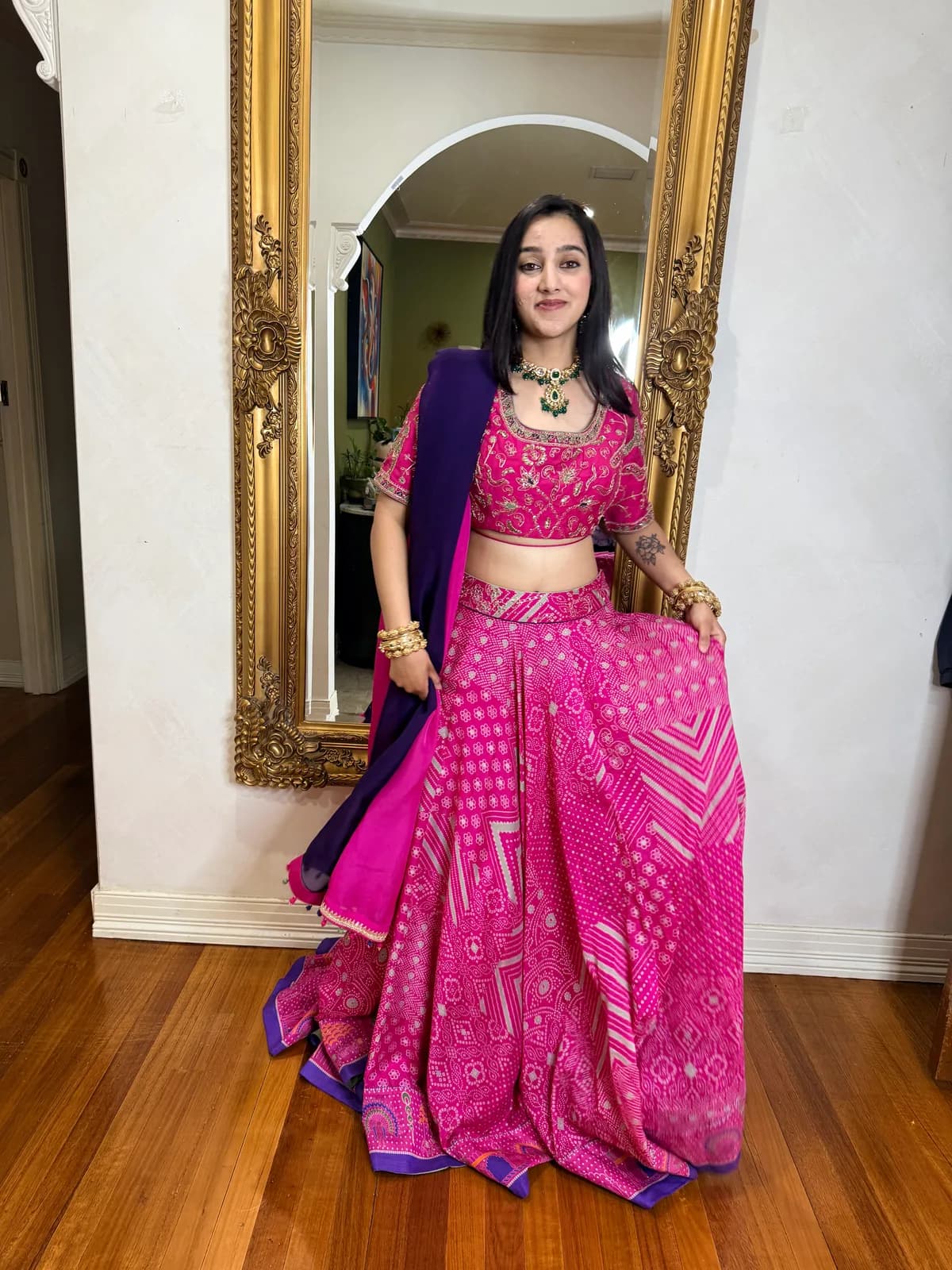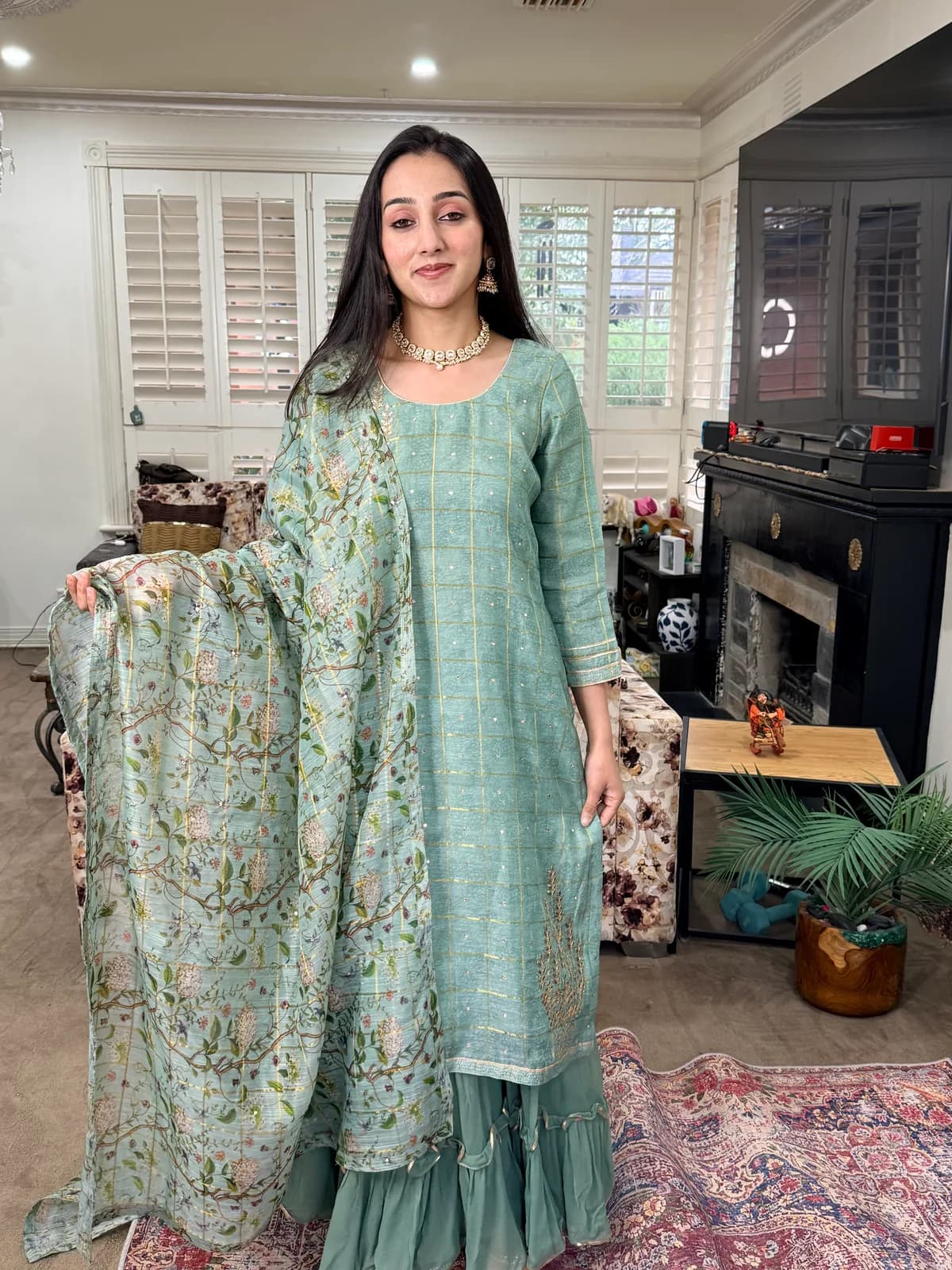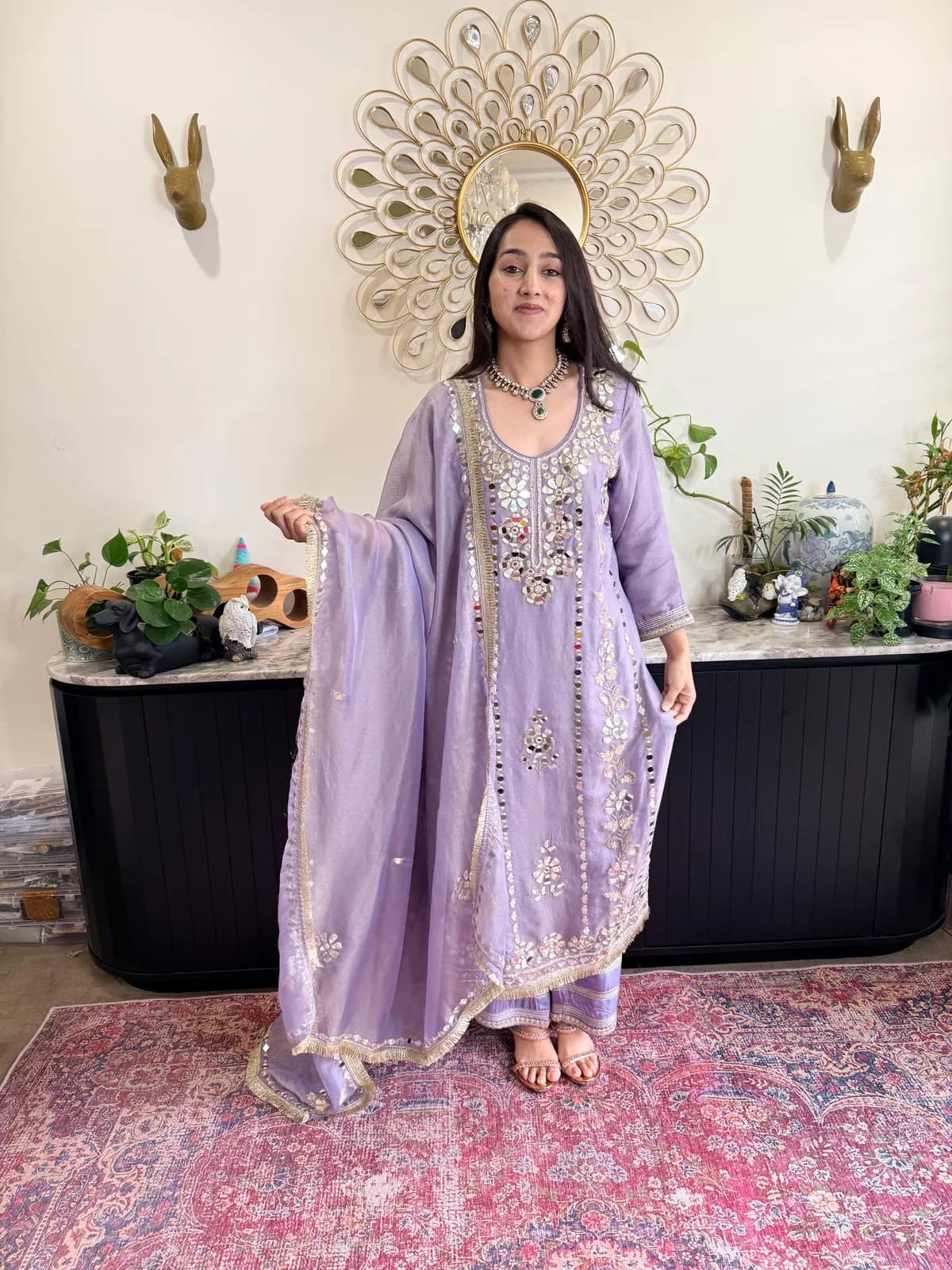
The dupatta is the only part of an Indian outfit you restyle rather than re-tailor. The same two and a half metres of fabric can lengthen you, broaden your shoulders, hide a waistband or do nothing at all, depending entirely on where you put it. It is also the piece people are most likely to leave in the bag because they are not sure what to do with it.
The single-shoulder drape is the default and the most forgiving. The dupatta sits over the left shoulder with the fall down the back, pinned once at the shoulder seam. It leaves the front of the outfit visible, which is the right choice when the embroidery you paid for is on the kurta or the choli rather than on the dupatta.
The front-pleated drape — pleats gathered and pinned at the shoulder, falling straight down the front — is the one to use when the dupatta is the most worked piece. It puts a vertical line down the centre of you, which reads as lengthening, and it covers the join between a crop top and a skirt if you would rather that join were not the first thing in the photograph.
The both-shoulders drape, where the dupatta sits across the back with an equal fall on each side, is the most formal and the least stable. It wants two pins and it will not survive dancing. It is the drape for an engagement or a reception where you are standing, greeting and being photographed, not for a sangeet.