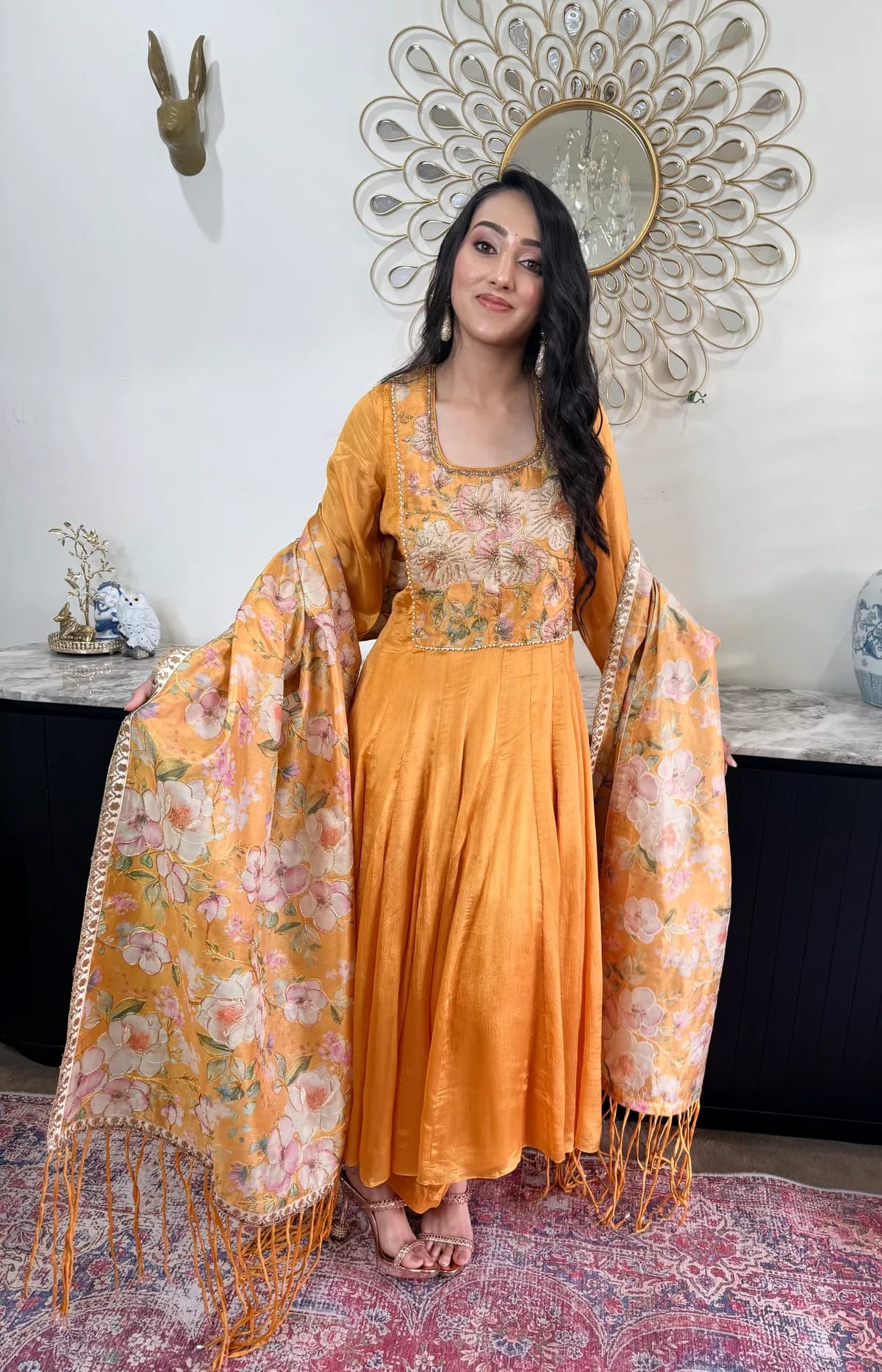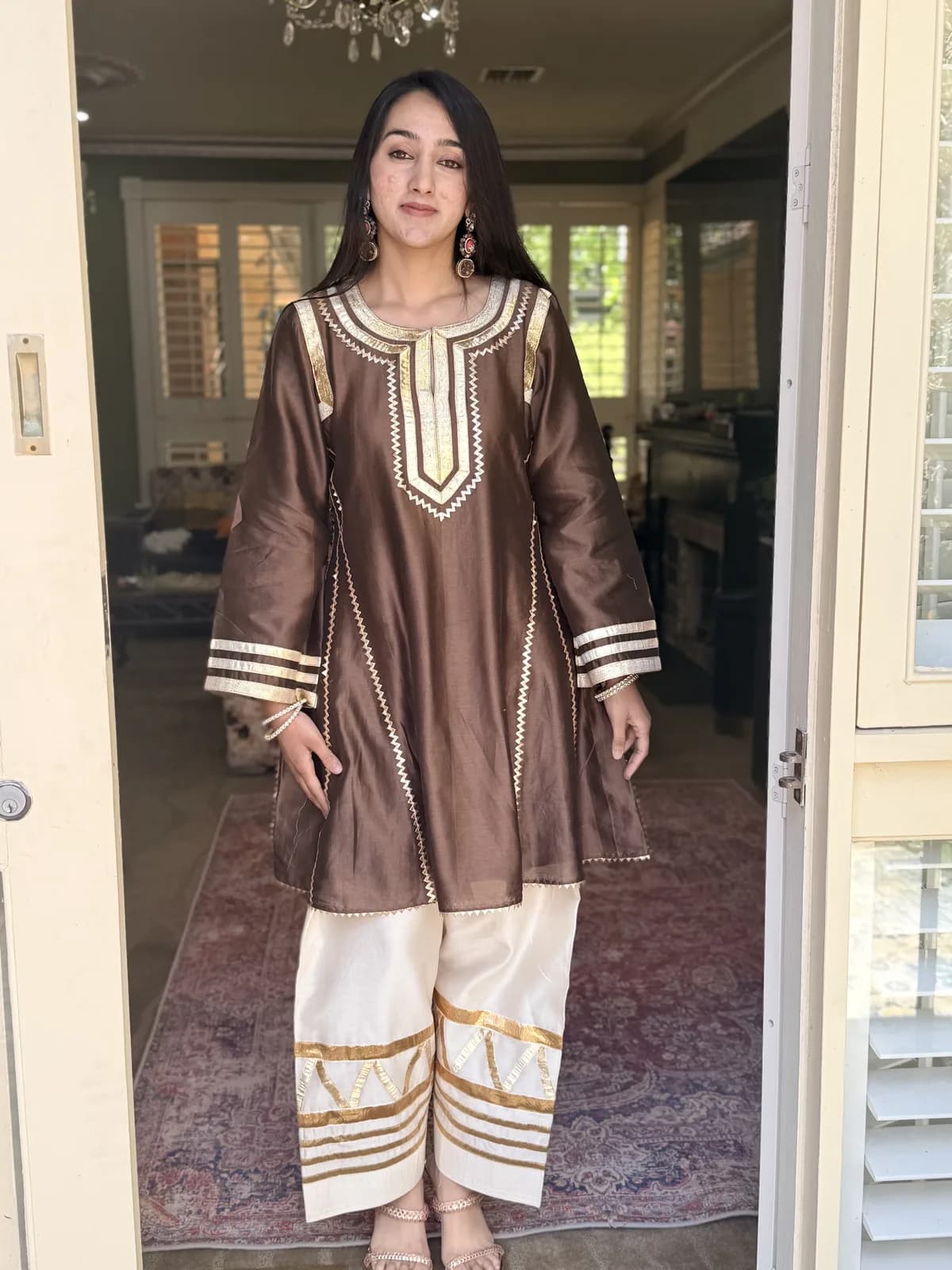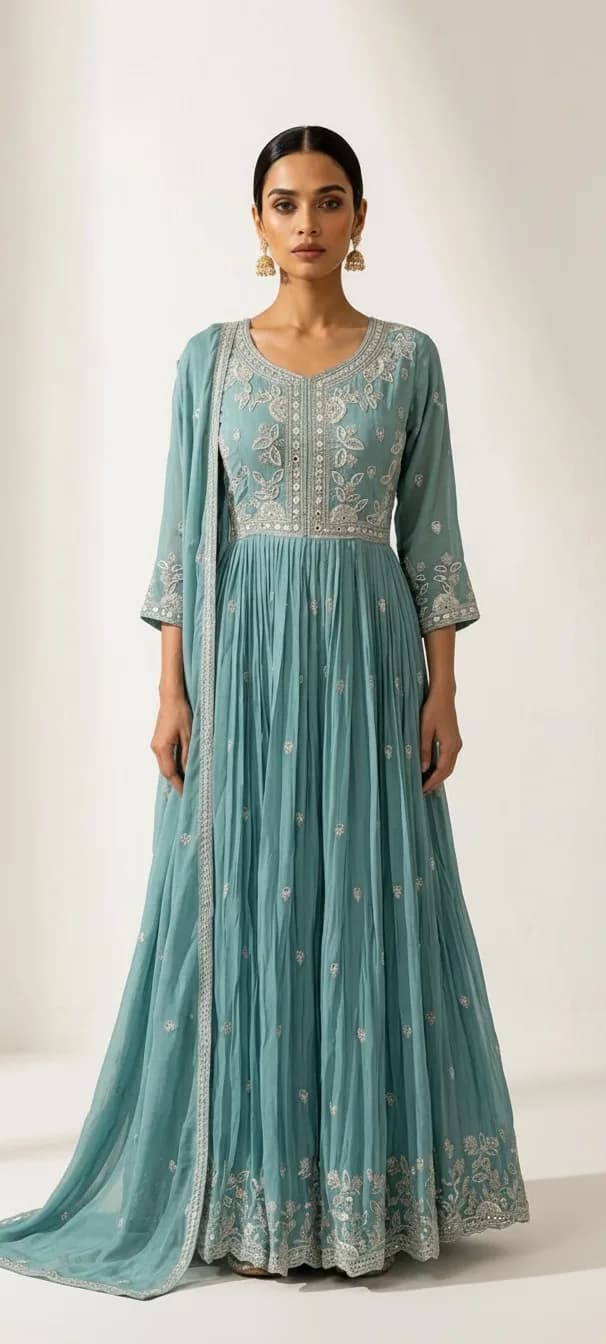
An anarkali is defined by a fitted yoke flaring into a continuous panel, with no waist seam breaking the line. What varies — and varies enough to make them different garments — is where the flare starts and where the hem stops.
The floor-length anarkali is the most formal thing in the category. The line runs unbroken from shoulder to floor, which is why it reads as the dressiest silhouette available without being a gown. It is also the least adjustable: because the flare is cut into a continuous panel, shortening it changes the width of the hem and the way the whole thing hangs. Buy the length right rather than planning to alter it.
The mid-calf or ankle anarkali is the practical version of the same shape. You keep the unbroken line and the flare, and you lose the floor contact — which matters at an outdoor function, on a staircase, or anywhere you will be carrying a plate. It is also the length that works with a flat shoe, where a floor-length one effectively requires a heel.
The anarkali-cut kurta is a different proposition: the flare begins lower, usually below the bust or at the hip, and the hem falls somewhere around the knee. It is day clothing with an anarkali's line, and it is the version that goes with everyday trousers rather than churidar.