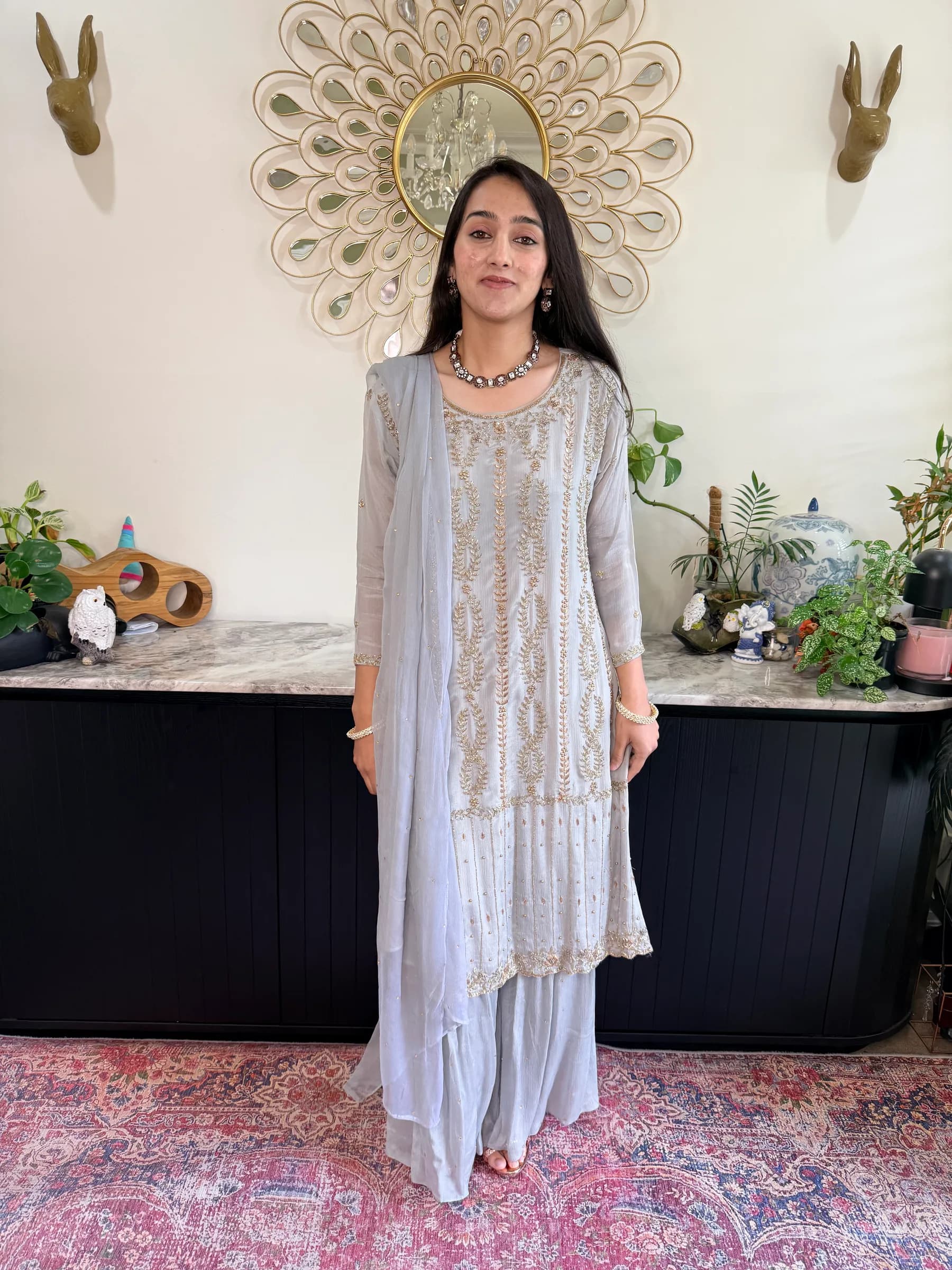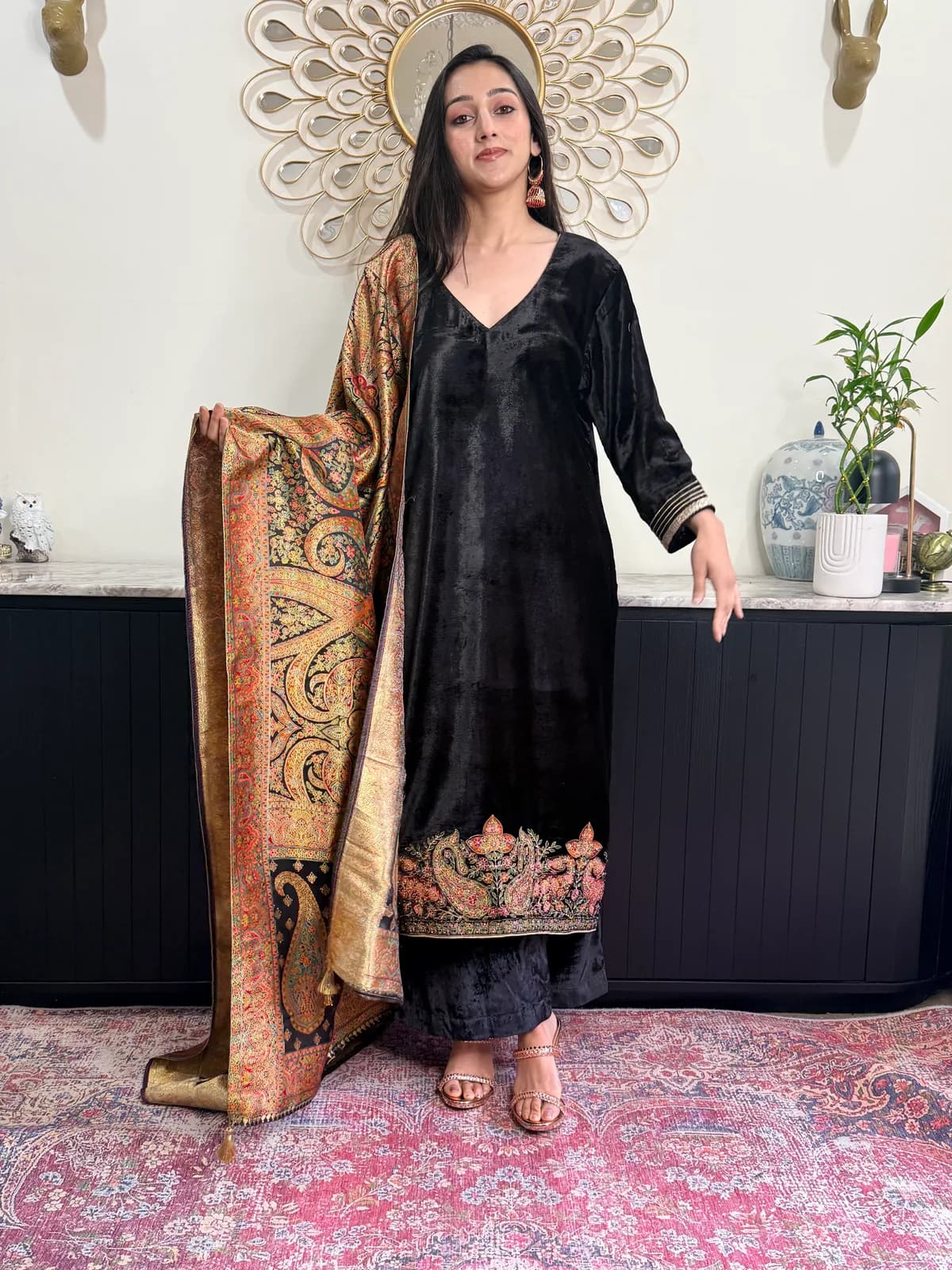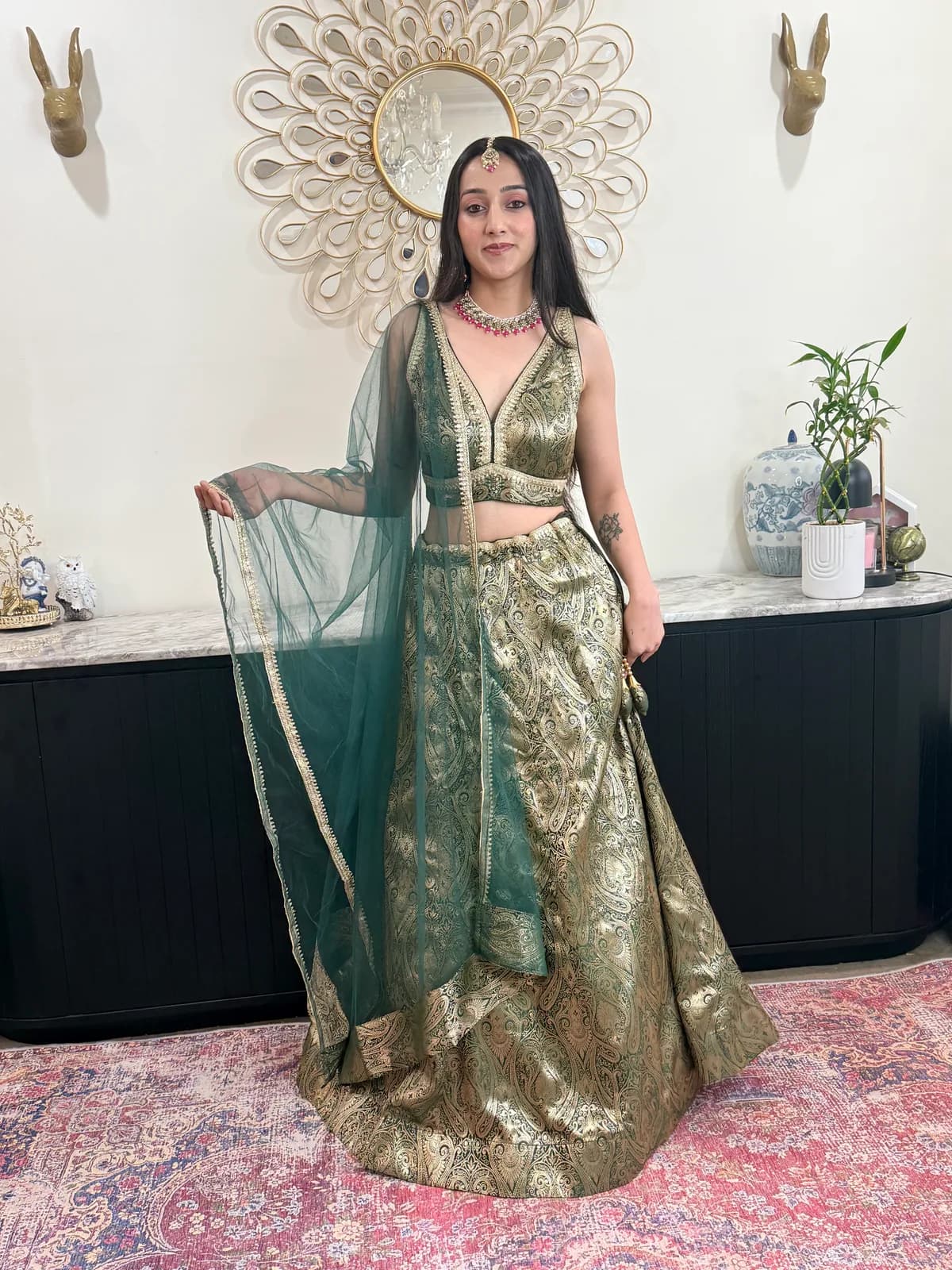
An Australian wedding season means interstate travel, and most of the damage embroidered occasionwear ever suffers happens in a suitcase rather than at the event. A crushed zardozi yoke, a sequin panel that has abraded the fabric next to it, a velvet pile permanently flattened along a fold — all of these are packing failures, and all of them are avoidable.
The principle is that embroidery damages fabric, including its own. Metal thread, mirror edges and sequins are harder than the cloth they sit on, and under the pressure of a packed case they will abrade whatever they are pressed against for six hours. So the first rule is that no embroidered surface should touch another fabric directly. Acid-free tissue, a cotton sheet or an unbleached muslin between the layers does the work.
The second rule is roll rather than fold wherever the garment allows it. A fold is a single hard crease at a fixed line, and on a heavily worked piece that line is where the threads eventually break. Rolling distributes the bend. A kurta, a dupatta and a saree all roll well; a structured corset and a heavily panelled lehenga skirt do not.
For the things that cannot be rolled, the trick is to fold with volume inside the fold rather than flat. Lay a rolled towel or a tube of tissue along the fold line and bring the fabric over it, so the crease becomes a curve. That is the standard way to move a Banarasi or a zardozi panel without flattening the relief.