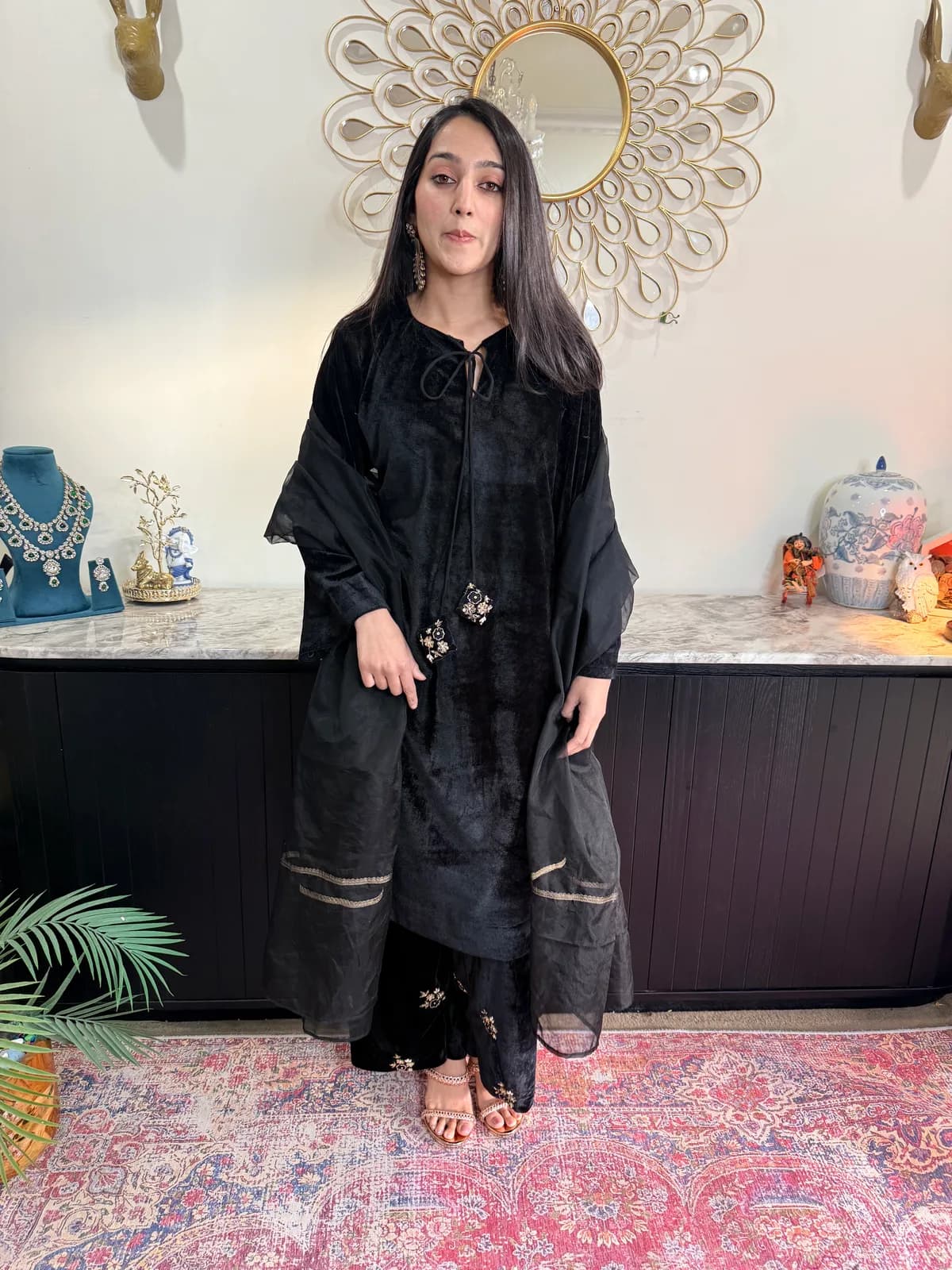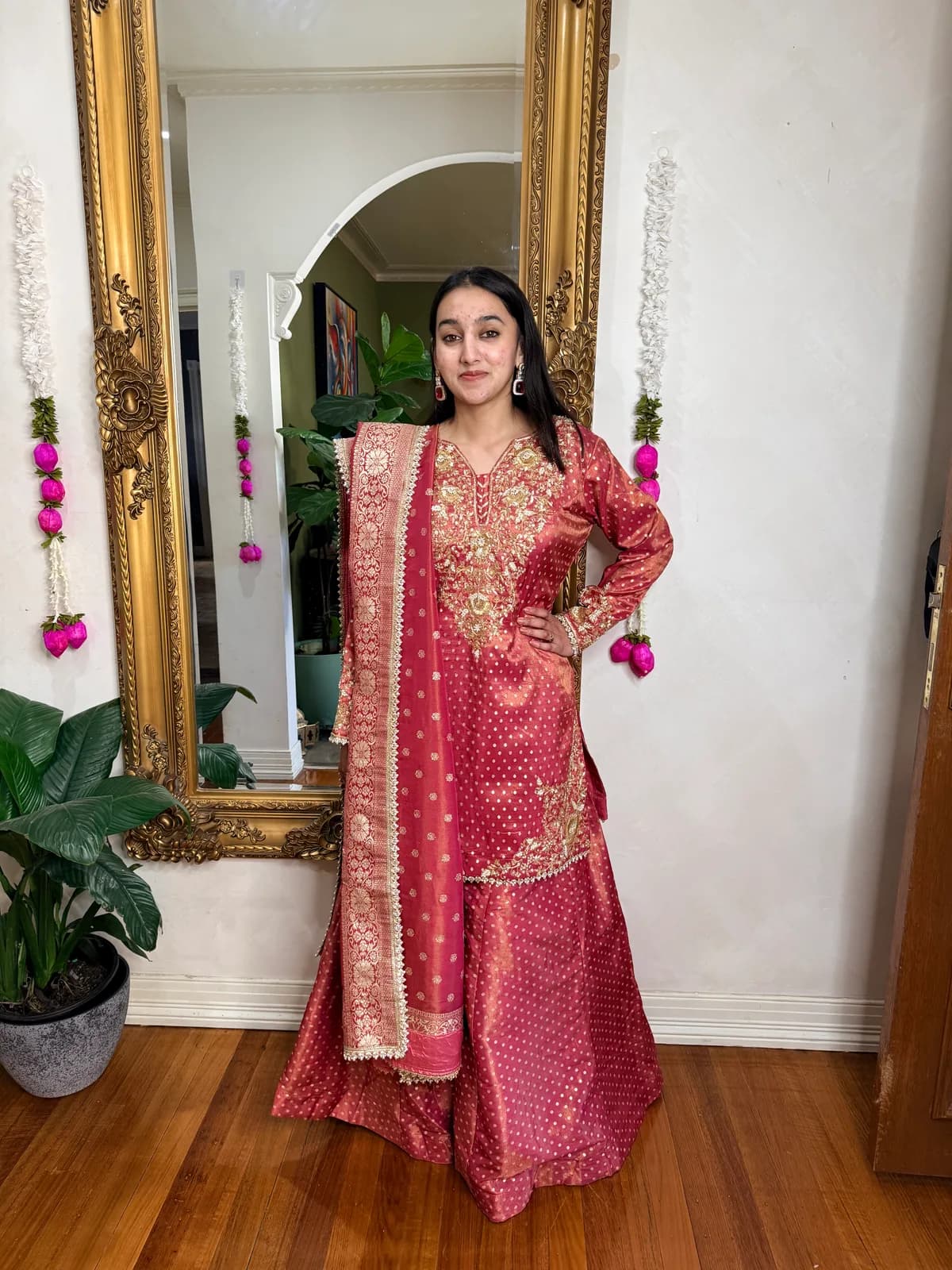
Velvet, silk and real zari are the three materials in this category that will genuinely last decades, and the three most often ruined in storage rather than in wear. All three fail in Australian conditions for reasons that are easy to design around once you know them.
Velvet fails by compression. The fabric's character is a standing pile, and pile is destroyed by sustained weight rather than by wear — a garment folded flat under other clothes for a year comes out with a permanent flattened line that no amount of steaming lifts. Velvet should hang, or be rolled with the pile facing out, and nothing should sit on top of it.
Silk fails by light and by dryness. Direct sunlight breaks down the protein fibre and shifts the dye, which is why a silk saree stored on an open shelf near a window fades along one edge within a couple of years. It also becomes brittle if kept very dry for long periods, which is the opposite problem to the one most people guard against.
Real zari fails by humidity. Zari is metal — traditionally silver gilt, now often a metallised polyester, but the real thing in a good Banarasi is metal — and metal tarnishes. A Sydney or Brisbane summer is more than humid enough to blacken real zari over a season if the garment is sealed in plastic where moisture cannot escape.