Indo-western is the loosest label on the rail. It gets applied to anything that takes an Indian element and builds it into a silhouette from somewhere else, which covers a genuinely wide range — and the range matters, because the four main things sold under the name are suited to quite different events.
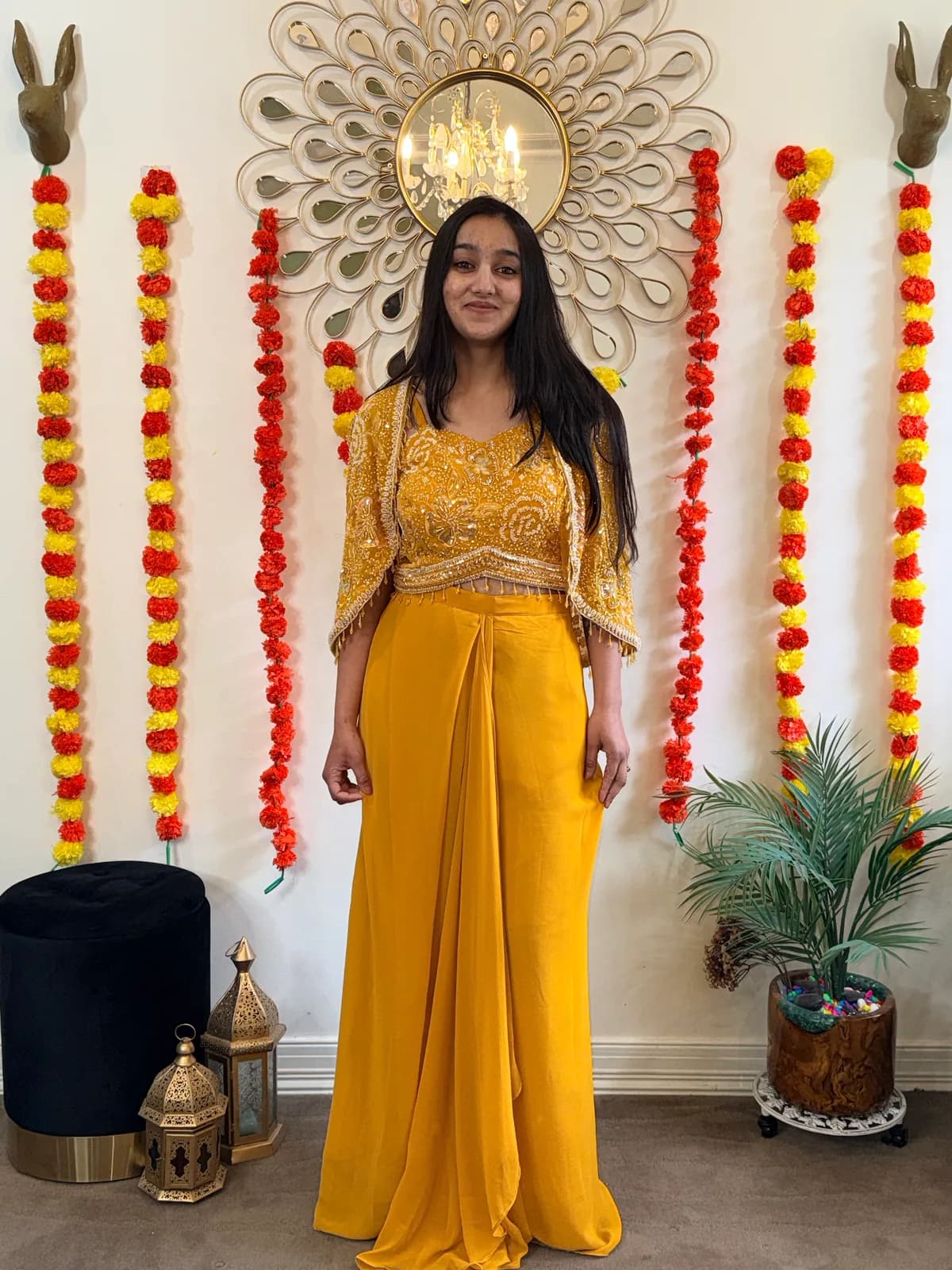
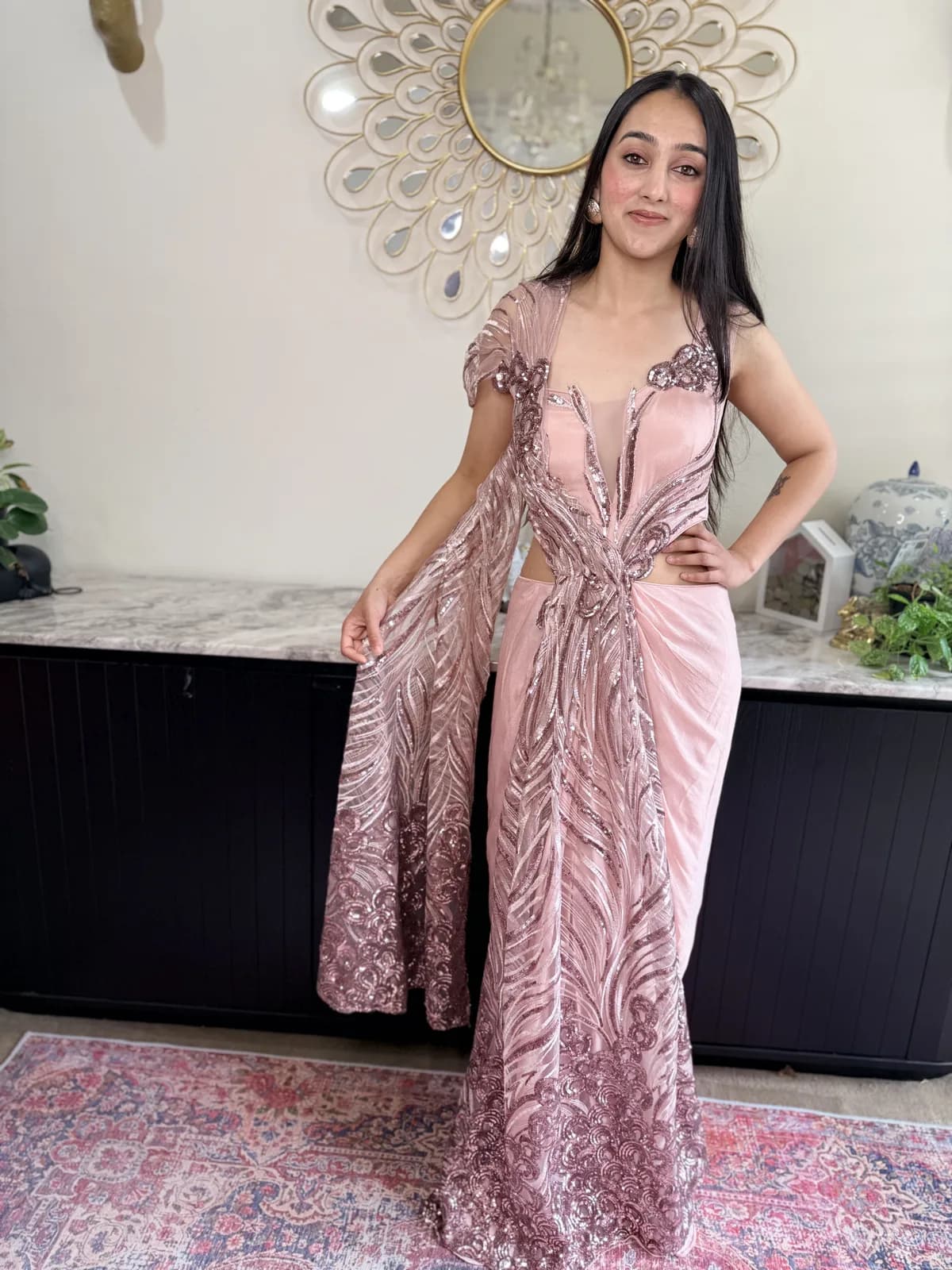
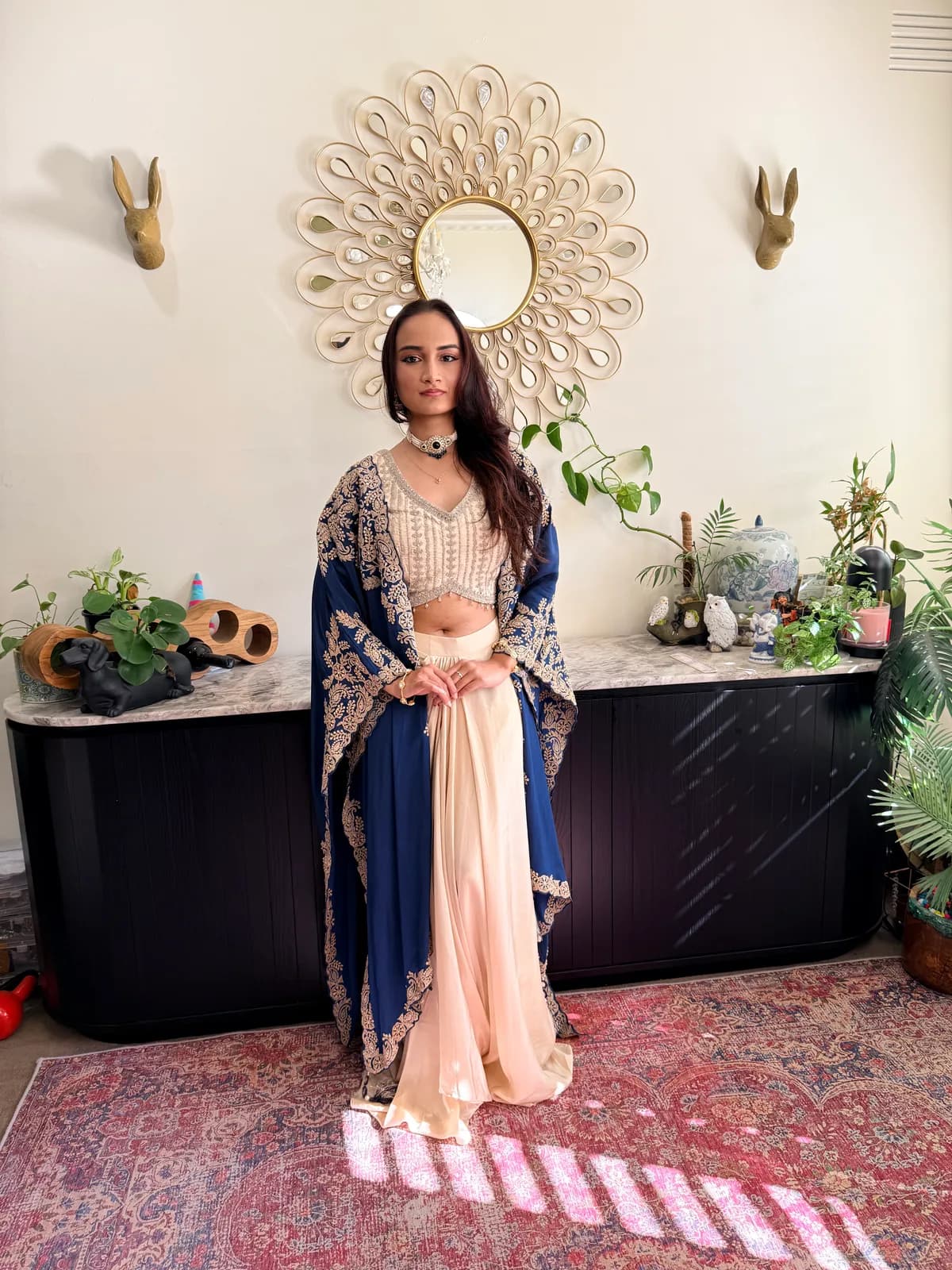
The first is the drape skirt with a separate top: a skirt cut with a built-in drape or pleat across the front, worn with a crop top, a corset or a cape. It is the closest of the four to a lehenga and the easiest to wear if you are used to one, with the difference that the drape replaces the dupatta and is attached, so nothing needs managing.
The second is the dhoti skirt, where the lower half takes the gathered, draped-between-the-legs construction of a dhoti and renders it as a skirt or wide trouser. It is the most architectural of the four and the most polarising — it reads as fashion rather than as traditional dress, which is exactly why it works at a cocktail event and reads oddly at a temple ceremony.
The third is the cape set. A cape or a long jacket replaces the dupatta entirely: it is pinned to nothing, needs no hand, and solves the single biggest practical problem in Indian occasionwear. For anyone who has spent an evening retrieving a dupatta from the floor, the cape is the whole argument.