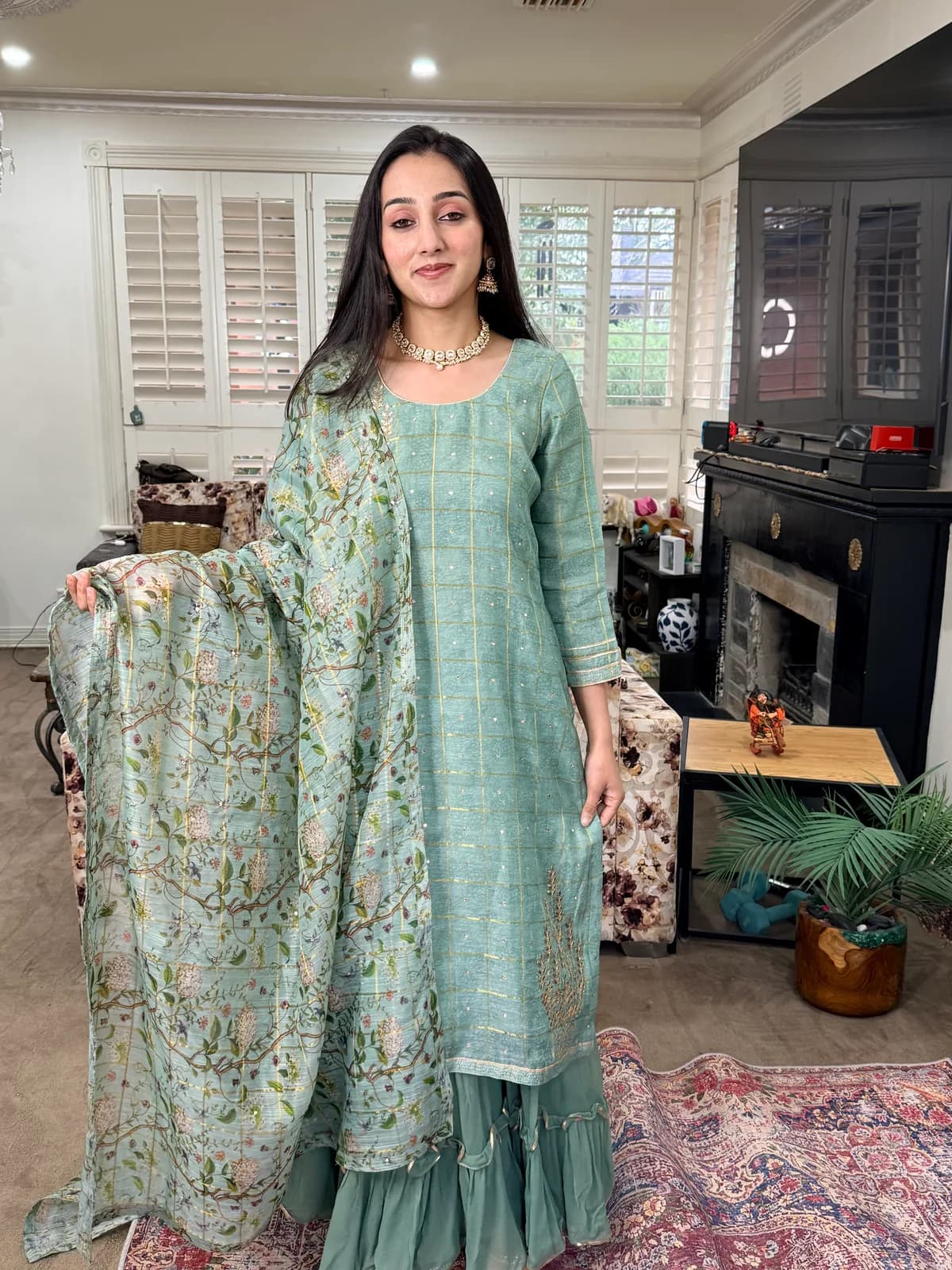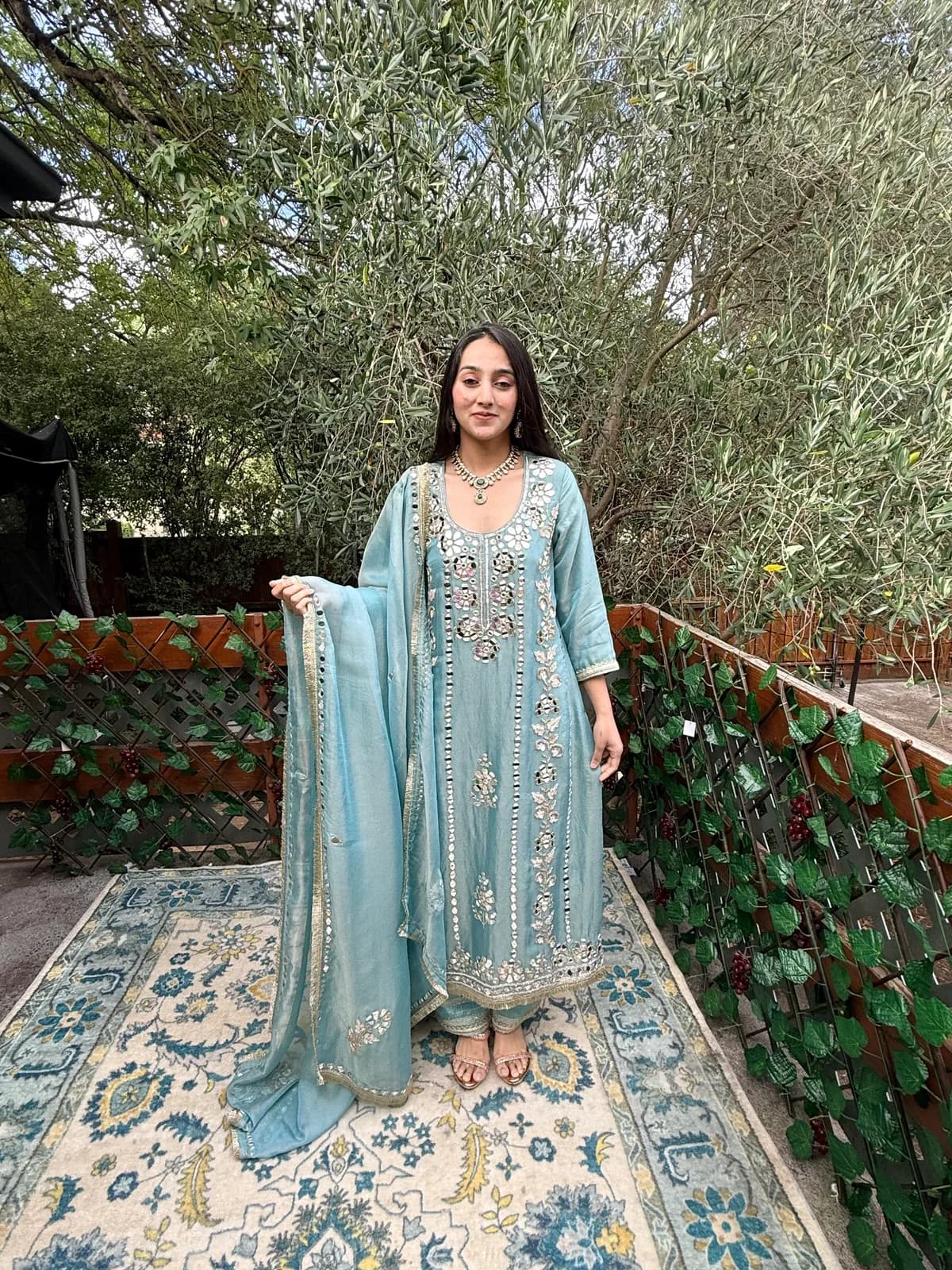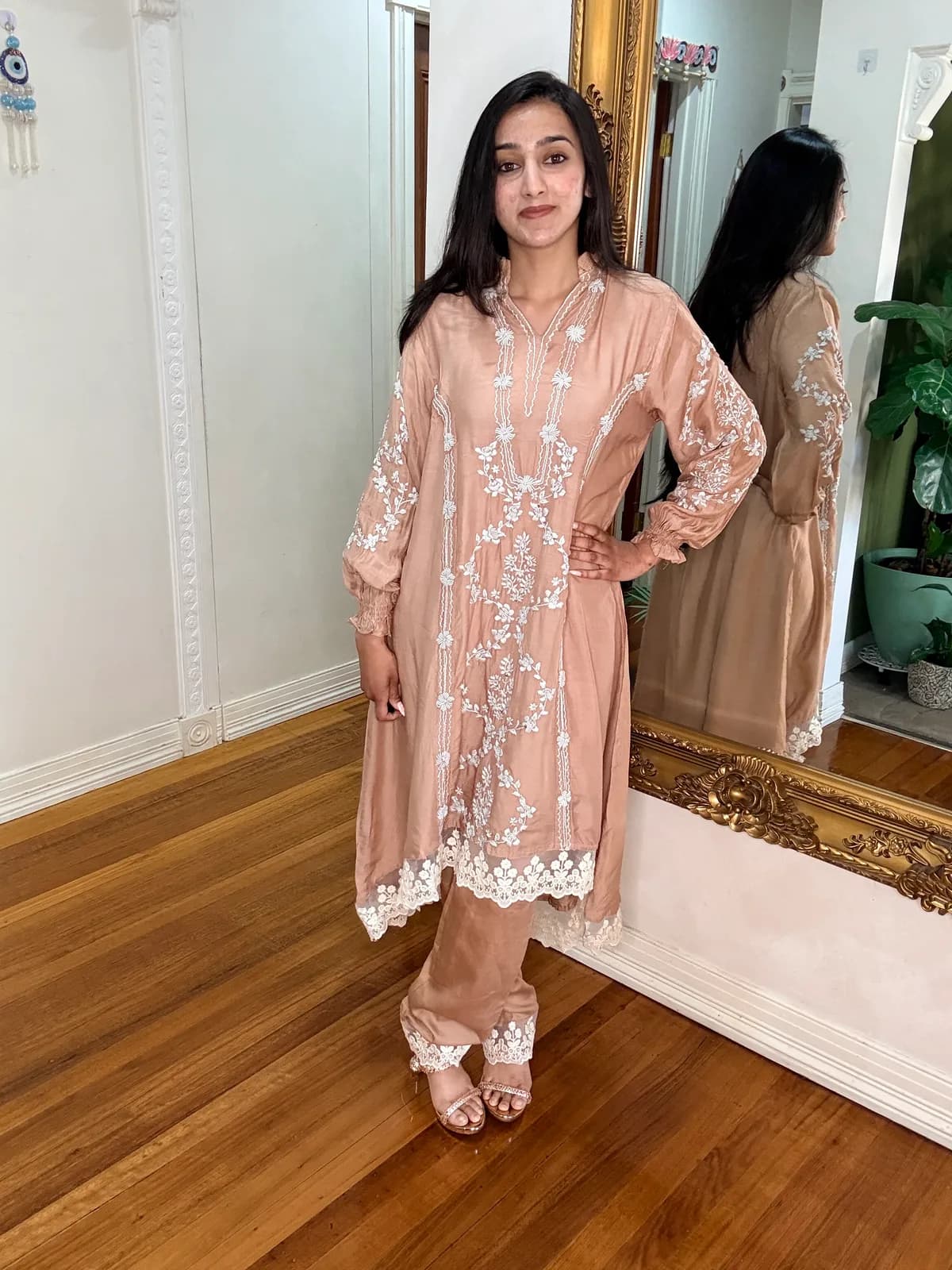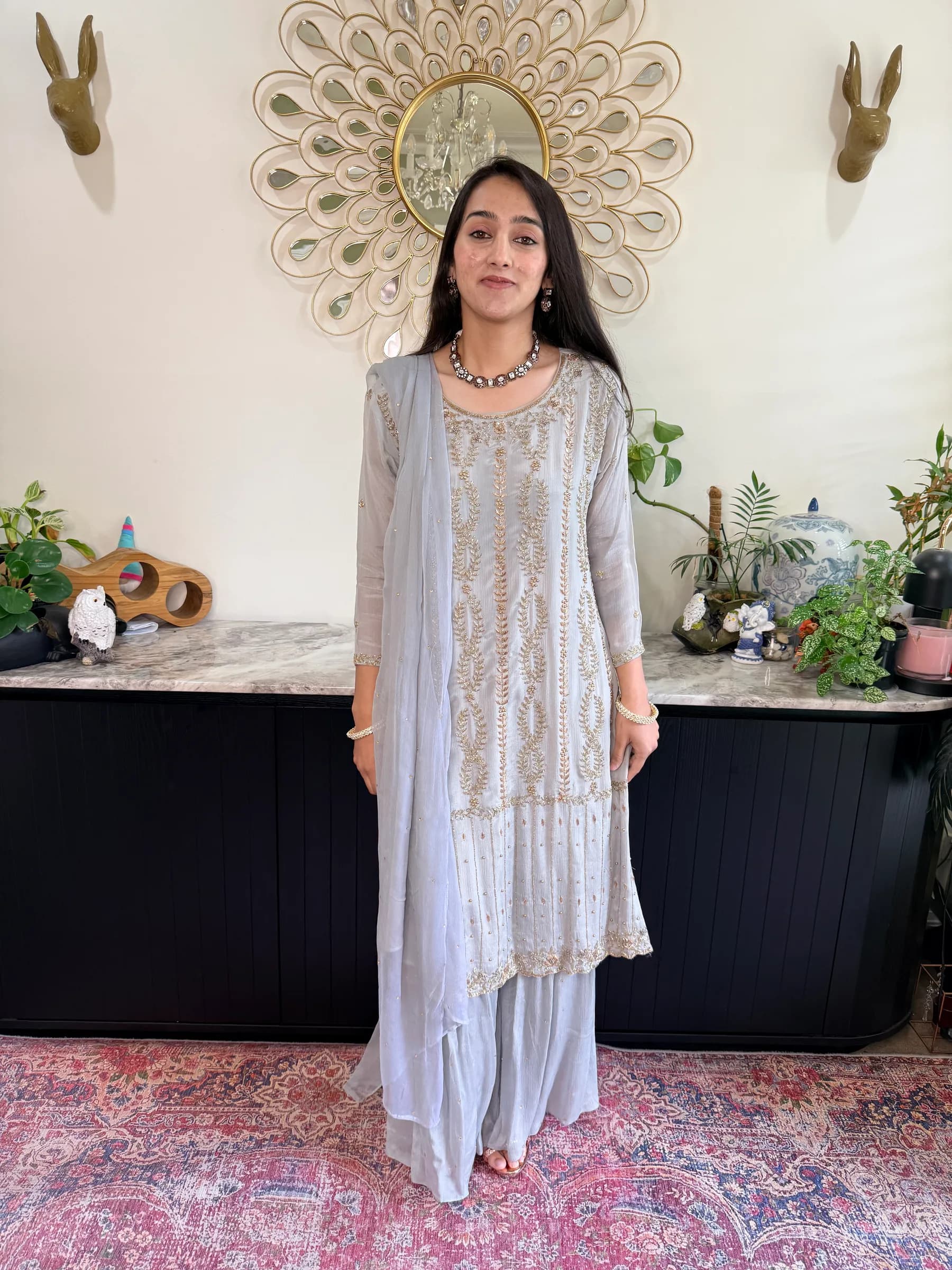
Four words appear constantly on Indian occasionwear and are used by most shoppers as rough synonyms for 'decorated'. They are not synonyms. They describe four techniques with different tools, different training, different costs and — the part that matters once the garment is yours — completely different behaviour in wear.
Gota is applied ribbon. A flat metallic tape is cut, folded and stitched down to form borders, leaf shapes and scalloped edges. Because it is a tape rather than a stitch, gota sits proud of the fabric and catches light along a line rather than at points. It is sturdy under movement, which is why it turns up so often on shararas and festive suits that are meant to be danced in. Its failure mode is snagging: a caught edge lifts the tape, and once lifted it does not lie flat again.
Zardozi is metal thread couched onto the surface, traditionally over a padded outline so the motif stands up in relief. It is the heaviest of the four and the most labour-intensive — the raised surface is built up in passes — and it is why a zardozi panel adds real weight to a garment. It is also the least tolerant of being crushed. A zardozi yoke packed under other clothes in a suitcase comes out with the relief flattened on one side.
Mirror work, or shisha, stitches small reflective discs down with a lattice of thread around each edge. The disc is held by the thread, not glued, which is the thing worth knowing: if the surrounding stitches wear, the mirror goes. It is the most forgiving of the four to wear — flat, light, no relief to crush — and the least forgiving of a washing machine.