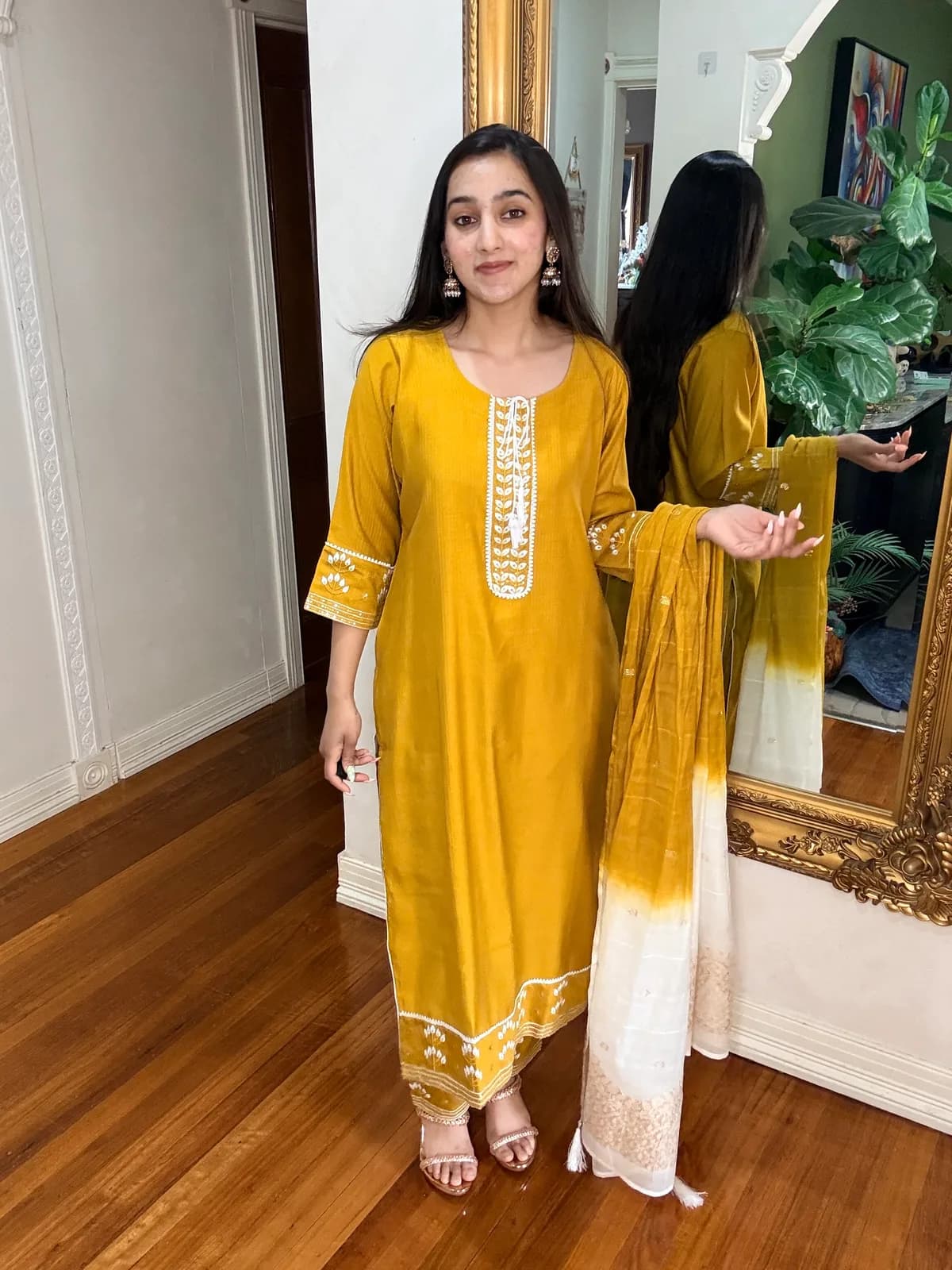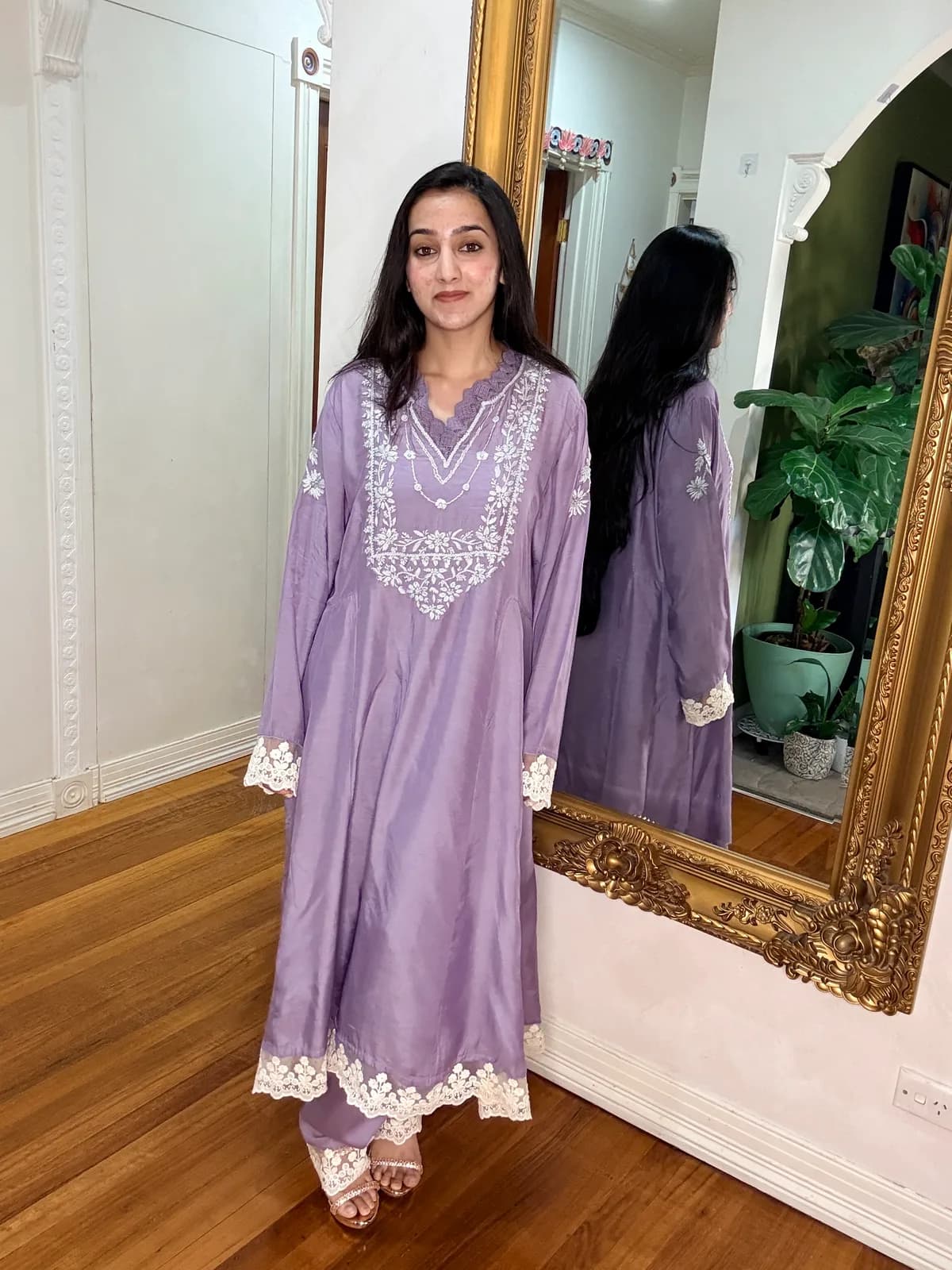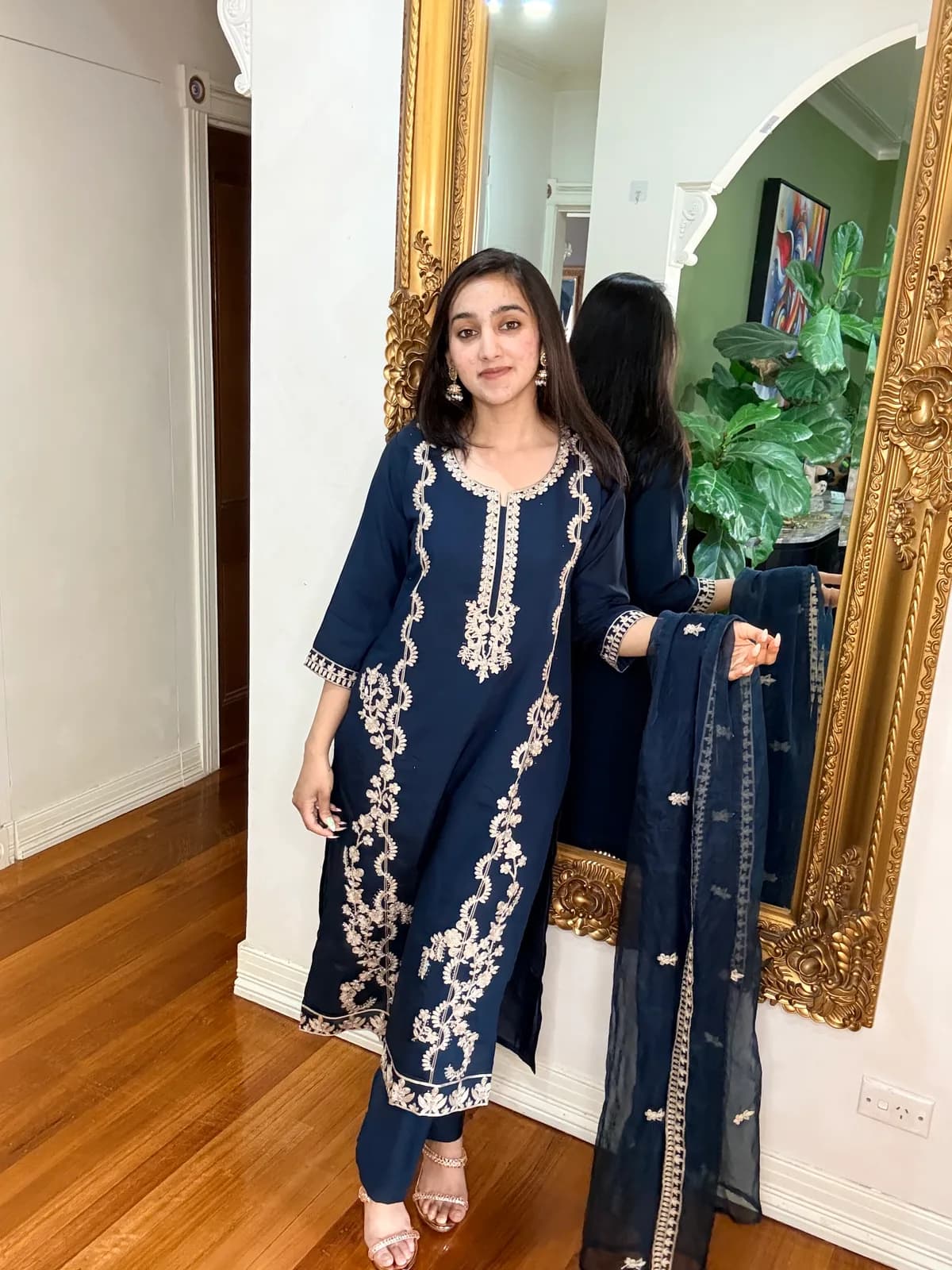
There is a split in Indian clothing that does not translate well once you have left India. A heavily embroidered georgette suit is occasionwear. A plain cotton one is what someone wears to work, to the shops, to a parent-teacher evening. Both arrive here described as 'an Indian outfit', and the second category quietly disappears.
The practical difference is the fabric and the embroidery placement. An everyday kurta set is cotton, cotton-silk, linen or chanderi; the embroidery is concentrated on a placket, a neckline or a cuff rather than spread across the body; and there is no sequin or mirror work, because those are the things that catch on a seatbelt and fail in a domestic wash.
What makes these genuinely useful in an Australian context is that they solve the problem of a 35-degree day in an office. A straight cotton kurta over straight trousers is more covered than a dress and considerably cooler, because the fabric is not touching you anywhere except the shoulders. That is the same reason the silhouette has survived three centuries in a hot country.