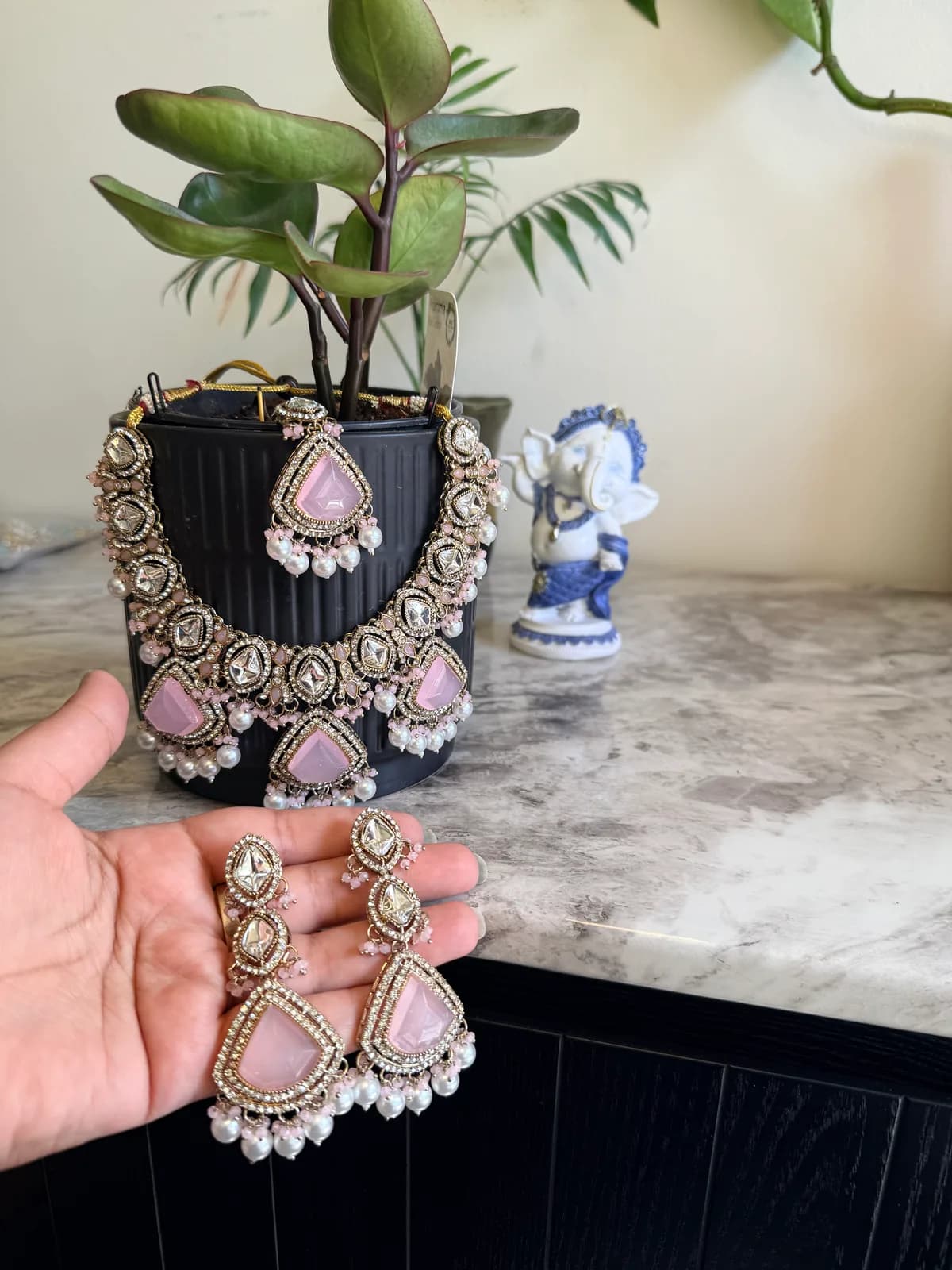
Kundan is a setting technique, not a stone. The method is to hold a flat-backed stone in place with a bed of highly refined, very soft gold foil, worked around the stone by hand until it grips. There is no claw and no prong — the metal itself does the holding. That is why kundan pieces have that characteristic continuous gold surface between the stones rather than visible settings.
Because the technique came out of the Mughal courts and was designed around uncut stones, kundan reads warm and slightly irregular rather than bright and uniform. That matters in a practical way here: Australian function rooms are usually lit warm and low, and a warm, matte-gold piece with coloured stones picks that light up softly, where a bright diamanté set can read flat and glassy under the same conditions.
It is worth distinguishing it from the two words it sits next to. Polki uses uncut natural diamonds, often in a kundan-style setting, and is the most expensive of the three. Kundan proper uses glass or other stones in that foil setting. Diamanté or American diamond is machine-set crystal, uniform and bright. All three are legitimate; they just do different things to a photograph.