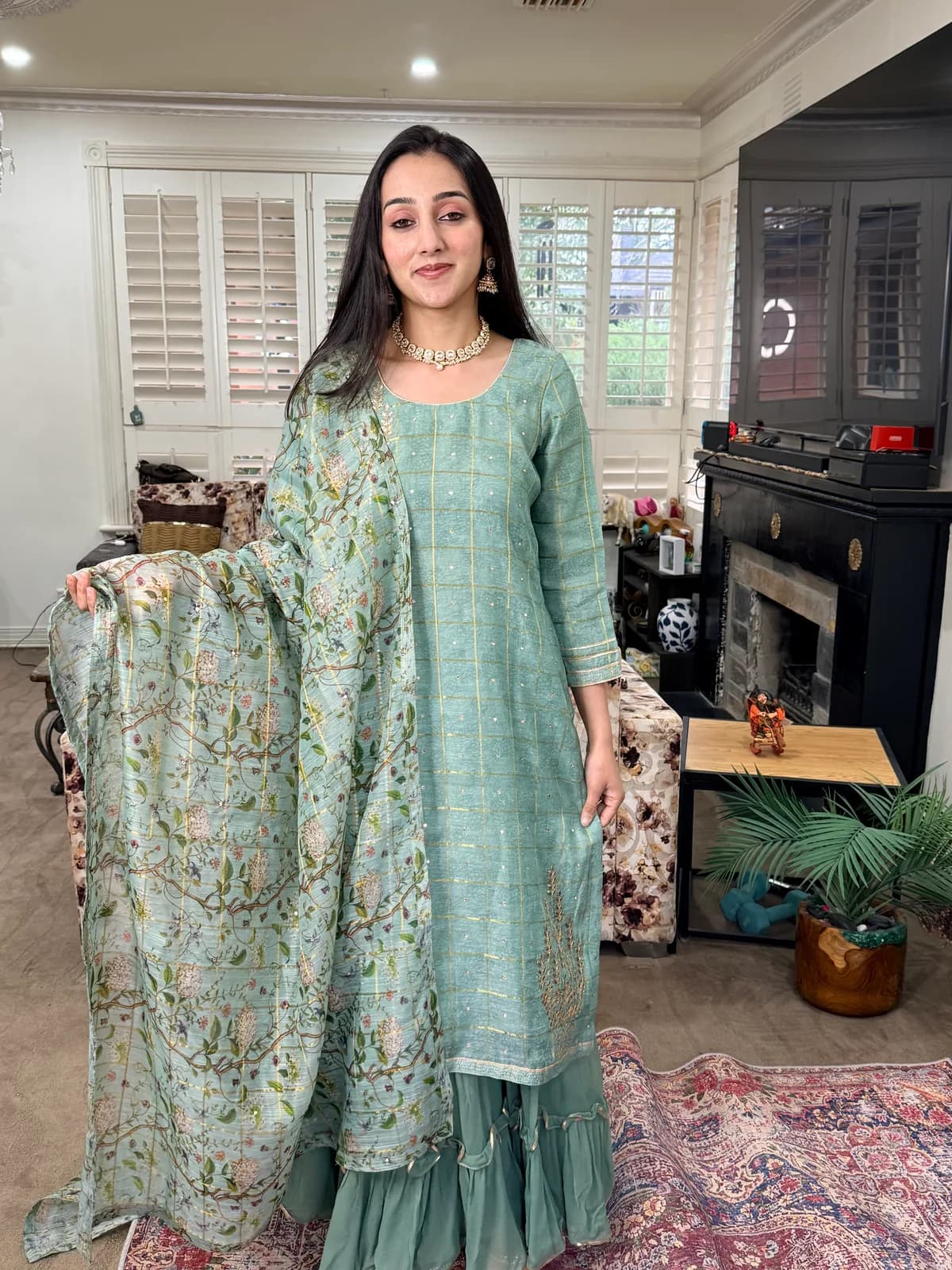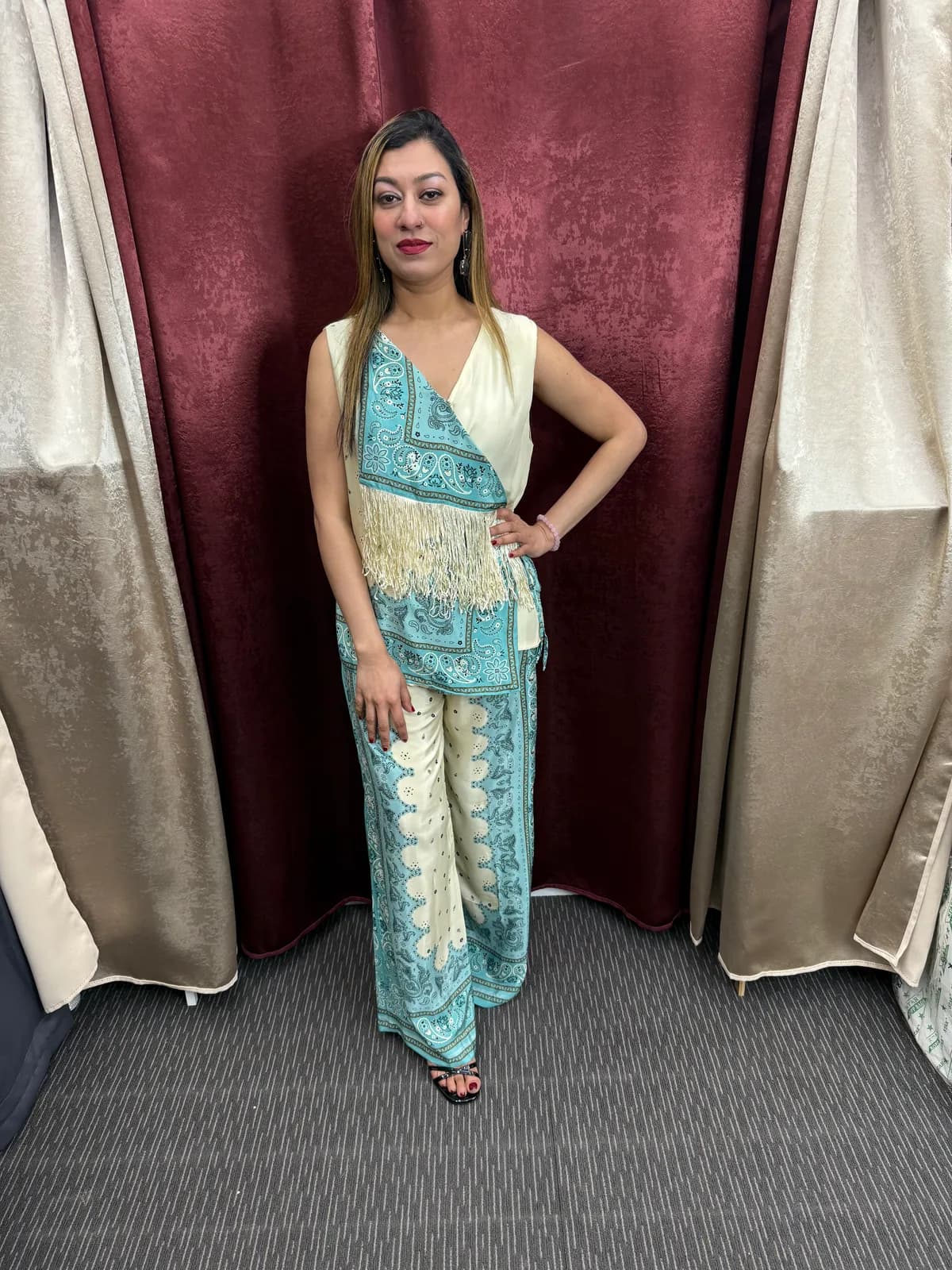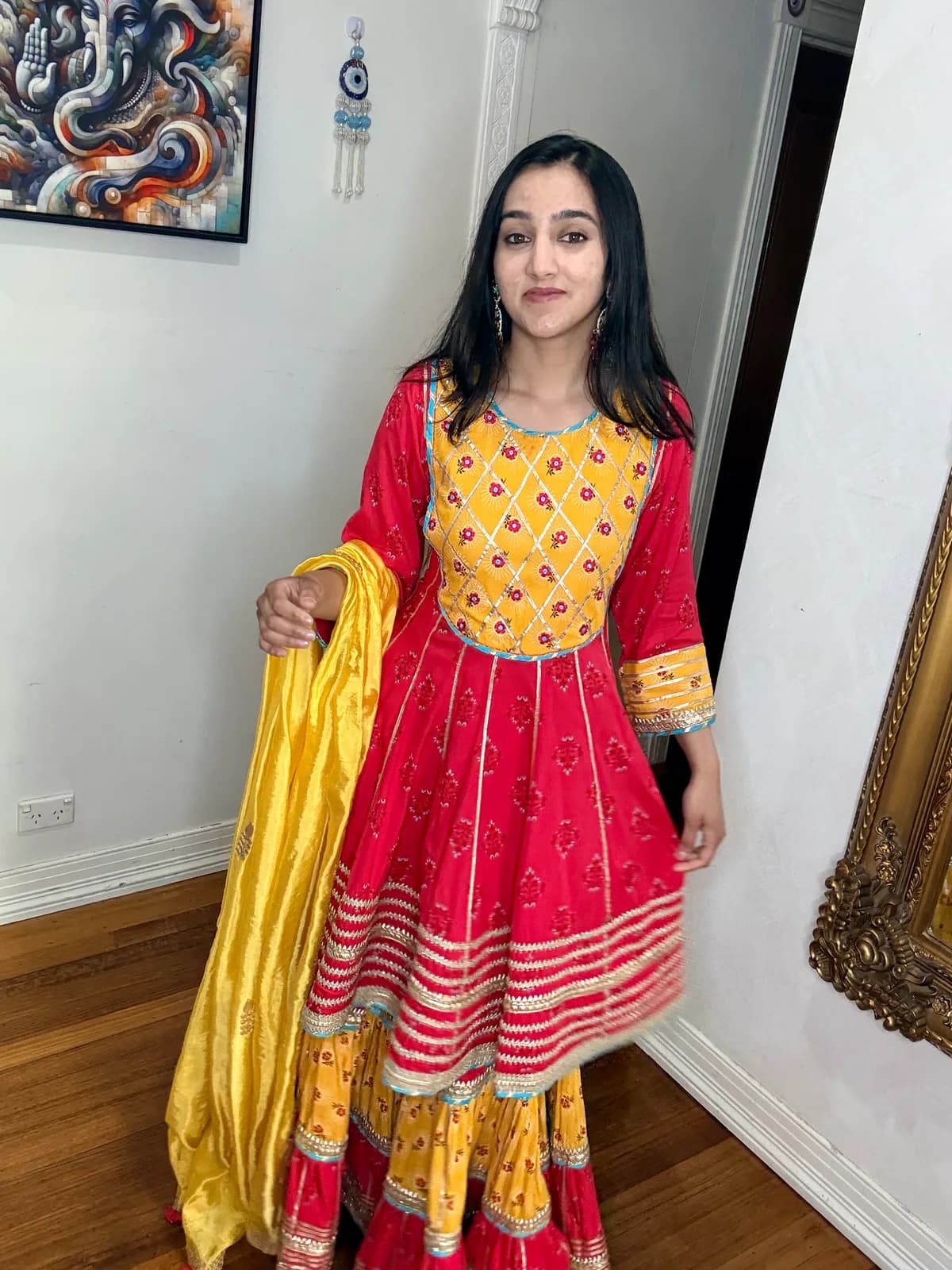
Most occasionwear is designed to be looked at. Garba clothing is designed to be moved in, for hours, repeatedly, usually in a hall with several hundred other people and no air conditioning worth the name. It is the one brief in the calendar where comfort and performance beat formality outright.
The silhouette requirement is simple: the hem has to swing and nothing can need holding. That is why the traditional chaniya choli works so well, and why a sharara has become the modern substitute — the flare is in the leg, so it opens out when you turn and there is no skirt to gather in a hand. Anything that needs one hand to manage costs you half the dance.
The fabric requirement is about sweat and abrasion, which are not the usual considerations. Cotton and cotton-blend printed fabrics come out ahead because they absorb rather than trap, and they survive being worn on consecutive nights. Georgette is acceptable. Heavy net is not — it holds no air and chafes at the waist and underarm after an hour of continuous movement.
The thing that most often ruins a garba outfit is not the garment but the embellishment. Mirror work is the traditional choice here for good reason: it is flat, it is stitched down, and it catches light while you turn. Heavy applied sequins and loose beadwork shed under repeated movement, and a dropped sequin on a dance floor full of bare feet is a genuine nuisance.