These three words get used as though they were interchangeable descriptions of 'a formal Indian outfit'. They are not. They describe three genuinely different constructions, and the difference shows the moment you move.
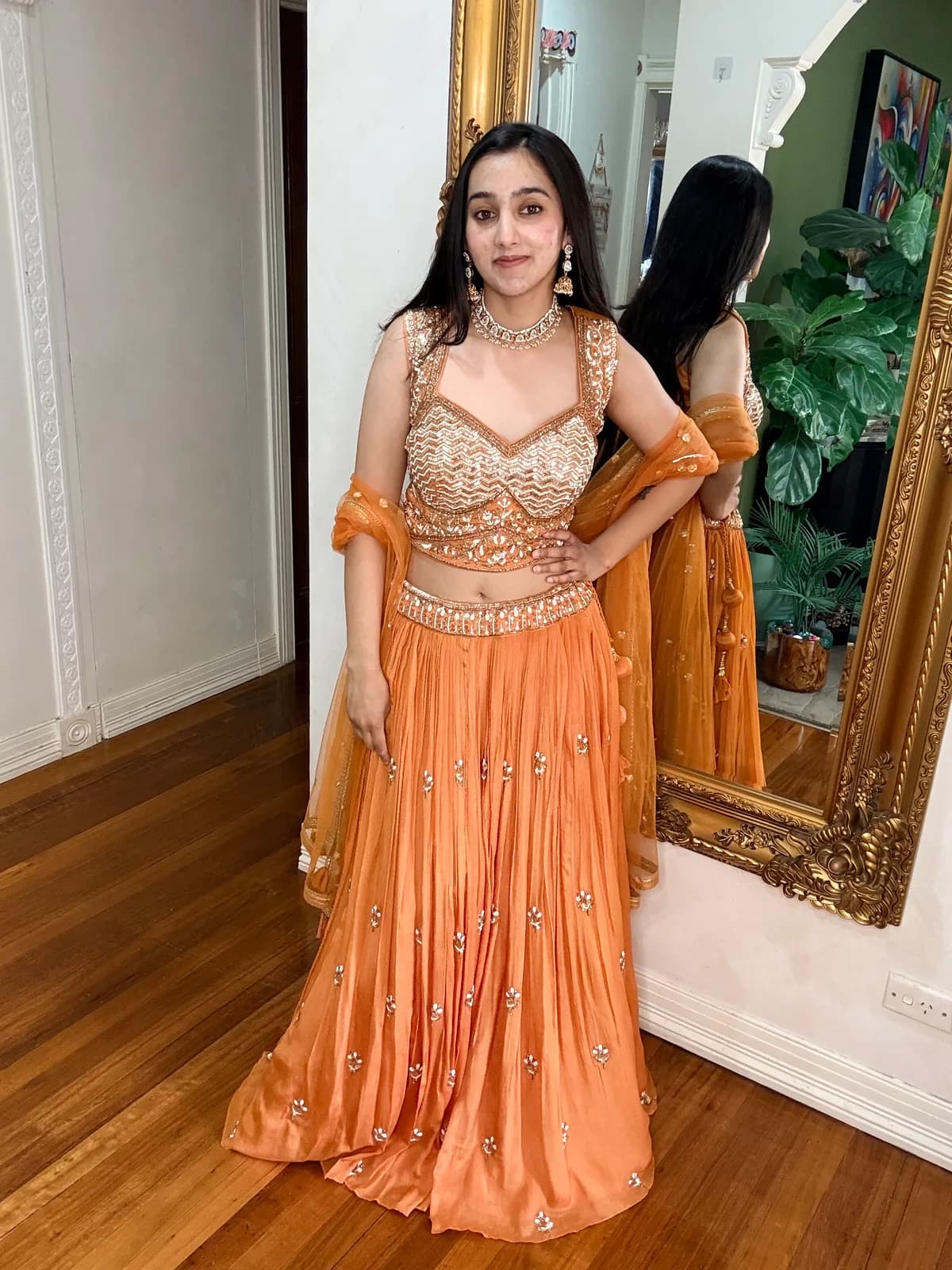
A lehenga is a skirt. It is a separate, usually floor-length piece worn with a cropped or fitted blouse and a dupatta. The volume is in the skirt, held at the waist, and the three pieces are independent — which is why a lehenga gives you the most room to restyle later. The skirt can be worn with a different blouse; the dupatta can be draped half a dozen ways.
A sharara is trousers. The flare is cut into the leg itself, usually from the knee down, so what reads as a skirt when you are standing still turns out to be two very wide legs when you walk. There is nothing to hold and nothing to step on, which is why it is the silhouette people who intend to dance tend to reach for.
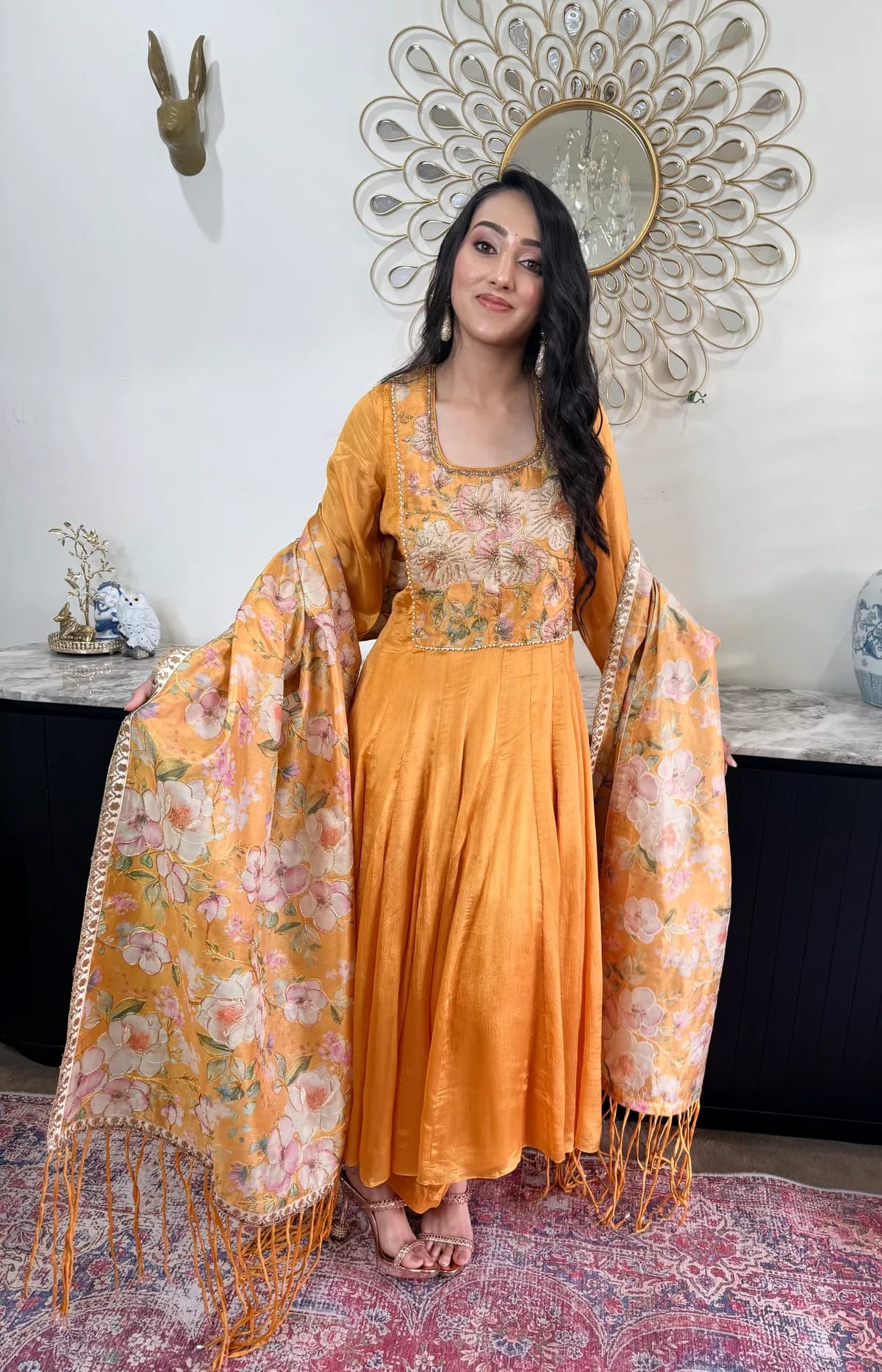
An anarkali is a dress. A fitted yoke flares into a long, often floor-length panel, worn over churidar or straight trousers. The line is continuous from shoulder to hem — there is no waist seam breaking it — which is why it reads as the most formal of the three even when the fabric is light.