An Indian wedding in Australia is rarely one event. There is usually a mehendi somewhere informal, a sangeet that runs late, the ceremony itself, and a reception in a venue that was built for a different kind of party. Each asks something different of what you wear, and the gap between them is wider here than it is at home — you might go from a backyard in forty-degree heat to a function centre with the air conditioning set to arctic.
The honest first question is not which silhouette is most beautiful. It is how long you will be standing, how far you are travelling between venues, and whether you will be sitting on the floor at any point. Those three answers narrow the field faster than any amount of scrolling.
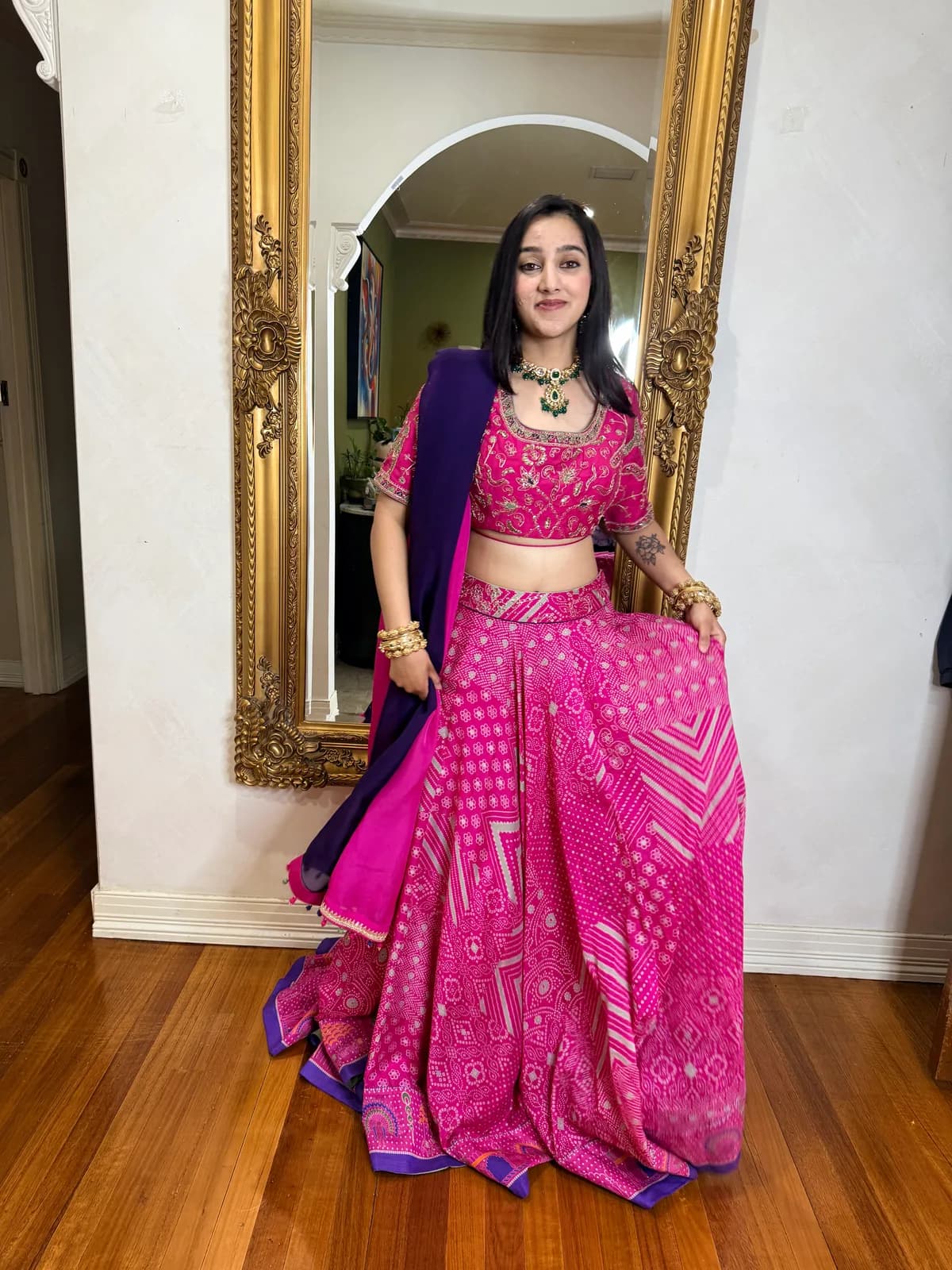
For the ceremony, a lehenga still does the most work. The weight sits on the hips rather than the shoulders, the skirt gives you room to sit cross-legged without rearranging yourself, and a dupatta can be draped over the head when the moment calls for it and dropped when it does not.
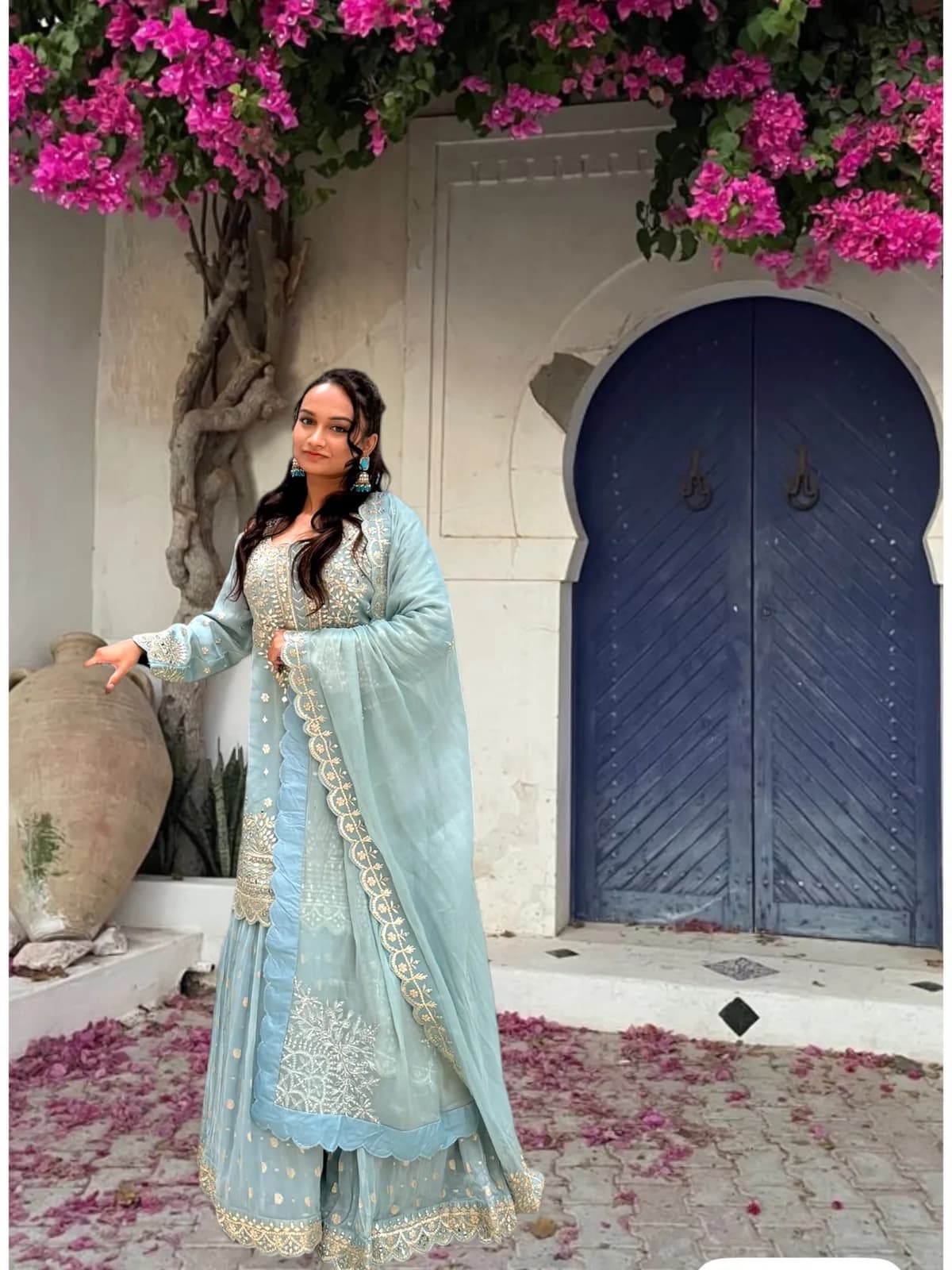
For a sangeet, where you will actually dance, a sharara is the quietly practical answer. The flare is cut into the trouser rather than a separate skirt, so there is nothing to hold, step on or hand to someone while you are on the floor.
For a reception, a ready-to-wear saree removes the one variable nobody wants on the night — whether the drape will hold for six hours. The pleats are stitched, so it goes on like a garment and stays where it was put.