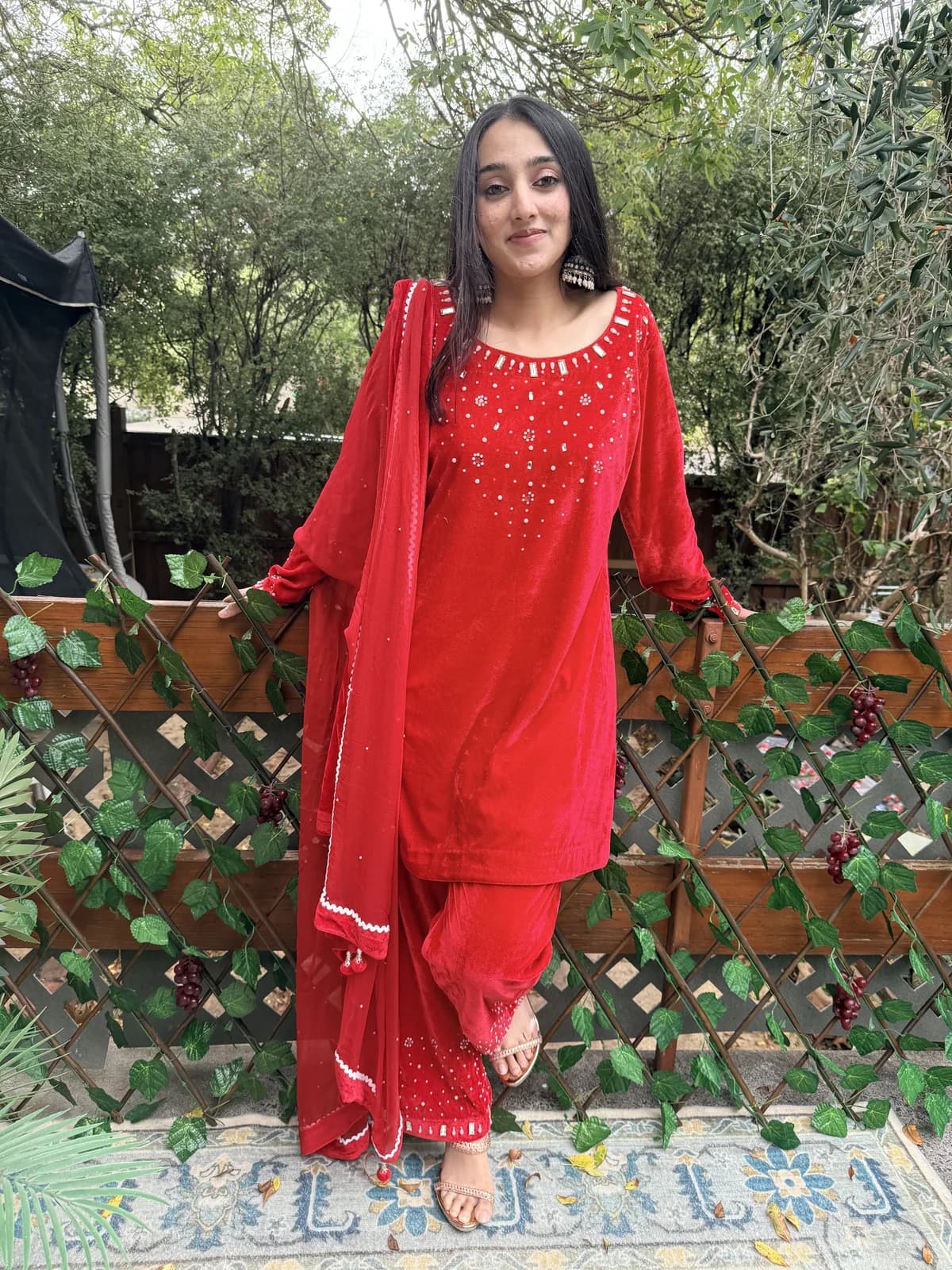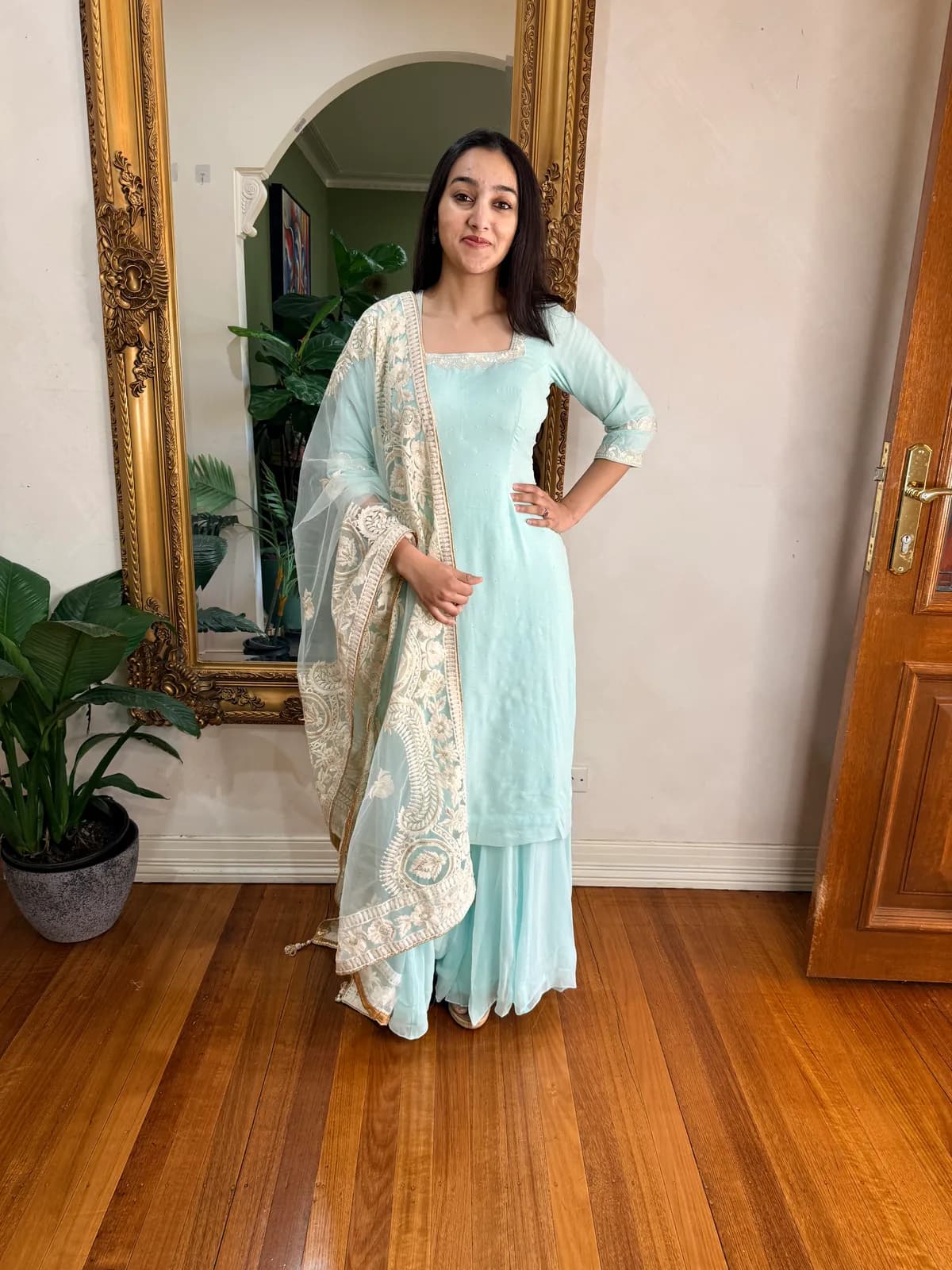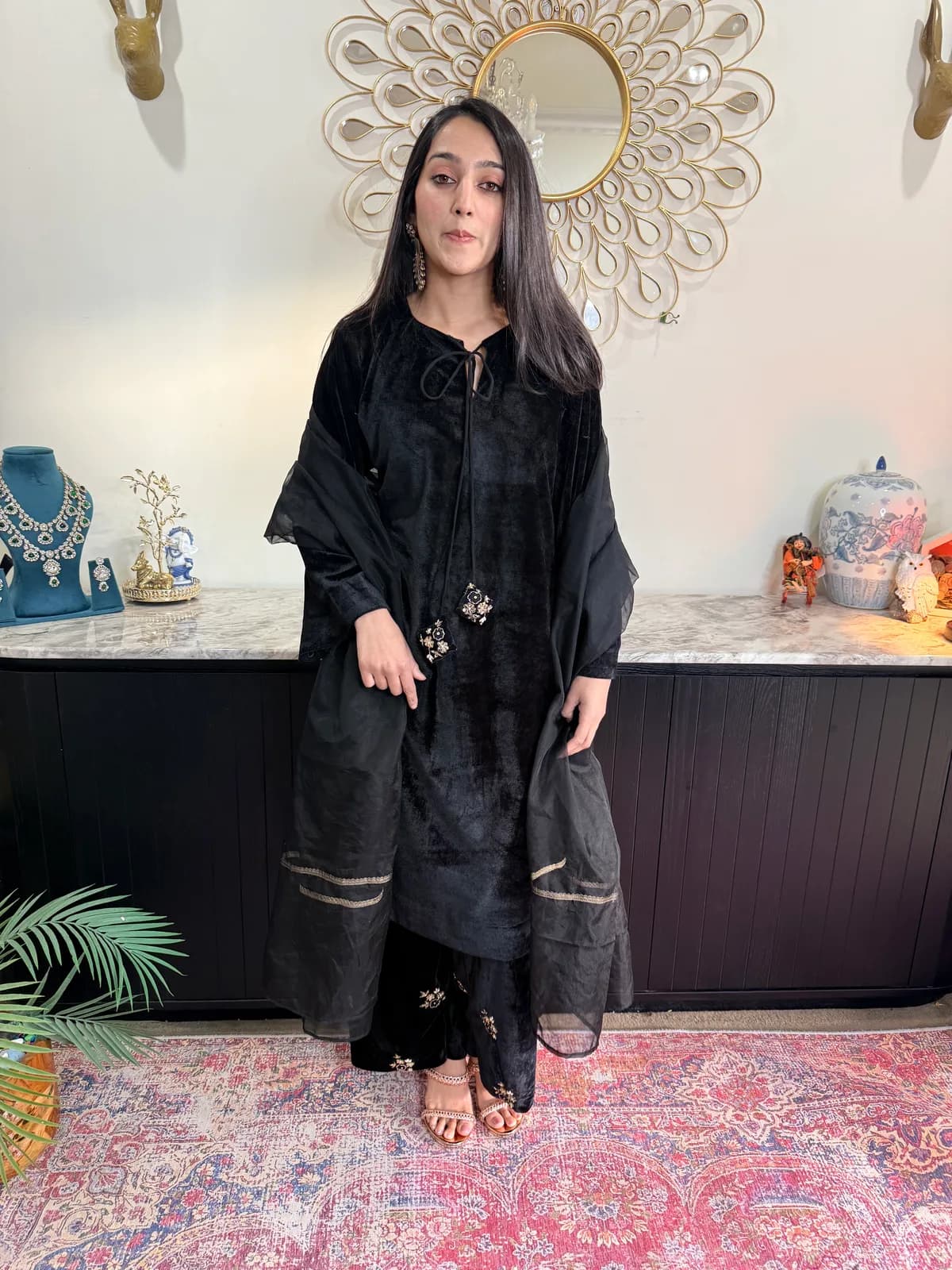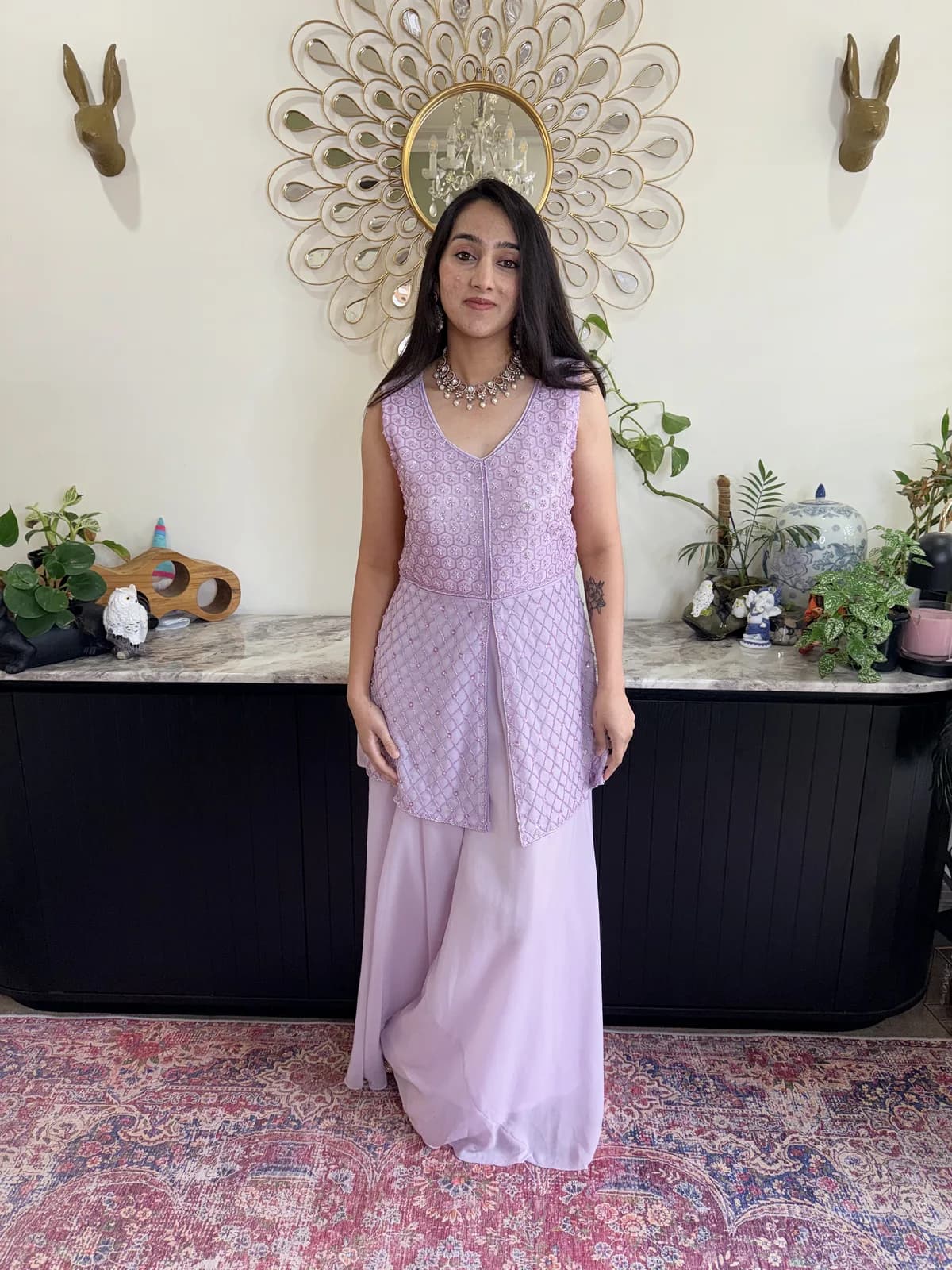
The top half of an Indian outfit gets all the attention and the bottom half gets four interchangeable-sounding names. They are not interchangeable. The cut of the trouser decides how the whole outfit moves, how long your legs read, and whether you can sit cross-legged on a floor without thinking about it.
A salwar is wide at the hip and tapers to a narrow, cuffed ankle, with the fullness gathered into a waistband. The patiala version takes that gathering to an extreme — deep, hanging pleats that fall from the waist and swing. It is the most generous cut to sit in and the most traditional-looking of the four, which is both the reason to choose it and the reason it reads as the least modern.
A churidar is the opposite: cut long and narrow so the extra length bunches into horizontal folds at the ankle, which is where the name comes from. It is fitted the whole way down the leg. It is the cut to wear under an anarkali, because the anarkali supplies all the volume and a wide trouser underneath would fight it.
A palazzo is a straight, wide leg from waist to floor — no taper, no gathering at the ankle, a single clean line. It is the most contemporary of the four and the most flattering on most people, because an unbroken vertical reads as length. It is also the one most likely to be too long: a palazzo is cut to skim the floor in a heel, and in flats it drags.