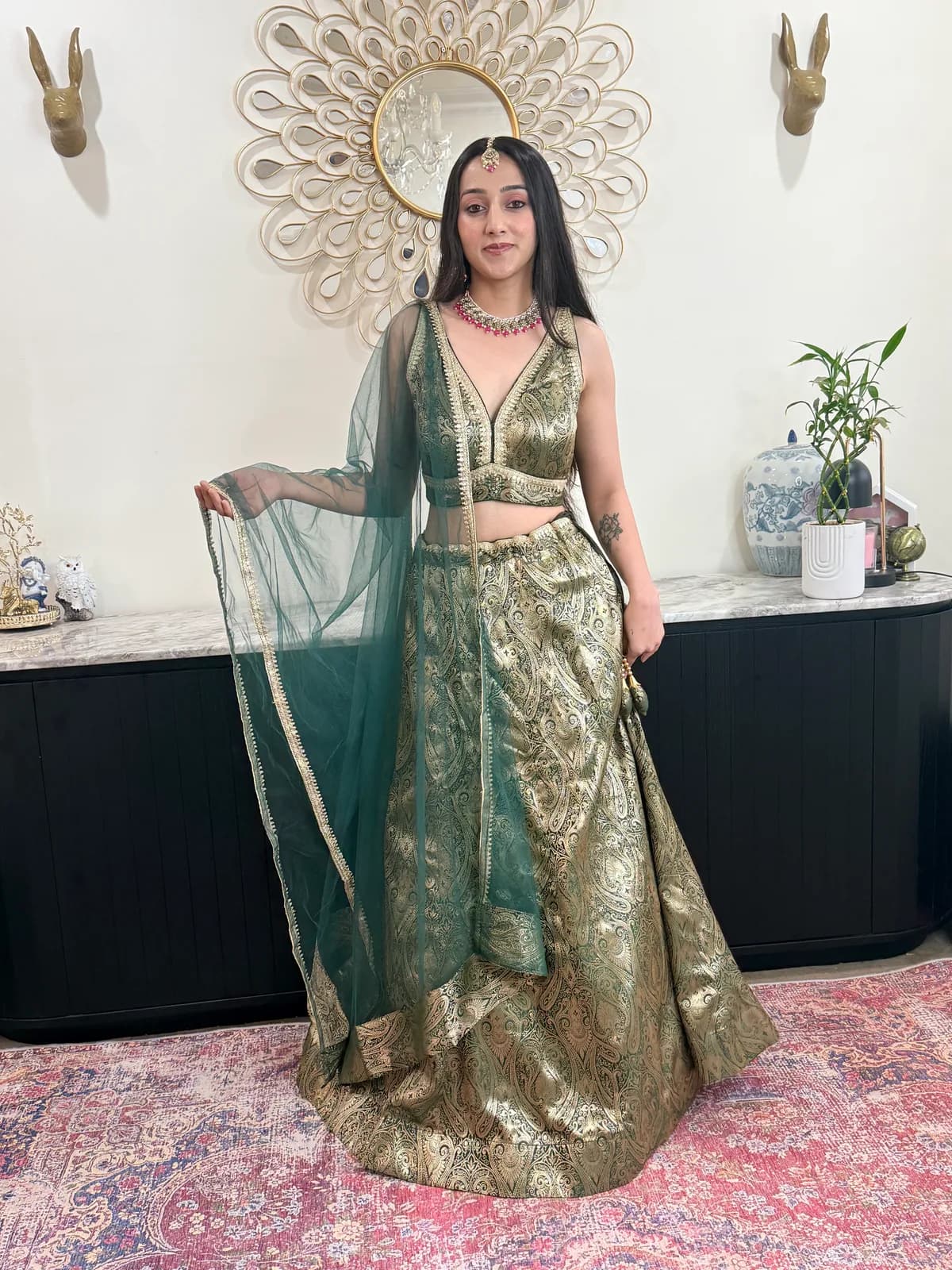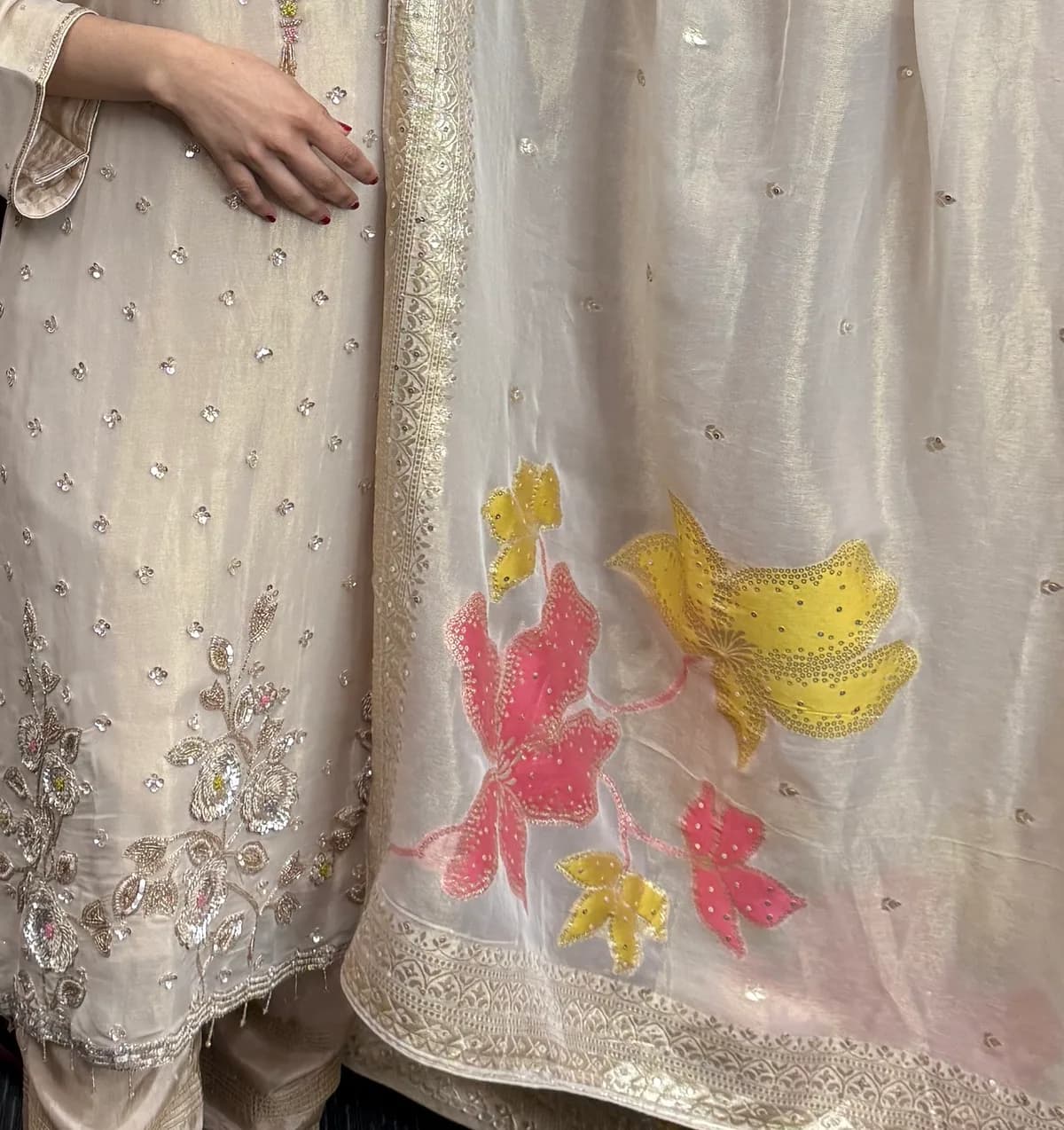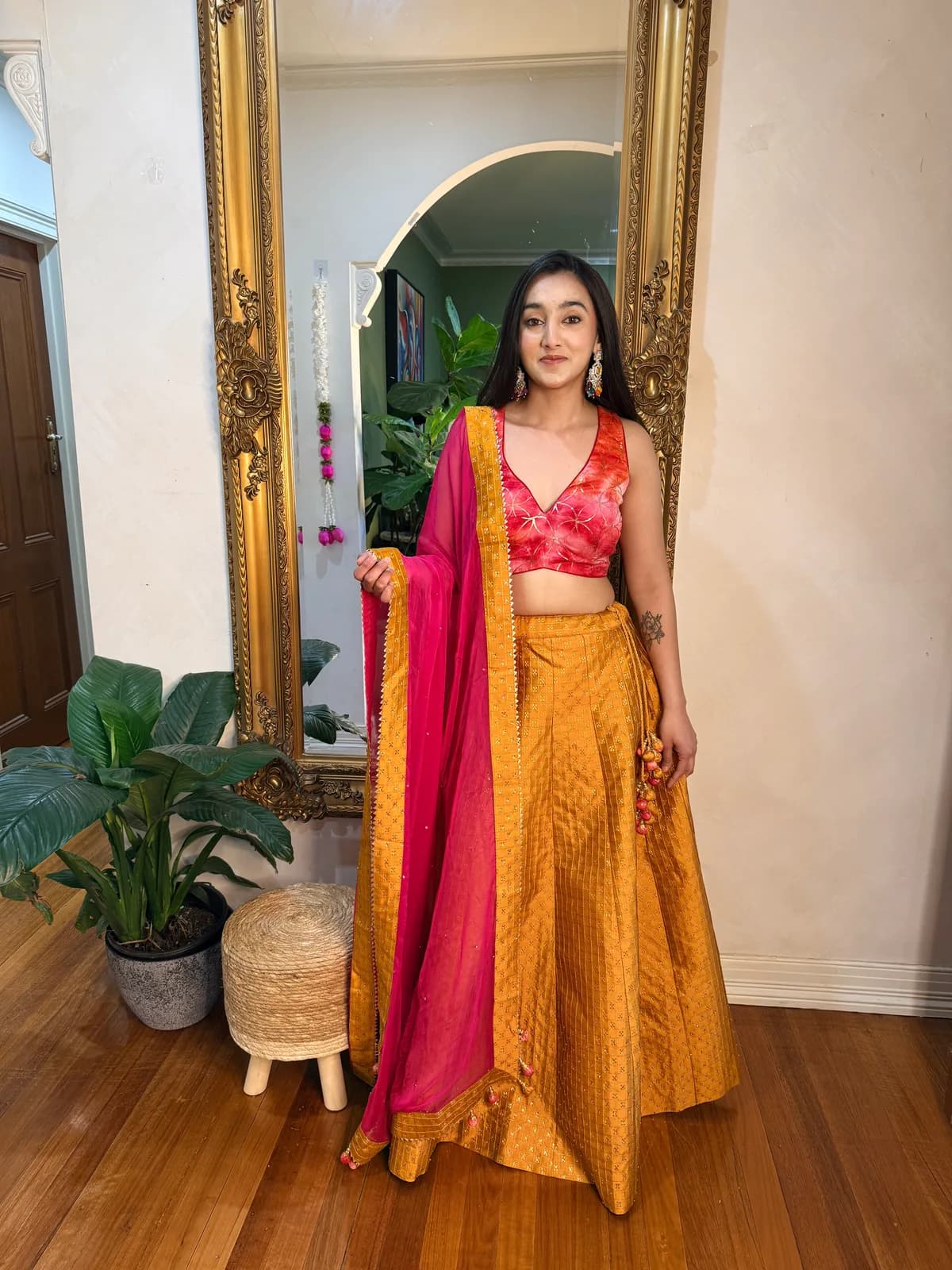
Banarasi is a place before it is a fabric. The word describes cloth woven in and around Varanasi, on looms that have been doing a particular kind of figured weaving for centuries. It is not a motif you can print and it is not a colourway — it is a construction.
The technique at the centre of it is brocade: extra weft threads, usually metallic zari, carried across the width of the cloth and raised to the surface only where the pattern needs them. The pattern is built into the weave rather than applied on top of it. That is the single most useful thing to know, because it is also how you tell a woven Banarasi from a printed imitation — turn the fabric over. A brocade has a reverse. You will see the floats of the extra weft where the motif sits, and a slightly rougher, more irregular surface than the front.
The weight follows from the same fact. Because the zari is woven in, a Banarasi carries its weight evenly through the whole cloth rather than in patches, which is why a Banarasi lehenga hangs in that particular heavy, swinging way. It is also why it does not drape softly: the fabric has body, holds a pleat, and stands away from the leg.
The motif vocabulary is distinctive but not exclusive — buta and butidar florals, jaal lattices, the jhallar border, and Mughal-derived vine patterns. Those turn up on printed fabric everywhere. The vocabulary is a hint; the reverse of the cloth is the evidence.