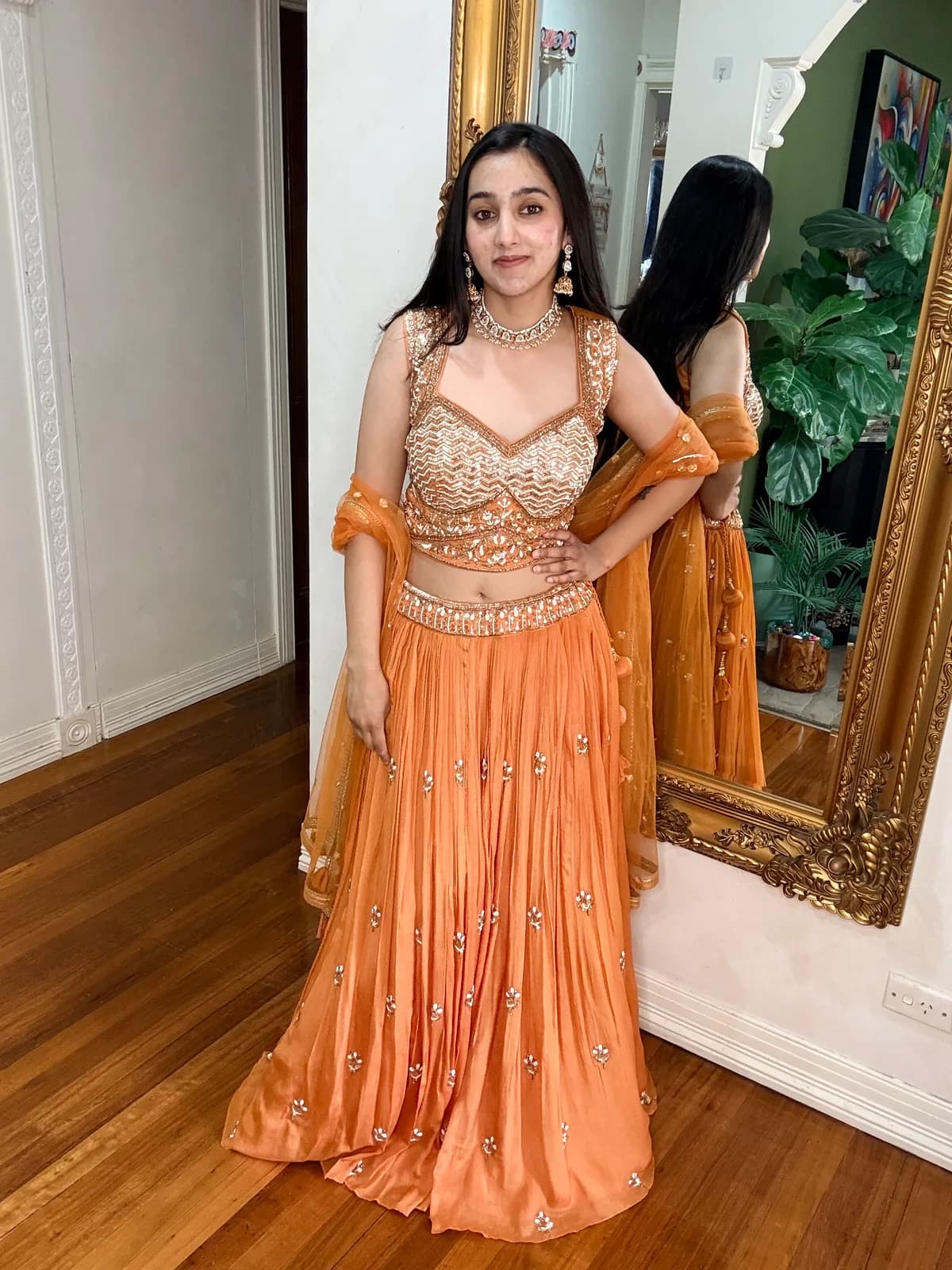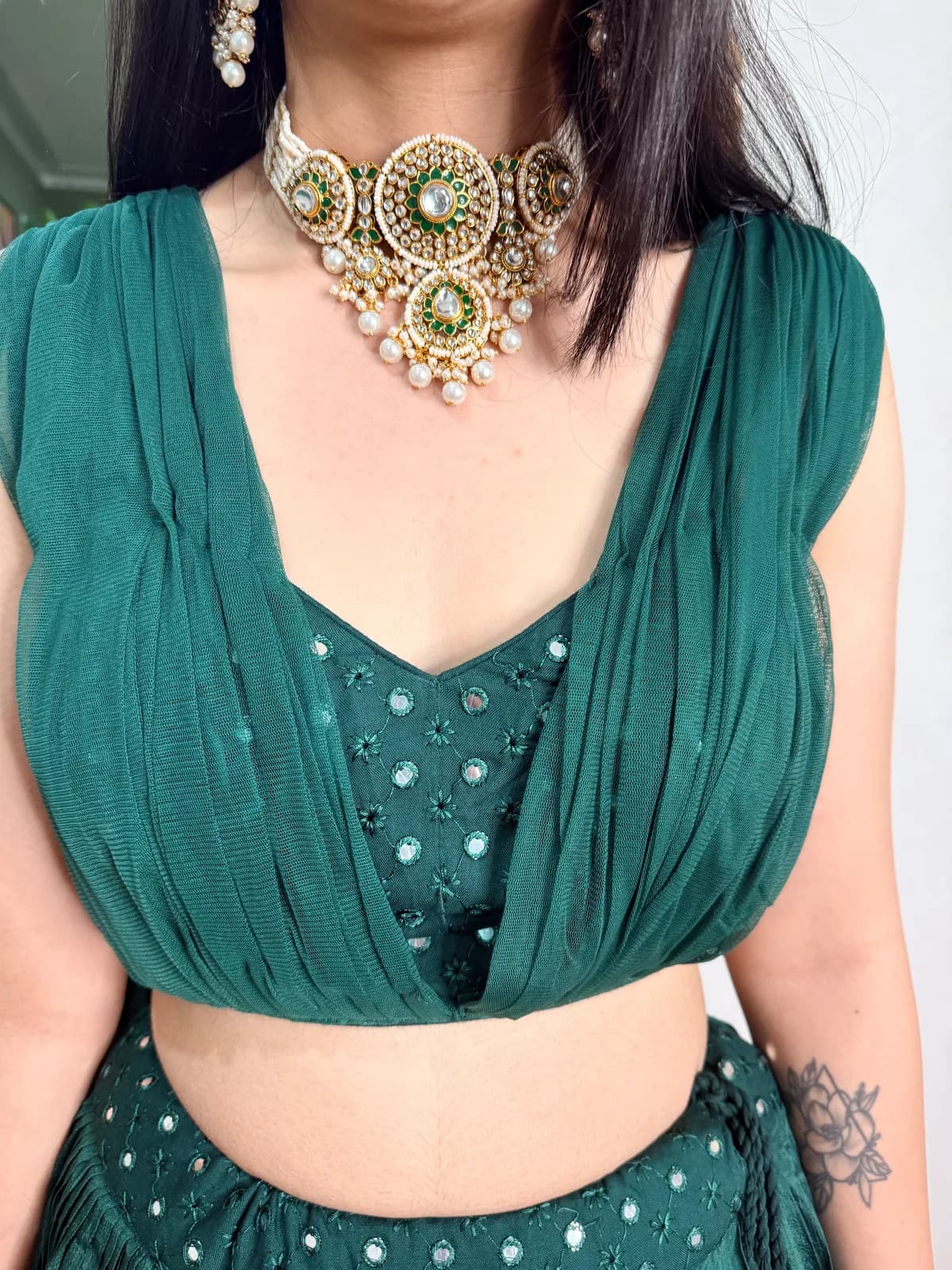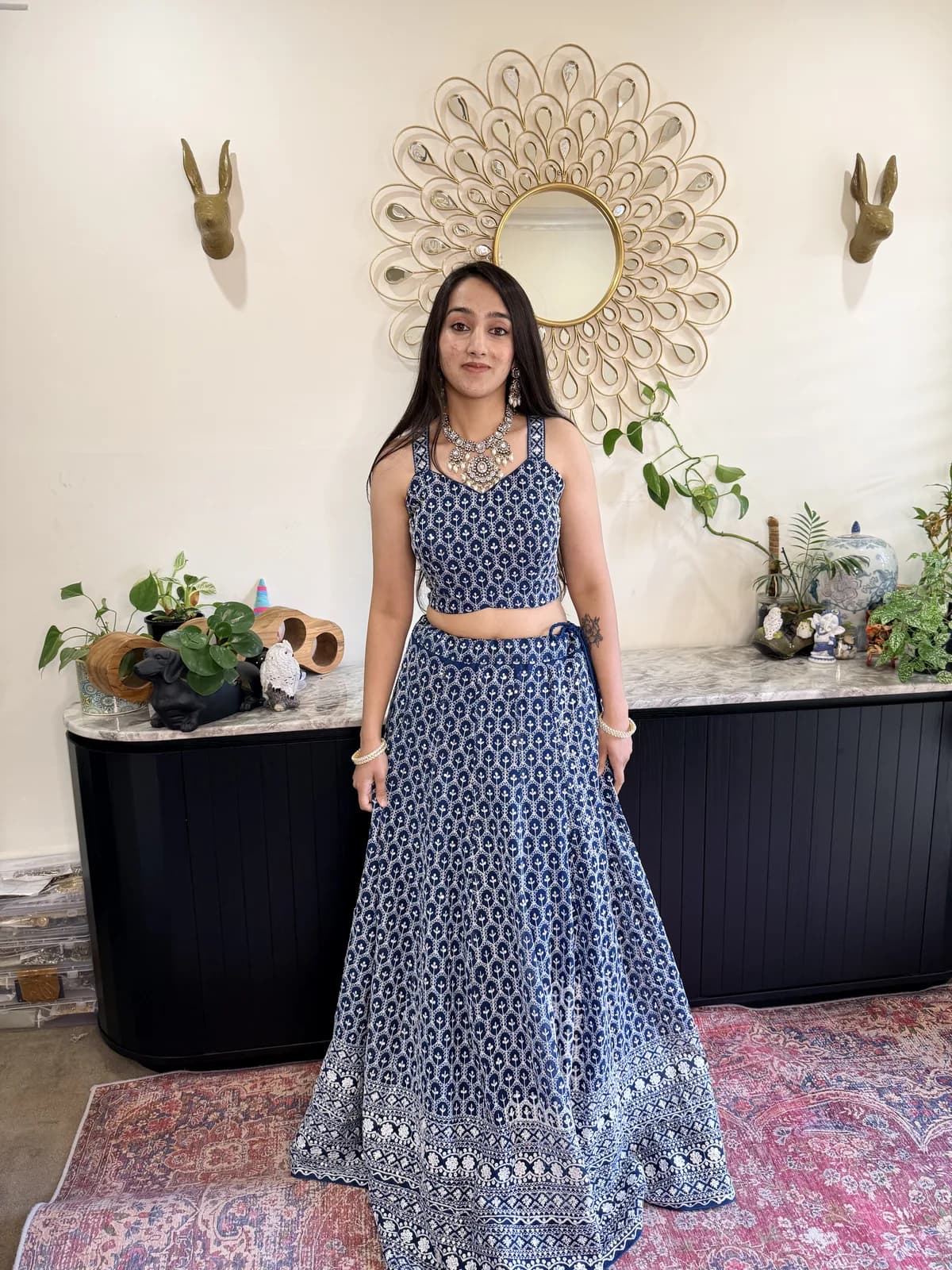
A lehenga is usually the largest single purchase in an Indian wardrobe, and it is almost always bought for one specific event, three weeks out, from a shortlist assembled in an evening. That combination produces a predictable set of regrets, and most of them are avoidable by deciding six things deliberately rather than by default.
The first is weight, and it is the one people underestimate most. A heavily worked lehenga skirt can weigh several kilograms, all of it hanging from your waist. Over six hours that is not a minor fact — it changes your posture and it decides whether you dance. If you have never worn one, assume you want less weight than you think you do.
The second is the flare, which is really a question about photographs versus movement. A heavily flared skirt with many panels gives the circular silhouette that lehengas are bought for, and it takes up a great deal of room when you sit at a table of ten. A narrower, A-line or fish-cut skirt reads more modern, moves more easily, and photographs less dramatically. Both are correct; they are different garments.
The third is the blouse, and this is where the reuse lives. A blouse cut as a genuine standalone piece — a corset, a structured crop, a jacket — can be worn afterwards with a palazzo, a saree drape or a plain skirt. A blouse cut to match the lehenga's embroidery exactly will only ever be worn with that lehenga. If you want the outfit to have a life after the event, this is the decision that determines it.