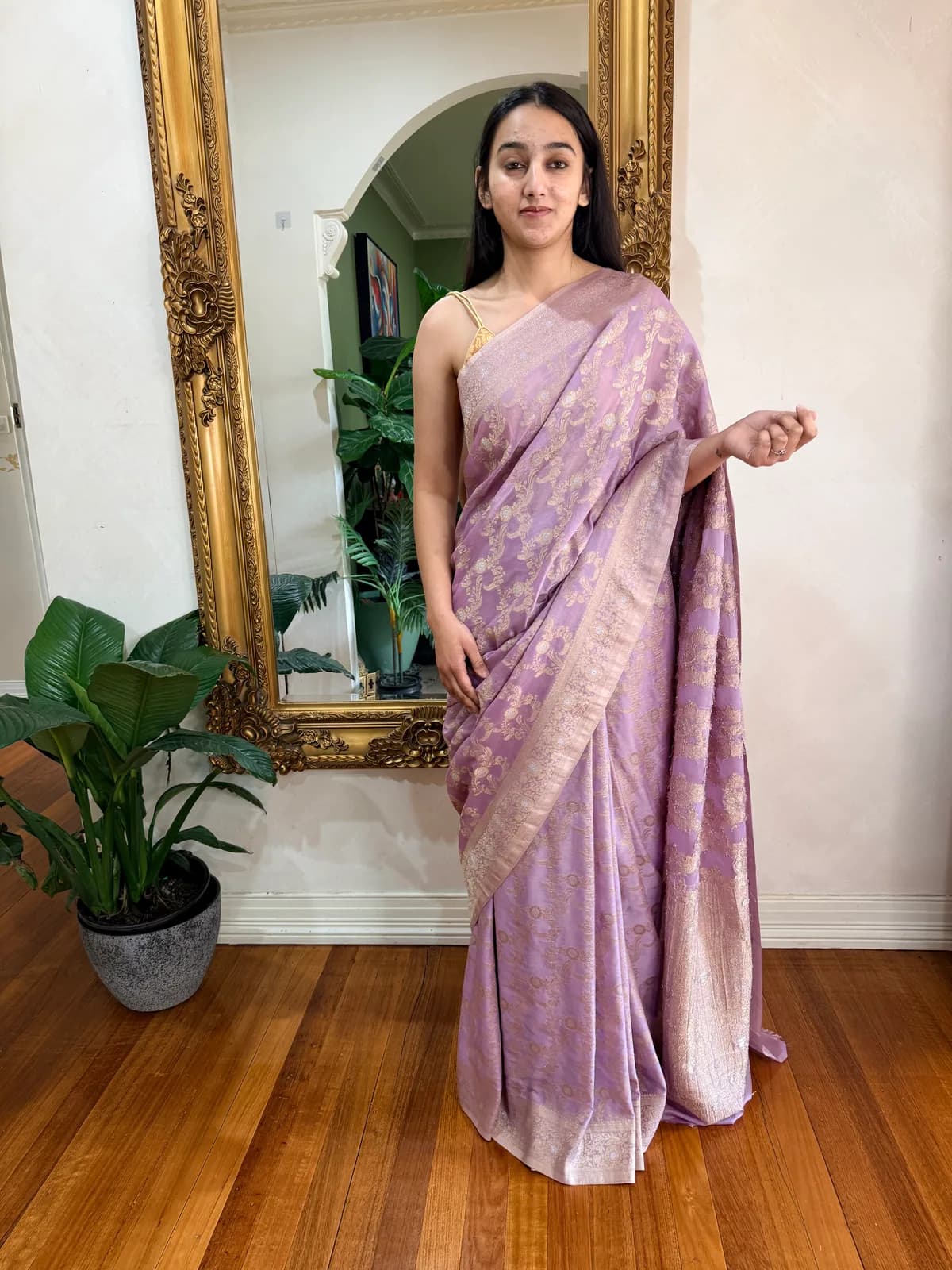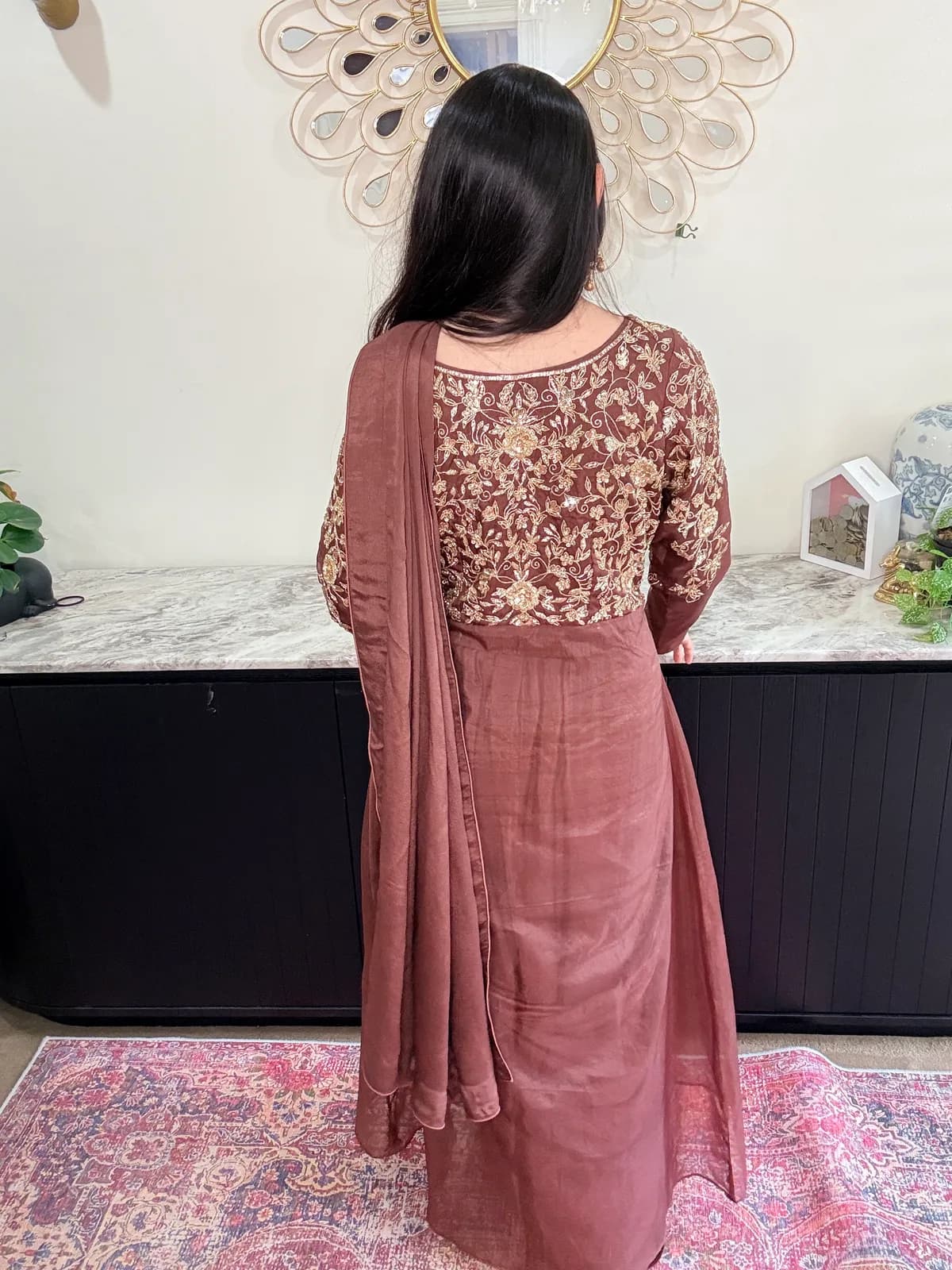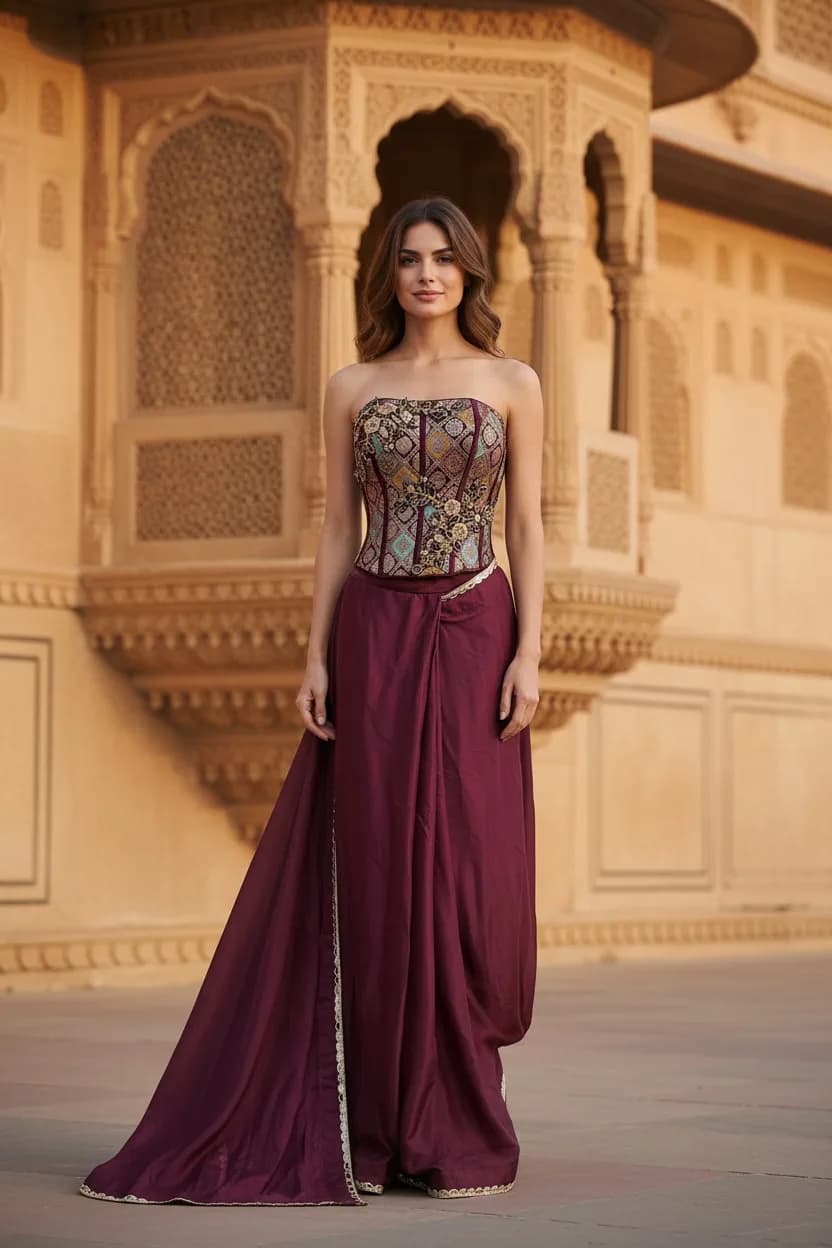
The pre-draped saree gets dismissed as a saree for people who cannot drape one. That is not what it is. Stitching a drape converts a garment that is adjusted every time you wear it into one that is fixed once, and that conversion has real gains and real losses. Which you want depends on the occasion, not on your skill.
The gain is predictability. A traditional saree is six metres of unstitched cloth, which means the pleat depth, the pallu length and the fall all get decided fresh each time — and they shift over an evening as the fabric settles and you move. A pre-draped saree has those decisions sewn in. It looks on hour six the way it looked on minute one, and it takes about ninety seconds to put on.
The loss is adjustability, in two directions. A traditional saree fits a range of bodies and will keep fitting you through the changes a decade brings, because nothing is fixed. A stitched one fits the measurements it was made to. And a traditional saree can be draped a dozen ways — Nivi, Bengali, seedha pallu, a trouser drape — while a stitched one can be worn exactly as it was built.
There is a third consideration people discover late: a pre-draped saree is harder to alter well. The drape and the pleating are structural, so letting out a waist means unpicking and re-forming the drape rather than moving a seam. That is a reason to be more careful about size on a stitched saree than on almost anything else.