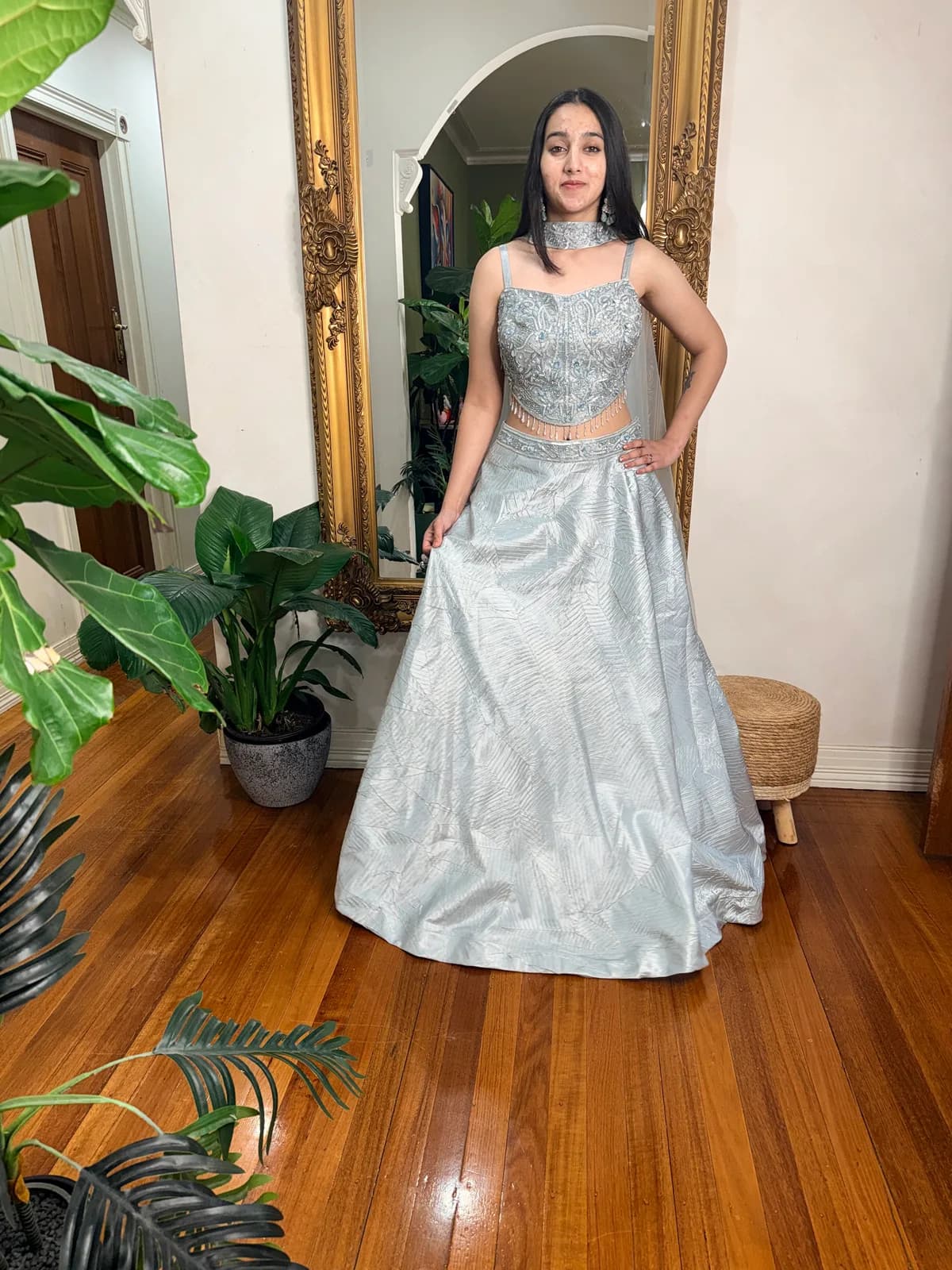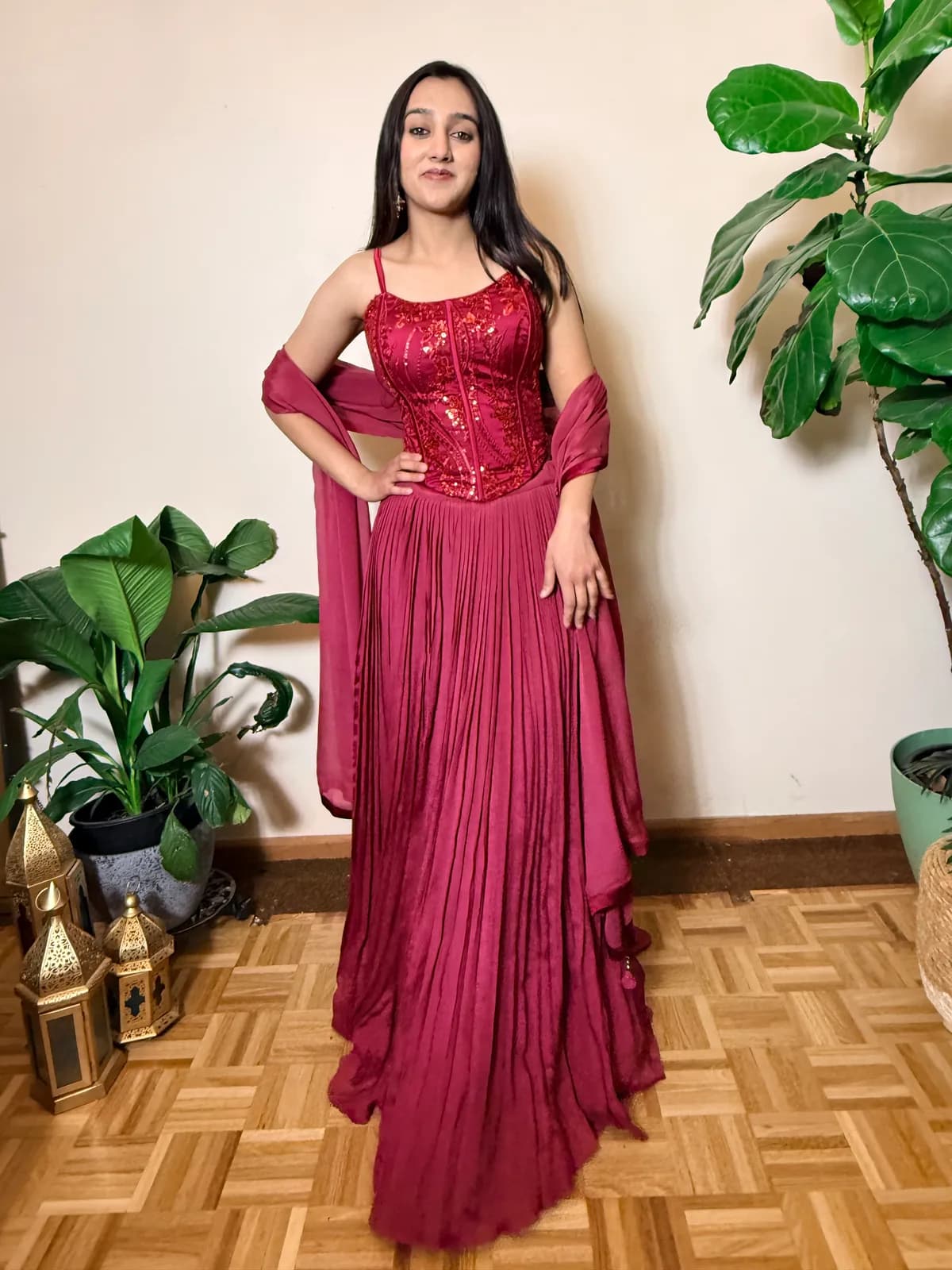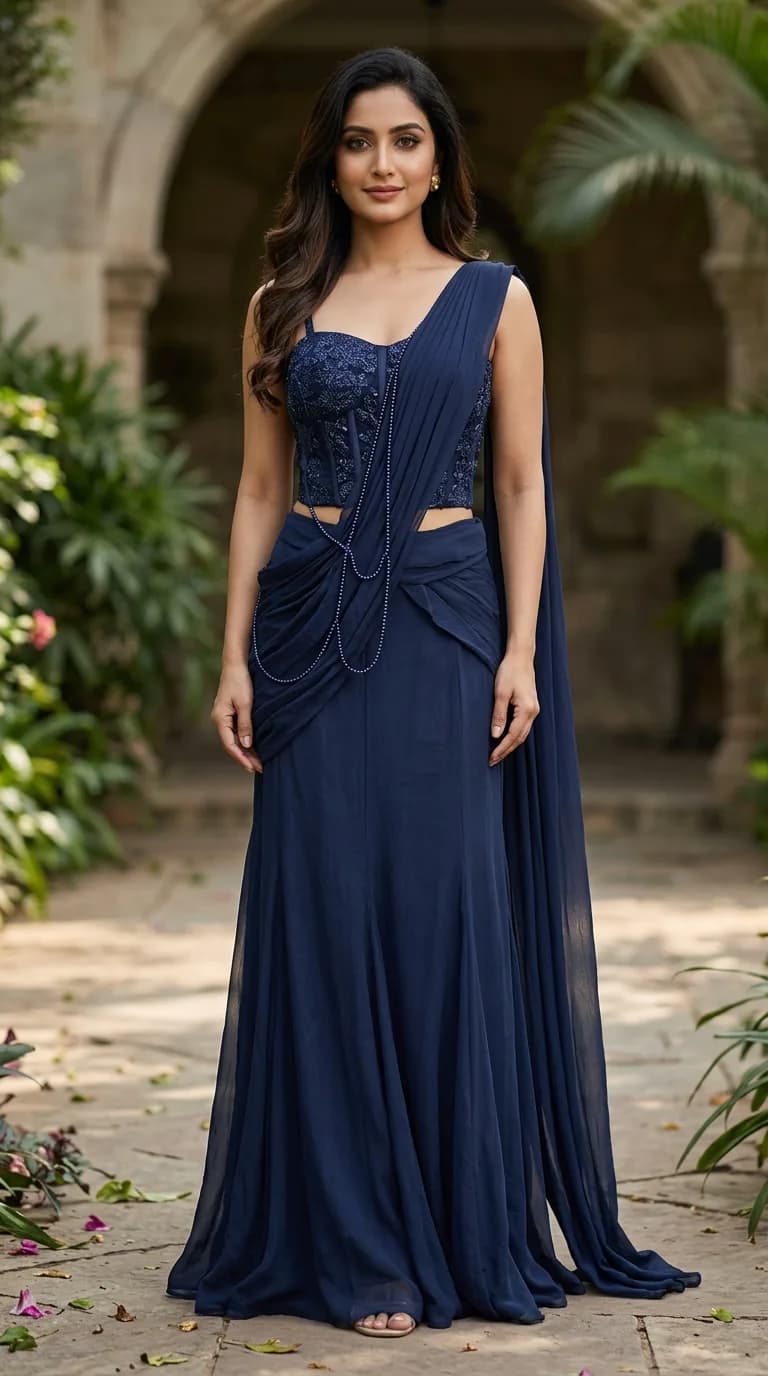
Ten years ago the blouse on a lehenga was a soft-stitched choli, lined and fitted but structurally unremarkable. Now a large share of the rail is corsets and bustiers — boned, panelled, built to hold a shape whether or not the wearer is holding it. That is a genuine construction change, not a trend in trims.
What boning does is transfer the work of holding the silhouette from your body to the garment. A soft choli follows your shape; a corset imposes one, pulling the waist in and lifting the bust, and it stays doing that for the whole evening without you thinking about it. That reliability is the actual appeal, more than the shape itself.
It also changes what the garment can be worn with. Because a corset holds its own structure, it does not need the lehenga to anchor it — which is why the same bodice can sit over a palazzo, a drape skirt or a saree drape and still look deliberate. A soft choli out of its original context tends to look like an undergarment.