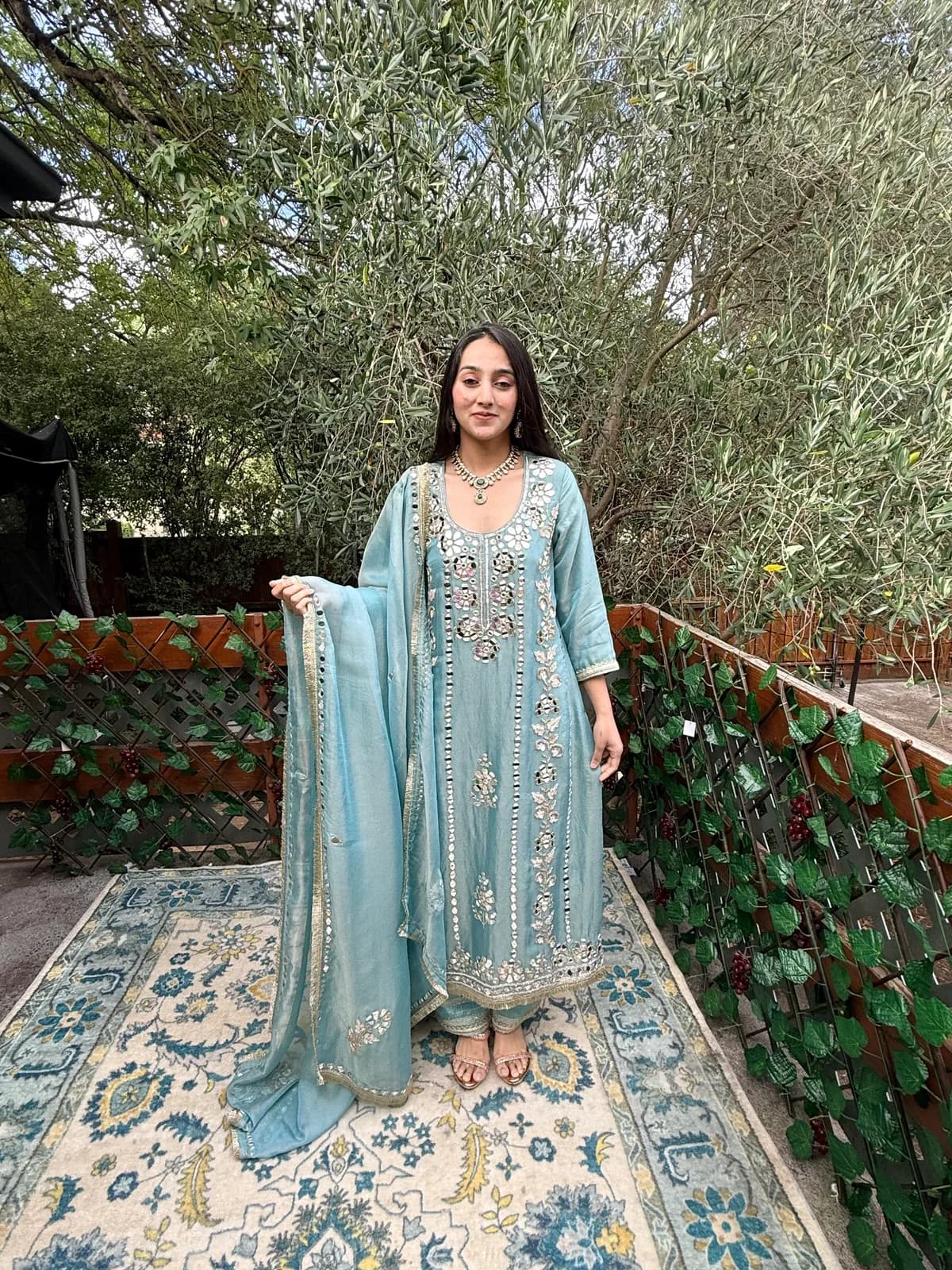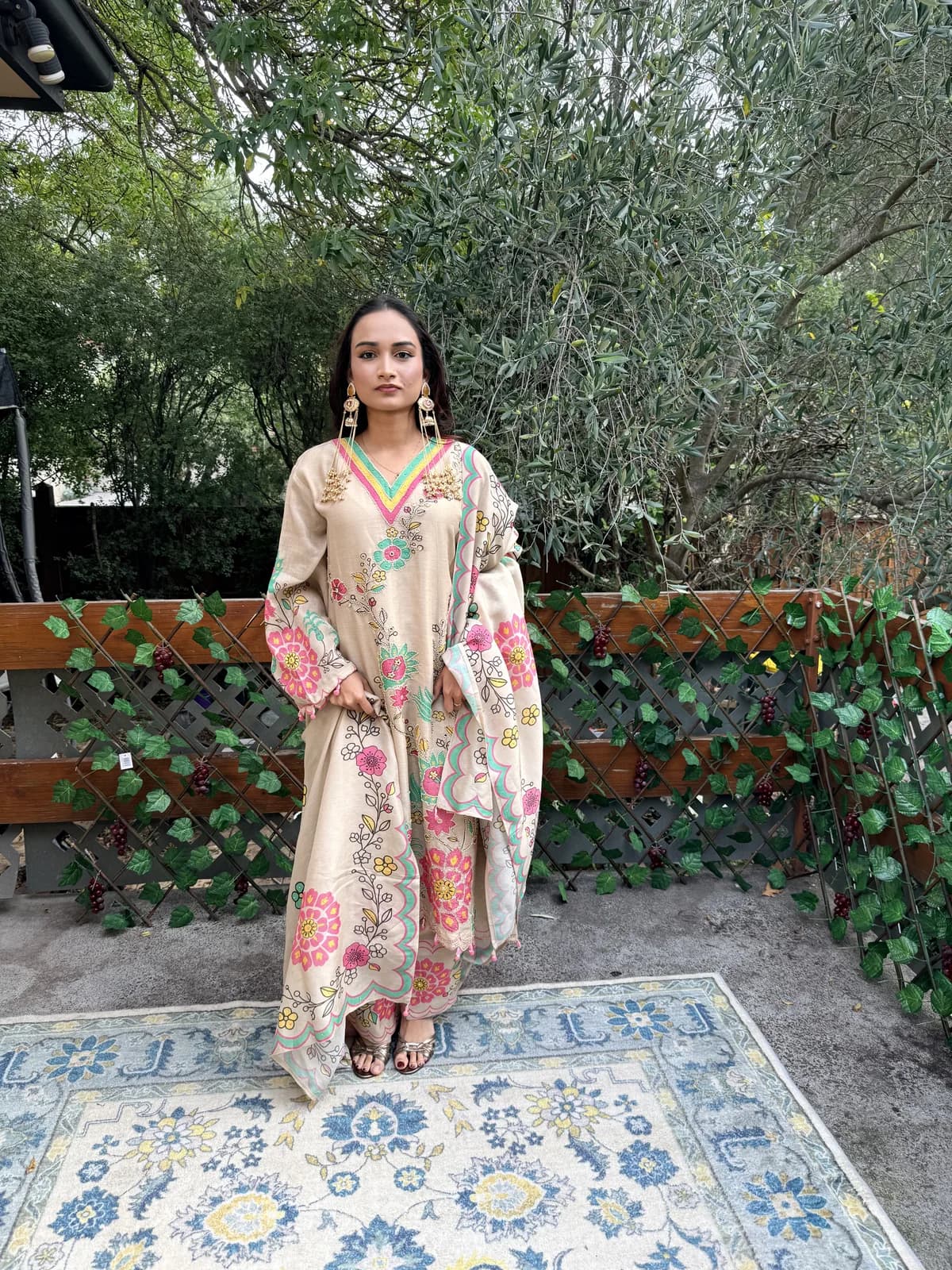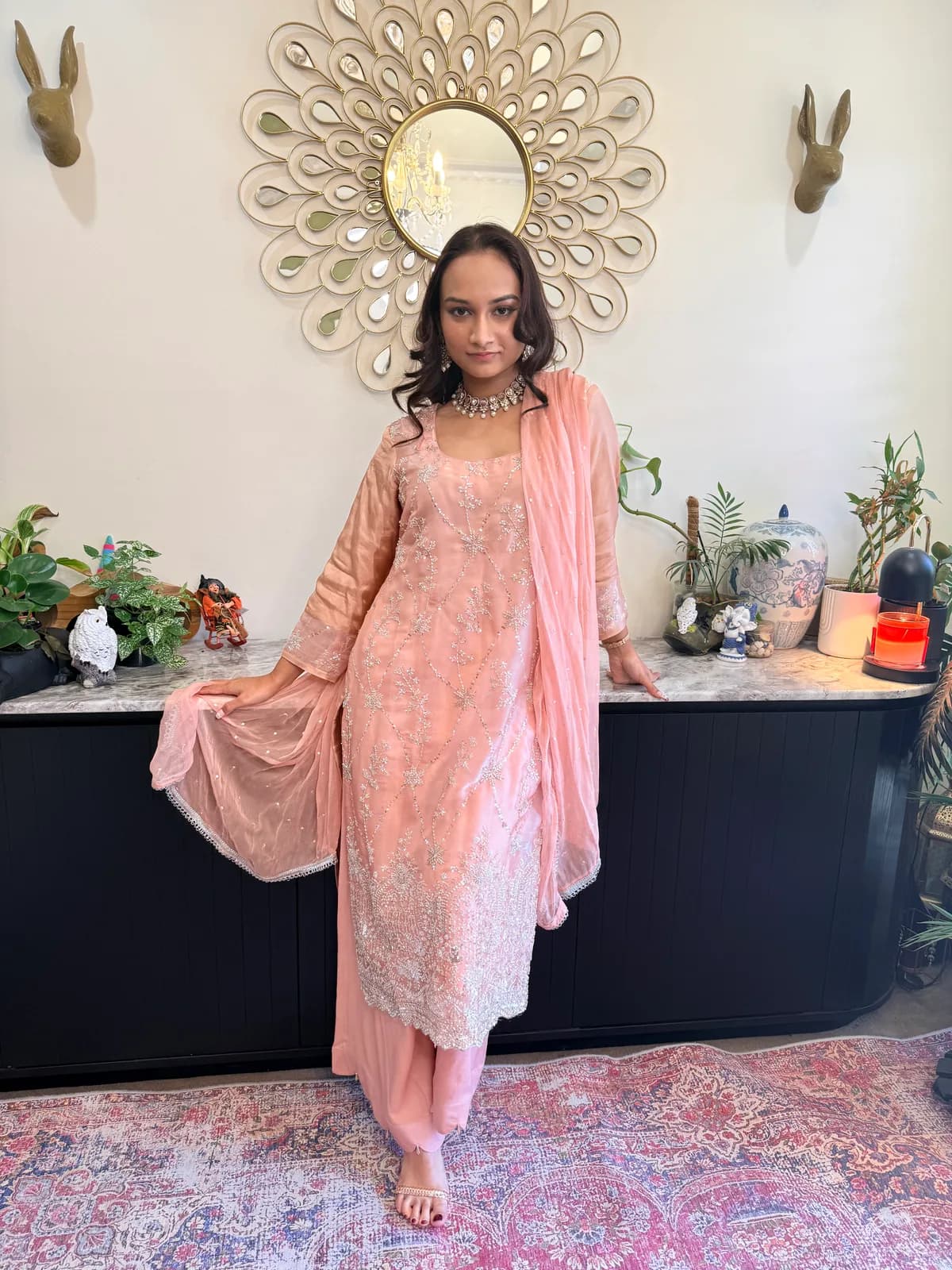
A wedding season that runs through an Australian summer is a problem Indian occasionwear was not designed for. Much of the formal vocabulary — velvet, heavy georgette, zardozi-laden silk — comes from a calendar where the big events fall in a North Indian winter. Wearing that in Sydney in January is not a style mistake, it is a physical one.
The fabric that handles it best while still reading as formal is organza. It is a very fine, crisp, sheer cloth that holds its own shape, which means it gives you volume and structure without weight. A full organza kurta with a palazzo weighs a fraction of a georgette equivalent and stands away from the body, so air moves between the fabric and you. That standing-away is the whole trick.
Chanderi is the other one worth knowing. It is a light, slightly translucent handwoven cloth, traditionally a cotton-silk mix, with a faint natural sheen. It breathes like cotton because it largely is cotton, and it reads as dressier than cotton because of the silk in the weft and the glassy finish. For a daytime event it is close to ideal.
Cotton-silk more broadly, and chiffon, round out the list. Cotton-silk is the most practical and the least formal. Chiffon is light and drapes beautifully but clings, which in heat is the opposite of what you want — a clinging fabric traps a layer of warm air against the skin, which is why a chiffon saree can feel hotter than a crisp organza suit that weighs twice as much.